

By Johannes Tobi Wojuola
At this time two years ago, Nigeria’s telecommunications sector was far from thriving. Consider the industry debts—both those among operators and those owed to them by banks. Or the Federal Government’s NIN-SIM linkage policy, which had suffered seven postponements since December 2020. Then there were the tariffs. They had remained static for a decade, and as a result, investors were looking the other way while investments dipped—a bad omen for a sector whose lifeblood is a constant flow of capital. All of these translated into networks that were hanging on their last legs.To cap it all, the country was still navigating its way through tough but necessary macroeconomic policies. The removal of petrol subsidies and the unification of FX rates had put the sector through a stress test.
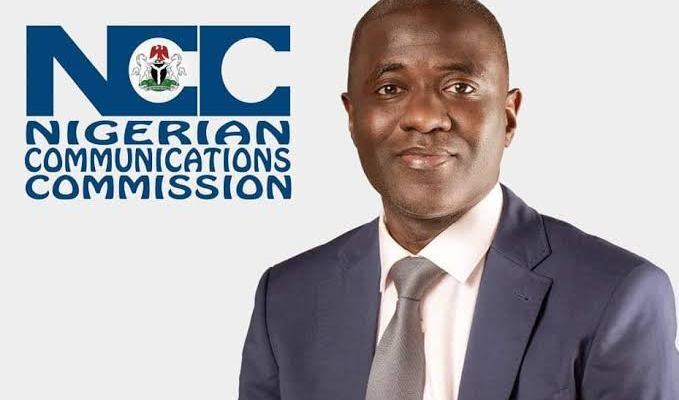
When Dr. Aminu Maida was appointed Executive Vice Chairman (EVC) and Chief Executive Officer (CEO) of the Nigerian Communications Commission (NCC) on October 11, 2023, to lead the regulation of the sector, he found it at one of its toughest moments—struggling to keep its head above water, though sustained by its rich legacy of forward-thinking legislation and policy.If the telecommunications sector was going to meet the needs of its stakeholders, it had to be resilient enough to weather these storms and grow.Upon assuming office, Dr. Maida’s strategic vision was simple yet comprehensive: to meet the expectations of the key stakeholders of the NCC. The consumers at the centre, who want quality network service and an overall five-star experience; the industry players and licensees, who seek a fair and predictable regulatory environment; and the government, which expects growth, innovation, and a digital infrastructure that powers the economy.So, what has the journey looked like since then?Take the issue of intra- and inter-industry debts.
In the whole of 2024, there was no new intra-industry debt among operators, with almost all old debts cleared. And before the year closed out, debts owed to operators by banks for USSD transactions—amounting to over N100 billion—had been settled.
This was followed by the introduction of an End-User Billing Policy, where consumers now pay directly for their USSD transactions through their airtime—knowing how much they are billed in real time, and effectively ending the long-standing conflict between operators and banks.Also, the NIN-SIM policy of the Federal Government, aimed at ensuring the integrity of identities in the telecommunications sector, was successfully concluded in September 2024.
Today, no SIM card operating in Nigeria lacks a verifiable NIN.The sustainability of the telecommunications industry is no longer under threat. In January this year, by applying its economic regulatory powers to approve cost-reflective and competitive tariff adjustments, the Commission spurred an investment boom in the industry unseen in over four years. Investor confidence has returned: since the tariff adjustment approval, operators have committed more than $1 billion in fresh investments into the sector.
The funds have been channelled into purchasing network infrastructure upgrades, modern equipment, and carrying out network expansion activities across the country. In the last six months alone, tower companies and operators have deployed over 2,600 additional capacity and coverage sites nationwide.Damage to telecommunications assets and infrastructure had long posed a challenge to operators and their investments. Through sustained advocacy by the Commission, President Bola Ahmed Tinubu, the President signed the Critical National Information Infrastructure (CNII) Presidential Order in June 2024, designating telecom systems and assets as national critical infrastructure that must be protected.The Commission is now working closely with the Office of the National Security Adviser (ONSA)—tasked with operationalising the Order—to coordinate its implementation within the telecommunications sector. While operators are being held accountable for full compliance with industry standards on site maintenance and security, awareness and collaboration with key stakeholders are ongoing.
Mediation efforts by both the Commission and ONSA have also ensured that locked sites providing critical network services were reopened, while major cartels responsible for the theft and resale of telecommunications equipment have been dismantled.In July 2025, the Commission launched its 2025 Corporate Governance Guidelines for the telecommunications industry. The framework is designed to strengthen transparency in the operations of the Commission’s licensees while emphasising balanced board structures, enhanced internal controls, and rigorous risk management practices.It is no gainsaying that consumers cannot receive quality services if telecommunications operators are plagued by debts, vandalised infrastructure, weak governance culture, and declining investments. By addressing these challenges within two years of assuming office, Dr. Maida has set a firm foundation for the industry’s sustainability, and for a thriving telecommunications sector.And that is not all.
Under Dr. Maida, the Commission is moving away from the traditional “command-and-control” style of regulation toward an approach that emphasises information disclosure and transparency. This new regulatory philosophy empowers consumers, investors, and the general public with clear, timely, and accurate information to make informed choices while driving competition among operators to deliver better services.In early 2024, the Commission revised the nation’s teledensity figures using verified population data and later in the year, upon the conclusion of the NIN-SIM linkage exercise, cleaned its subscriber database—removing over 60 million inactive or unverifiable lines.
These adjustments, though uncomfortable and a bitter pill to swallow, reflected the Commission’s commitment to data transparency, accountability, and the integrity of the sector.Clear, honest, and timely information empowers consumers to make better choices. This is why the Commission issued a Guidance on Tariff Simplification, directing operators to publish disclosure tables that clearly present plan names, prices, validity periods, add-ons, and terms and conditions in a uniform, user-friendly format. Similarly, the Commission’s directive that operators must log major network outages on its Major Outage Portal and inform consumers accordingly means that the public can now know when a network downtime occurs, what caused it, its impact, and the steps operators are taking to fix it.Furthermore, the NCC took a bold leap into data-driven performance regulation in 2025 through its Quality of Experience Crowdsourcing Project.
This project now provides the Commission with real-time, independent data on network quality and consumer experience across all 36 states and the FCT. The first public reports and interactive coverage maps are being launched this month. They will provide consumers with transparent performance insights and encourage healthy competition among operators. Collaboration has been a cornerstone of the Commission’s progress. Through sustained engagement with State Governments, 28 states have now capped Right of Way (RoW) fees at N145 per metre, while 11 states have gone further to waive the charges entirely—a decisive step toward reducing barriers to broadband rollout and encouraging private investment.Later this year, the Commission will unveil two major frameworks: the National Spectrum Roadmap (2025–2030) and the Cybersecurity Framework for the Telecommunications Industry—both developed after extensive stakeholder consultations.
Together, they will guide spectrum management, ensure network resilience, and support Nigeria’s ambition for a secure, inclusive, and prosperous digital economy.After a press meeting in August this year—which lasted over two hours, during which Dr. Maida spoke for most of the time reflecting on the Commission’s work over the past two years—he sat with his team for a post-mortem, as he is known to do, insisting on feedback. After all that had been said, he exhaled deeply and remarked, “We have done quite a lot in these two years.” Truly, and remarkably so.In his words: “We have made significant progress in addressing issues of sustainability, but I believe we now stand at a crossroads. By next year, we hope to have a revised National Telecoms Policy that will focus on building a more robust and secure internet space for all Nigerians and every sector of the economy. Then we can be confident that we are laying the right digital foundation to drive the growth of our digital economy.”Taking stock of the past two years tells a story of resilience and renewal of an industry coming of age—an industry that has been stabilised, re-energised, and is once again looking forward. The signs of tangible progress are unmistakable as the telecommunications sector today stands at an inflection point.
Looking ahead, Dr. Maida believes the industry will not only continue to thrive but will become the central enabler of Nigeria’s economic transformation. His confidence is grounded in the signs of progress already taking shape—greater transparency and accountability, renewed investor confidence, upgraded networks, stronger protection of telecom assets, and improved corporate governance—all reinforcing his faith in the sector’s upward trajectory.
Johannes Tobi Wojuola is the Special Adviser to the EVC/CEO, NCC on Communication and Media.