
BY MUSA ILALLAH
“Hadejia is a large town with 5 town gates and excellent walls about 30 feet high and 30 feet thick. The gates are protected in such a way that guns could not get a direct fire at them – Captain H C B Phliphs. (1903)
Captain Philips, famously known as Mai tumbi, was an Assistant Resident Officer and leader of the British troops that invaded and occupied Hadejia in 1906 as a part of British conquest and occupation of Northern Nigeria. .
The Hadejia Colonial War in 1906 was a major battle in Northern Nigeria where Emir Muhammadu Mai Shahada of Hadejia defied the British Empire’s expansion that resulted in his ‘shahada’ in battle.
British forces used superior weaponry comprising 75mm guns, Maxim guns among others on April 3, 1906, to crush the walled city’s defenders, incorporating Hadejia into the colonial system.
Emir Muhammadu Mai Shahada rejected British demands from Frederick Lugard for total submission, tax payment, and cessation of military preparations.
Frederick Lugard, the British guy who basically created Nigeria was a soldier, mercenary, explorer and a. Colonial administrator.
He was head of the West African Frontier Force tasked with stopping Fulani resistance. The 1906 Hadejia invasion happened under his administration as High Commissioner.
Hadejia was renowned as a strong, defiant walled city whose resistance was one of the last major armed challenges in the region to the British after the fall of Kano and Sokoto. British troops led by Captain Philips and Colonel Lowry Cole, used cannons to break through the city walls, overcoming the Hadejia cavalry and archers.
Casualties included the Emir, 800 plus of his men, and Captain Philips later died of injuries from the battle on September 12th, 1906, along with a number of his troops.
The event marked the end of independent resistance against British rule in that area. The site is still remembered in local memory, with colonial-era bullet marks appearing on the palace doors that are now part of the items in the Hadejia Museum.
Hadejia was established in the early 19th century as a Fulani jihad emirate after overcoming smaller kingdoms.
The “Martyr” Emir, Emir Muhammadu Mai Shahada is remembered in Hadejia for choosing to fight for honour rather than surrender, making his name synonymous with bravery.
Famously known as “Hadejia Resistance”, The Hadejia Invasion.of 1906 was the last major battle against British colonial forces in Northern Nigeria.
It would not be out of place to interconnect the inherent attitude of resistance, forthrightness, militancy with the miraculous Atafi pond water.tied to the history of warfare for which Hadejiyawa had a high reputation.
By 1903, the British had taken Sokoto, Kano, and most of Northern Nigeria. But Hadejia Emirate under Emir Muhammadu Maishahada refused to surrender.
A British military force led by Captain H.C.B. Philips advanced on Hadejia, expecting compliance, but the Hadejia warriors fought back instead of surrendering, during which Captain Phillips was killed as a rare event in colonial campaigns
The theme of the 120-year commemoration “Hadejia Resistance: Defending Islam, preserving honour, Heritage, and inspiring the future”,
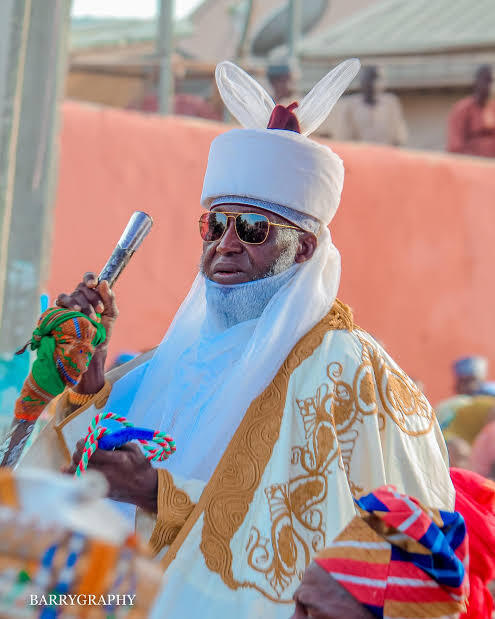
Celebrated on Friday 24th & Saturday 25th April 2026 witnessed Special prayers, visits to the graves of the 800 fallen heroes or martyrs, visit to historical sites and monuments rather than security outposts they were initiallly designed to be, commissioning of a museum, academic lectures and presentation of a book, was rounded up with a grand Durbar led by Emir of Hadejia, Alhaji Adamu Abubakar Maje Haruna.
British forces used superior weaponry (75mm guns/Maxim guns) on April 3, 1906, to crush the walled city’s defenders, incorporating Hadejia into the colonial system.
During the fierce battle and as a scholar, warrior and king who came about the name Mai Shahada meaning one who seeks martyrdom, Emir Mai Shahada,1885-1906 led his troops from the front and defended his people and religion with the last drop of his life.
In the course of the war, Captain Phillips tried to personally capture Emir Mai Shahada but was fatally stabbed and injured by the Emir in self-defense before he succumbed to death few days later.
Hadejia sits on the edge of the Sahel and owes it’s prosperity to water. The town was literally founded because of it’s natural endowments and rivers. It lies north of the Hadejia River, which joins the Jama’are River to form the Hadejia-Nguru Wetlands and the 25 000 hectares Hadejia Valley Irrigation Scheme.
Its endowments include fisheries, biodiversity, forest resources, and wildlife. It was founded by a combined duo of Hade and Jiya, the Kanuri hunter and wife who founded Hadejia. They became attracted to the area because of its rivers and other natural endowments. Those endowments are still why 35% of Hadejia’s population work in fishing and irrigation farming.
Indeed, the choice of the theme could not have come at a better time than now when all efforts are on deck for our youths to appreciate our heritage and culture and become inspired from there for future development.
Speaking at the ceremony, Emir Adamu Maje of Hadejia who is also the chair of Jigawa State Council of Chiefs stated that celebrating the anniversary is not only timely but also an attempt to put the records straight for even generations yet unborn to appreciate the bravery of our fore fathers to defend themselves, their culture and religion.