
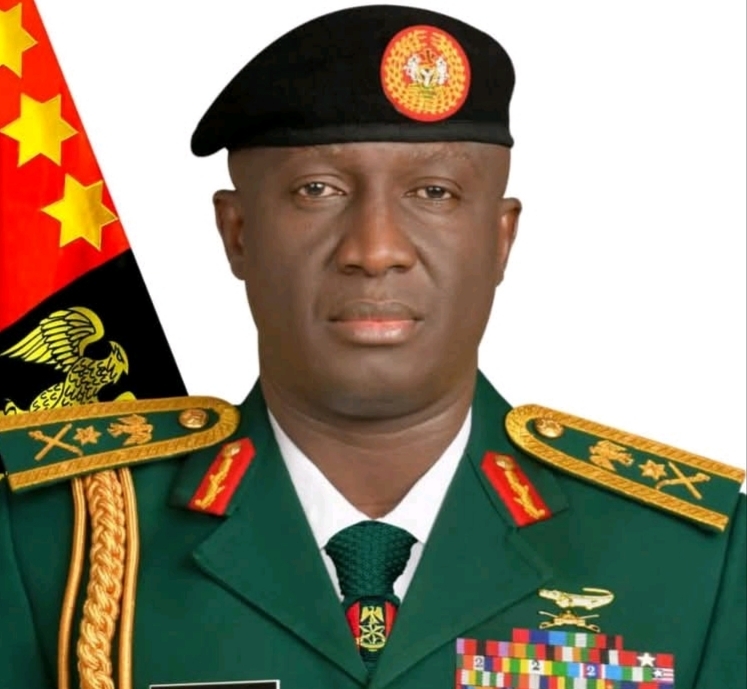
The Chief of Army Staff (COAS), Lt.-Gen. Waidi Shaibu, has declared that the Nigeria–United States counter-terrorism partnership signals a major turning point, transitioning the nation’s security operations into an intelligence-driven, technology-enabled campaign.
Speaking on Monday in Abuja at the opening of the Nigerian Army’s bi-annual conference for 2026, Gen. Shaibu reviewed ongoing operations and strategic partnerships shaping the Army’s counter-insurgency efforts.
He revealed that recent joint operations with the United States Africa Command (AFRICOM) have significantly enhanced operational effectiveness, leading to the neutralisation of a senior terrorist commander linked to the Islamic State network. According to the army chief, this success underscores the growing value of intelligence fusion, precision targeting, and coordinated mission planning between both militaries.
Gen. Shaibu noted that modern terrorism has evolved into a highly networked, technology-driven threat, demanding equally sophisticated responses grounded in real-time intelligence sharing and multinational cooperation. He added that the bilateral partnership has moved beyond conventional support to deeper operational integration, including surveillance coordination, intelligence analysis, and joint mission execution in select theatres.
The collaboration, he said, has improved the Nigerian Army’s ability to track high-value targets, disrupt logistics chains, and dismantle terrorist command structures across multiple regions. Such partnerships are critical to sustaining pressure on insurgent groups, particularly in the Lake Chad Basin and Sahel, where terrorist networks exploit porous borders.
Describing the development as evidence of Nigeria’s commitment to strengthening global counter-terrorism alliances while enhancing domestic security architecture, the COAS urged commanders to continue leveraging intelligence-sharing mechanisms and inter-agency cooperation to consolidate recent gains.
Future operations, he reaffirmed, will increasingly rely on technology, precision engagement, and joint planning frameworks to deny terrorist groups operational freedom. He expressed gratitude to international partners for their sustained support, stressing that collective action remains essential to long-term regional stability.
The conference continues with strategic briefings and operational assessments aimed at refining the Army’s posture for the remainder of 2026.