

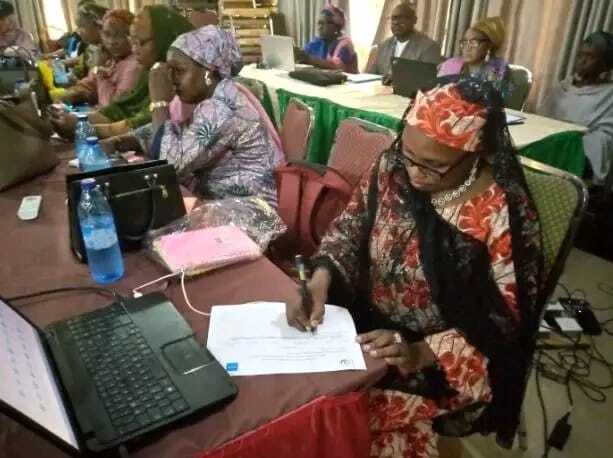
aKADUNA – The Nigerian Association of Women Journalists (NAWOJ), Kaduna State Chapter, in collaboration with UNICEF, has trained over 30 female journalists in child-sensitive reporting. The two-day workshop, held at the National Agricultural Extension and Research Liaison Services (NAERLS), Ahmadu Bello University, Samaru, focused on strengthening media coverage of issues affecting children.
Under the theme, “Strengthening Child-Sensitive Media Reporting: Empowering Women Journalists as Advocates for Children and Social Change,” the training addressed ethical reporting, child rights protection, and responsible storytelling that upholds the dignity and safety of minors. Participants were equipped to advocate for child protection, survival, and social development, with emphasis on reporting sensitive issues such as abuse, crime, conflict, and disasters while safeguarding children’s identities. Maternal mortality was also highlighted as a critical concern.
Mr Mamah, speaking on behalf of UNICEF’s Chief of Field Office in Kaduna, urged journalists to amplify the voices of vulnerable children and challenge harmful societal stereotypes. Describing the situation of Nigerian children as critical, he cited poverty, insecurity, and harmful socio-cultural practices as major threats. “Many children cannot speak out due to cultural restrictions. You are in a position to amplify their voices and hold perpetrators accountable,” he said.
The workshop included practical sessions on reporting child-related cases without causing harm, stigmatisation, or privacy violations, in line with global best practices and the United Nations Convention on the Rights of the Child (UNCRC).
The Kaduna State Chairperson of NAWOJ emphasised that media reports often inadvertently violate minors’ dignity and privacy, underscoring the need for specialised training. She noted that women journalists play a critical role in shaping narratives that protect children’s rights and drive policy change.
Presentations also addressed the prohibition of all forms of discrimination against the girl child, the importance of anonymity in child reporting, the use of artificial intelligence in journalism, traditional reporting methods, and internet-era developments. Additionally, the workshop examined challenges to editorial integrity, including political pressure, governmental or powerful group influence, financial interests, and the impact of advertising or sponsored content on editorial decisions.
The training, which ran from 29 to 30 April 2026, aims to enable journalists to contribute meaningfully to child-focused advocacy through informed and responsible reporting.