

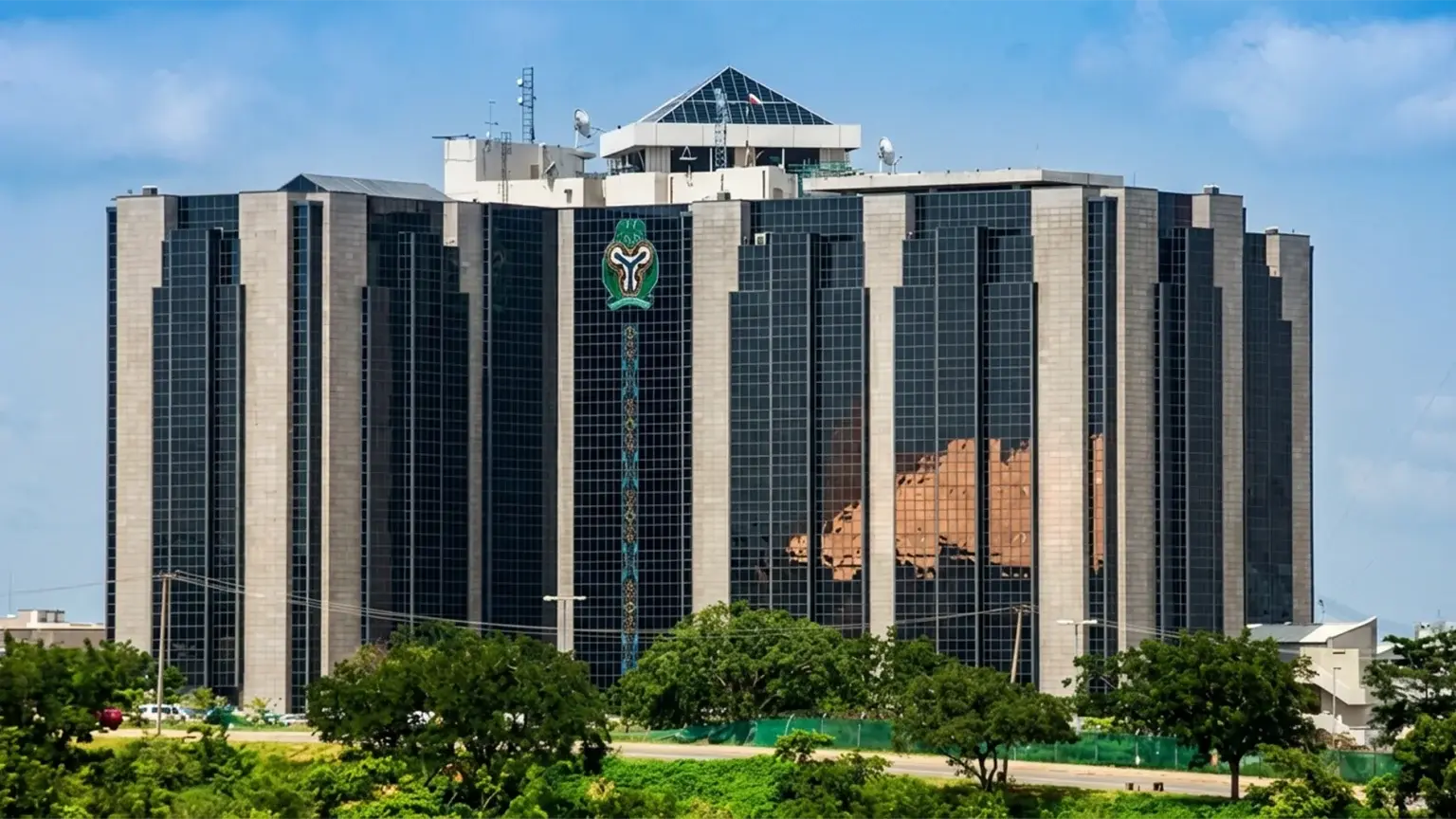
The Nigerian stock market closed sharply lower on Thursday as investors lost N1.92 trillion following a wave of sell-offs in banking and cement stocks, triggered by the Central Bank of Nigeria’s (CBN) new regulatory directive on banks’ foreign subsidiaries.
Market capitalisation declined from N155.78 trillion to N153.86 trillion, a fall of 1.23 per cent or N1.922 trillion. The All-Share Index also dropped by 1.23 per cent, or 2,994.90 points, to settle at 239,734.61, down from 242,729.51. The year-to-date return moderated to 54.82 per cent.
Tajudeen Olayinka, an investment banker and stockbroker, attributed the decline to investor reaction to the CBN’s new guideline, which requires banks operating abroad to limit their investments in foreign subsidiaries to 10 per cent of their equity capital or shareholders’ funds.
Mr Olayinka noted that the apex bank had also directed institutions currently exceeding the threshold to begin divesting from such subsidiaries.
“The drop in the ASI and market capitalisation came from market reactions to the new CBN guideline that compels banks operating in foreign countries to limit their investment in foreign subsidiaries to 10 per cent of their equity capital or shareholders’ funds,” he said.
“The market’s immediate interpretation is that the CBN is effectively integrating revenues and other reserves of banks operating in foreign countries into their existing regulatory capitals. This will limit their corporate payout capabilities or make future payouts dependent on growth trajectories.”
He explained that the development prompted a sharp repricing of international banking stocks, which in turn affected other highly capitalised equities, particularly cement companies.
“So, prices of many of the international banks came down heavily by way of repricing. This was followed by declines in prices of highly capitalised listed companies like cement,” he said.
Mr Olayinka described the downturn as temporary, emphasising that the affected banks remained fundamentally strong and undervalued.
“I think the development is temporary, as the affected banks are already well capitalised and largely undervalued. Therefore, the upside potential for banks is very high, suggesting that anyone selling banking stocks at this time might be throwing good money away. This is because the industry is now very strong and highly regulated. The liquidity hasn’t gone away,” he added.
Market breadth
The market breadth closed positive, with 42 gainers against 30 losers. CAP and FTN Cocoa Processors led the gainers’ chart, each rising by 9.99 per cent to close at N212.50 and N8.04 per share, respectively.
University Press topped the losers’ table, falling by 10 per cent to finish at N4.50. Red Star Exchange followed with a decline of 9.59 per cent, ending the session at N25.45, while Skyway Aviation Handling Company dipped by 8.63 per cent to close at N130.75 per share. Cileasing shed 8.50 per cent, settling at N7, and Consolidated Hallmark lost 7.54 per cent, finishing at N6.01 per share.
Market activity improved during the session, with total traded volume rising by 29.34 per cent to 1.83 billion shares worth N72.17 billion, exchanged across 81,131 deals. NEM Insurance recorded the highest volume, with 360.56 million shares accounting for 19.70 per cent of the day’s total.
Seplat Energy led in value terms, with transactions worth N12.98 billion, representing 17.99 per cent of the total value traded.