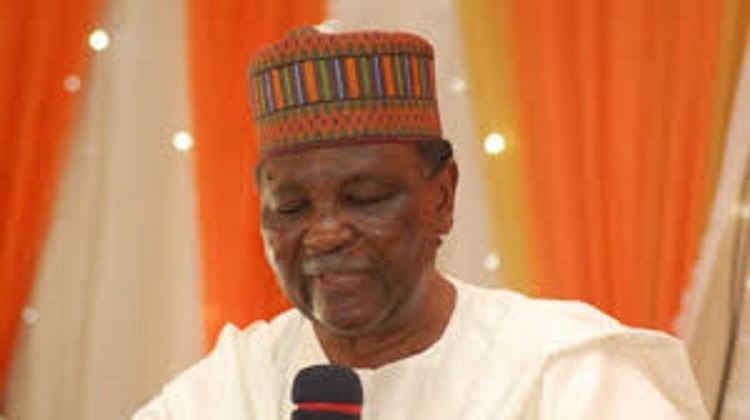
Former Head of State General Yakubu Gowon has disclosed that the refusal of the United States and Britain to supply arms during the Nigerian Civil War drove his government to seek help from the Soviet Union and a Lebanese black-market arms dealer.
In his newly published 859-page autobiography, My Life of Duty and Allegiance, Gowon recounts how these two unlikely lifelines turned the tide of the three-year conflict, which lasted from July 1967 to January 1970.
The revelations appear in Chapter Fifteen, titled “If The Devil’s Ready To Help”. According to Gowon, by late 1968, Nigeria’s ammunition stockpile had fallen to just 500,000 rounds for the entire Army – insufficient to sustain military operations. Yet traditional Western allies remained unhelpful.
“As the weeks of fighting wore on, our stock of ammunition was steadily depleted,” Gowon wrote. “International sales restrictions prevented suppliers from selling military hardware to Nigeria.”
He ordered federal troops to hold their positions after capturing Enugu, saying he could not, in good conscience, authorise further advances without adequate ammunition.
Gowon expressed particular frustration at the contrast between Western inaction in Nigeria and their heavy military engagement in Vietnam and Cambodia, where American air power was deployed at scale.
During a critical meeting with British and American ambassadors, Gowon warned: “I will go to any devil to get what I need to deal with the problem. When that happens, I hope I will not be accused of doing something wrong.” Both ambassadors left without making any commitment.
Turning to Moscow
Gowon then directed his Principal Secretary, Hamza Ahmadu, to contact the Soviet Ambassador, Aleksandr Romanov. A Nigerian delegation – including Commissioner of Information Anthony Enahoro, Permanent Secretary Edwin Ogbu, Chief of Air Staff Emmanuel George Kurubo, and Ambassador John Ukegbu – was promptly dispatched to Moscow.
“The Soviet Union supplied us MiG-15 trainers and MiG-17 bombers,” Gowon wrote, adding that Soviet-Nigerian relations grew into something “special” – a warmth purchased by Western indifference.
Black-Market Solution
Moscow alone could not solve the immediate ammunition crisis. Gowon turned to Ali Jamal, a Lebanese businessman with black-market access to military hardware. Jamal, who “strongly believed in Nigeria”, offered to personally finance ammunition procurement and asked only for interest-free reimbursement when the government could afford to pay.
“Jamal told me not to worry. He would use his own money,” Gowon recalled. “With his support, we changed the face of the war.”
Clash with Awolowo
The arrangement nearly collapsed at the Federal Executive Council when Finance Commissioner Chief Obafemi Awolowo refused to authorise payment, objecting that due process had not been followed and that the expenditure was extra-budgetary.
An aghast Gowon responded: “I will use my powers as Head of State and Head of Government to give any department the order to do what is required.”
Although he deployed anger and executive authority to win the argument, Gowon said he remained proud of his team’s insistence on due process. Jamal was eventually paid in full.
The autobiography spans 36 chapters and covers Gowon’s life from his Angas origins in Plateau State through his military career, the civil war, his ouster in 1975, and his years in exile and academic study.