

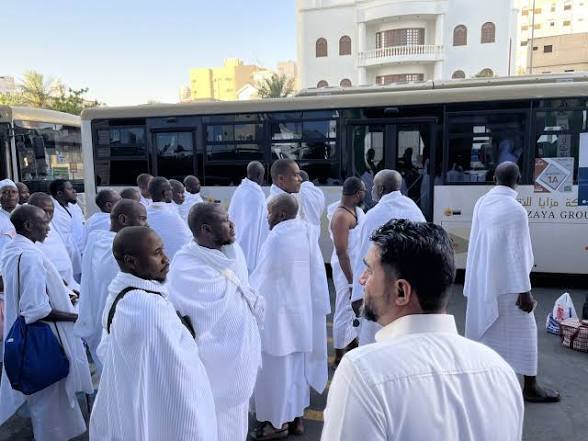
For years, between 80 and 90 per cent of the challenges plaguing Hajj administrators – including Nigeria’s National Hajj Commission (NAHCON) and private operators – have stemmed from tent allocation disputes in Mina during the Tashreeq days.
The premium facilities, known as Tent A and Tent A Plus, are reserved for pilgrims who purchase high-end, US dollar-denominated packages. Meanwhile, pilgrims from state Muslim pilgrims’ welfare boards are largely assigned to Tent D.
Space management in Mina remains a global headache due to the valley’s limited size and the sheer number of pilgrims – over 1.2 million this year – converging on the same terrain.
Three Persistent Loopholes
Three major flaws worsen the annual crisis:
1. Service provider insincerity over actual secured space.
2. Tour operators marketing packages they do not possess.
3. A growing demand for luxury in a place historically defined by sacrifice and hardship.
In 2016, the Mina Tent Distribution Algorithm (MTDA) was developed to improve space use. Experimental results showed the system could accommodate 80 per cent of pilgrims within 76.2 per cent of available space. Yet even that fell short of full coverage.
Mina spans approximately 7.82 square kilometres, but rocky and hilly terrain means only 61 per cent is effectively usable. Tent sizes vary between eight square metres, 6×8 metres, and 12×8 metres.
Shrinking Capacity
Originally designed to host about 850,000 pilgrims – with each person allocated sleeping space – Mina has since lost nearly 20 per cent of its capacity to support infrastructure, including the Al Mashaaer Railway, medical centres, security posts, ministry offices, emergency response units, and fire stations.
In reality, Mina can no longer comfortably accommodate 800,000 pilgrims, let alone the more than 1.2 million expected this year.
Mattresses have also worsened the crunch. Unlike previous years when pilgrims slept on rugs, mattresses now consume additional space, further compressing capacity.
Global Complaints and Local Deception
Many major Hajj-participating countries have already complained about inadequate tent allocations this year. In response, Saudi authorities have previously directed Gulf Cooperation Council (GCC) pilgrims to proceed directly from Makkah to Arafat, bypassing the first day in Mina.
Although the Kidana Development Company has added 79 two-storey complexes with 7,838 restrooms, the structures themselves occupy significant land, offsetting any gains.
Indications now suggest that some Nigerian private Hajj operators failed to secure Tent A spaces yet marketed packages as Tent A, when actual bookings fell under Tent B or C.
Any elite Nigerian paying $15,000 or more for Tent A services – only to discover a downgrade upon arrival – could trigger serious outrage in Mina over perceived deception.
Last year, the Saudi ministry’s “No NUSUK, No Hajj” policy freed up space in Tent D by curbing unauthorised pilgrims. However, Tent A remained largely unaffected.
Governors, senators, influential political figures, and their families are regular subscribers to Tent A packages. Any disappointment among this cohort would attract swift public attention and widespread criticism.
Way Forward
NAHCON, as Nigeria’s apex Hajj regulatory body, should establish a special committee to work closely with private tour operators. The committee’s mandate should include verifying the exact tent categories secured for VIP pilgrims before movement to Mina.
Direct engagement with Masha’ir service providers is essential to confirm actual allocations.
Private operators found to have downgraded pilgrims must be compelled to:
· Notify affected clients before Hajj rites commence,
· Issue appropriate apologies, and
· Arrange refunds where necessary.
Pilgrims who pay premium fees deserve transparency, accountability, and the exact services promised.