
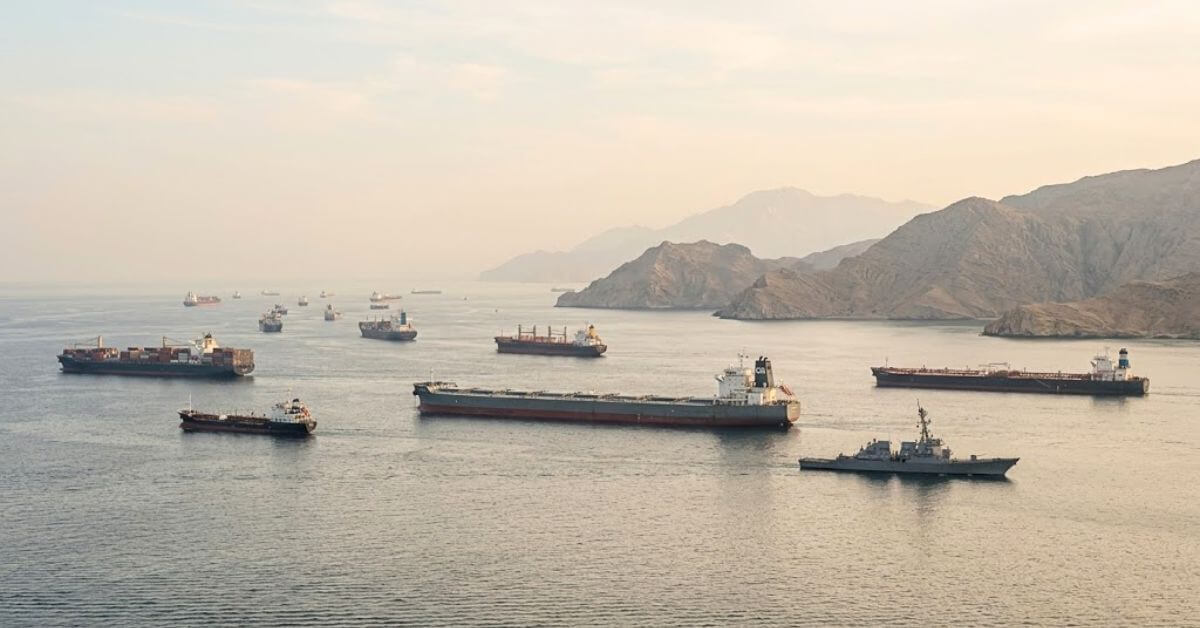
Tensions in the Middle East escalated sharply on Saturday as Iran announced the closure of the Strait of Hormuz, blaming the United States for reneging on prior understandings amid an ongoing naval blockade.
The Islamic Revolutionary Guard Corps (IRGC) said control of the strategic waterway had “returned to its previous state,” citing continued US restrictions on Iranian ports as justification. The strait is a vital chokepoint through which a significant share of the world’s crude oil passes daily. Any disruption is expected to send immediate shockwaves through global energy markets.
Trump stands firm
Reacting to the development, US President Donald Trump insisted Washington would not back down, stating the naval blockade “will remain in full force” until “our transaction with Iran is 100% complete.” He did not elaborate on the nature of the “transaction.”
Conflicting signals from Tehran
In a contrasting statement, Iran’s Foreign Minister Abbas Araghchi claimed the strait remained “completely open” to commercial vessels. He said maritime activity was proceeding “in line with the ceasefire in Lebanon” and along “the coordinated route as already announced.”
The contradictory messages have sowed confusion among shipping companies and global observers scrambling to assess real-time risks.
Israel ‘prohibited’ from Lebanon strikes
Separately, President Trump disclosed that Israel had been “prohibited” from launching further strikes on Lebanon, as a fragile ten-day ceasefire entered its first full day. The pause in hostilities has allowed tens of thousands of displaced civilians to begin returning to their homes after weeks of intense Israeli bombardment.
What comes next
The situation remains fluid, with mounting fears that any miscalculation in the Gulf could trigger a wider regional confrontation. Observers say the coming hours will be critical in determining whether diplomatic channels can ease tensions or if the standoff will deepen further.