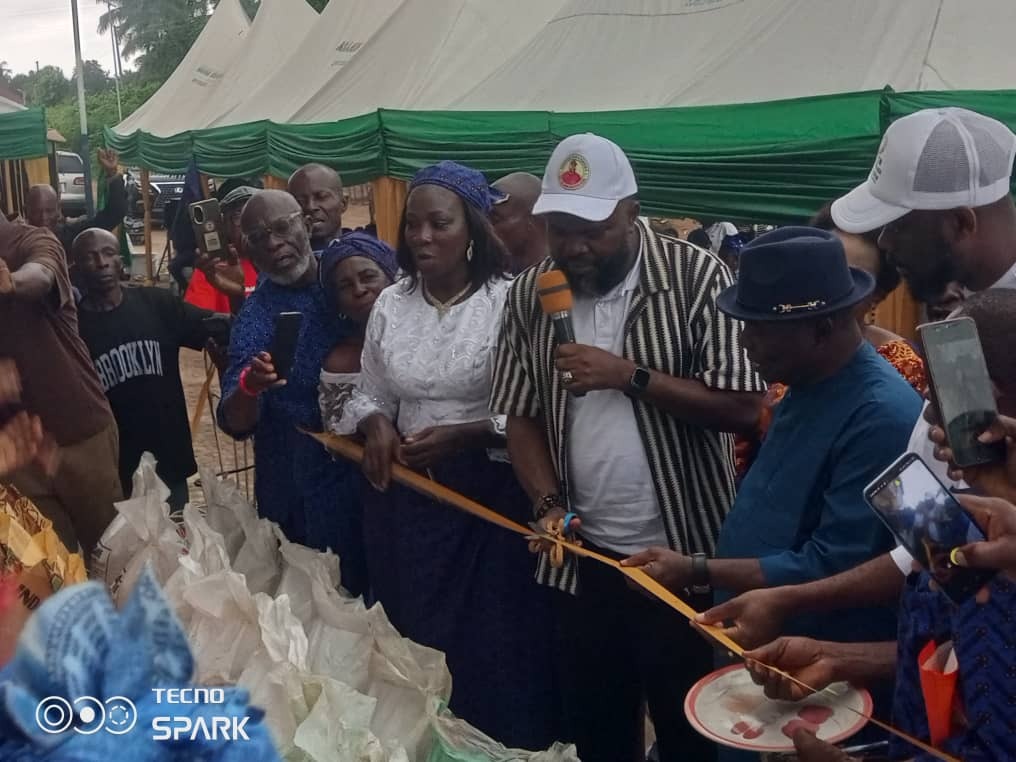
Farming communities in Abia State are celebrating as the Abia Grassroots Movement flagged off its 10th annual subsidised fertiliser distribution at its zonal office in Nkwokpu, Isiala Ngwa South LGA. The move aims to boost food production, reduce rising farming costs, and improve livelihoods during the 2026 cropping season.
At the flag-off ceremony held at Izybest Plaza, Nkwokpu, the Board of Trustees Chairman of Abia Grassroots Movement and Chairman of Izybest Group, Hon. Chief Israel Amanze (Oke Orji Abia), said the programme is designed for genuine rural farmers. He reiterated that agriculture is a key pillar of economic growth and food security, urging beneficiaries to use the fertilisers effectively to increase crop yields.
“We have sustained this subsidised fertiliser distribution for ten years, helping members benefit from government agricultural programmes,” Mr Amanze said. “Abia Grassroots is a farmers’ organisation, not a political one. This subsidy supports your farming businesses.”
Former ASOPADEC Commissioner and President of the Ngwa Patriot Forum, Chief Uzo Ihuka, flagged off the ceremony. He praised Mr Amanze’s gesture as timely and capable of easing financial burdens on local farmers, urging well-to-do individuals to imitate such philanthropy to boost agricultural productivity and reduce poverty.
Engr. Chibuzor Patrick Esihe, High Chief Ebere Fike Enyi, and Mrs Charity Ochiulo (Abia State Chairperson of the Rice Farmers Association and South-East leader of Moringa farmers) commended Mr Amanze’s dedication to revitalising agriculture and empowering rural communities.
State Secretary Engr. Christopher C. Chigbu confirmed that the distribution would be closely monitored for transparency and equitable access. He noted the organisation’s registration with the CAC as a farmers’ body and its collaboration with the Federal Ministry of Agriculture and Food Security through the Bank of Agriculture.
Beneficiaries—including BOT member Mr Christian Amamba, Mr Ugochukwu Ihediiwa, and State Women Leader Mrs Ngozi Ocho—said the high cost of inputs had previously discouraged small-scale farmers. They appealed for the programme’s continuation and expansion.
Subsidised fertilisers include NPK 25:10:05, NPK 20:10:10, NPK 15:15:15, NPK 20:10:10 Special, and ammonium bicarbonate. In addition, 52 women agribusiness entrepreneurs from selected LGAs received training in fertiliser use and sales, along with quality fertilisers on credit for retail across wards.
The event drew fertiliser distribution committee members, women entrepreneurs, farmers’ associations, traditional rulers, stakeholders, and partners.