
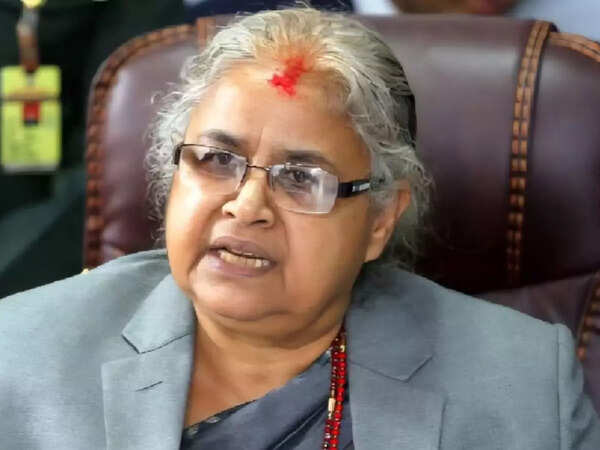
The country’s former Chief Justice Sushila Karki is appointed interim prime minister in a bid to quell anti-corruption violence that has rocked the nation.
In a historic move aimed at stabilising a nation in crisis, Nepal’s former Chief Justice Sushila Karki has been named the country’s interim prime minister following deadly protests this week that killed at least 51 people, injured more than 1,300, and led to the mass escape of thousands of prisoners.
On Friday, President Ramchandra Paudel’s office announced the appointment of Karki, the country’s first female head of government. The 73-year-old, who is also the only woman to have served as chief justice of Nepal’s Supreme Court, was set to be sworn in late Friday.
The appointment comes after days of violent unrest primarily driven by the country’s youth. The protests, initially sparked by a government ban on social media and fueled by deep-seated anger over corruption and poor governance, reached a boiling point earlier this week.
Police spokesperson Binod Ghimire provided a grim casualty toll on Friday, stating that those killed included 21 protesters, nine prisoners, three police officers, and 18 others, without elaborating. Another 1,300 people were injured as police fought to control massive crowds.
The scale of the chaos was further underscored by Ghimire’s update on the country’s prison system. “About 13,500 prisoners had escaped — some have been recaptured, 12,533 are still at large,” he said. The dead included prisoners killed during or after their escape in clashes with Nepalese security forces. Some of the fugitives have reportedly tried to cross into India, where scores have been apprehended by Indian border forces.
Nepal’s army, which has imposed a curfew, said that it had recovered more than 100 guns looted in the turmoil, with some protesters seen brandishing automatic rifles.
Karki’s selection appears to be a direct concession to the Gen Z-led protest movement. “They [Gen Z] want [Karki]. This will happen today,” a constitutional expert consulted by Paudel, who spoke on condition of anonymity, told the Reuters news agency before the official announcement.
Al Jazeera’s Rob McBride, reporting from the capital Kathmandu, explained Karki’s appeal to the demonstrators. “She’s seen as an anticorruption voice, so she’s acceptable to a lot of the Gen Z groups that have been firing up this movement, because corruption has been a big issue,” McBride said. “But while she’s popular with them, she’s not necessarily popular with other groups … so she’s seen as a consensus candidate.”
However, her appointment is not without complications. McBride noted that there was uncertainty about whether Karki could serve as an interim prime minister because she is not a member of parliament. But one Gen Z leader reportedly said an agreement had been made to dissolve parliament, enabling Karki’s appointment. “Still,” said McBride, “Nepal is in for a long period of political uncertainty.”
The week’s events unfolded with shocking speed. On Monday, 21 protesters were killed during a police crackdown on demonstrations. The situation escalated dramatically on Tuesday when protesters set the parliament ablaze, leading to the resignation of former PM KP Sharma Oli and prompting the army to take charge of the streets.
Wedged between India and China, Nepal has grappled with political and economic instability since the abolition of its monarchy in 2008, while a lack of jobs drives millions to seek work in other countries and send money home.
By Friday, there were tentative signs that normalcy may be slowly returning to Kathmandu. Shops began reopening, and cars again filled the streets while police held batons instead of the guns they carried earlier in the week. Some roads stayed blocked, though streets were patrolled by fewer soldiers than before.
As the clean-up began, the painful process of mourning also started. Authorities began handing the bodies of loved ones killed in the protests to their families.
“While his friends backed off (from the protests), he decided to go ahead,” Karuna Budhathoki said of her 23-year-old nephew, as she waited to collect his body at Kathmandu’s Teaching Hospital. “We were told he was brought dead to the hospital.”
The task now falls to Sushila Karki, a historic figure thrust into power during a national emergency, to navigate a path out of the crisis and toward a stability that has long eluded the Himalayan nation.
Source: Al Jazeera and news agencies