As the political clock ticks towards the 2027 governorship election in Sokoto State, permutations have begun in earnest among power brokers, opposition figures, and incumbent allies over who will control the Seat of the Caliphate. With the All Progressives Congress (APC) currently holding sway, opposition parties are quietly regrouping, while internal dynamics within the ruling camp could shape the outcome of what promises to be a fiercely contested race.
The Incumbent Factor
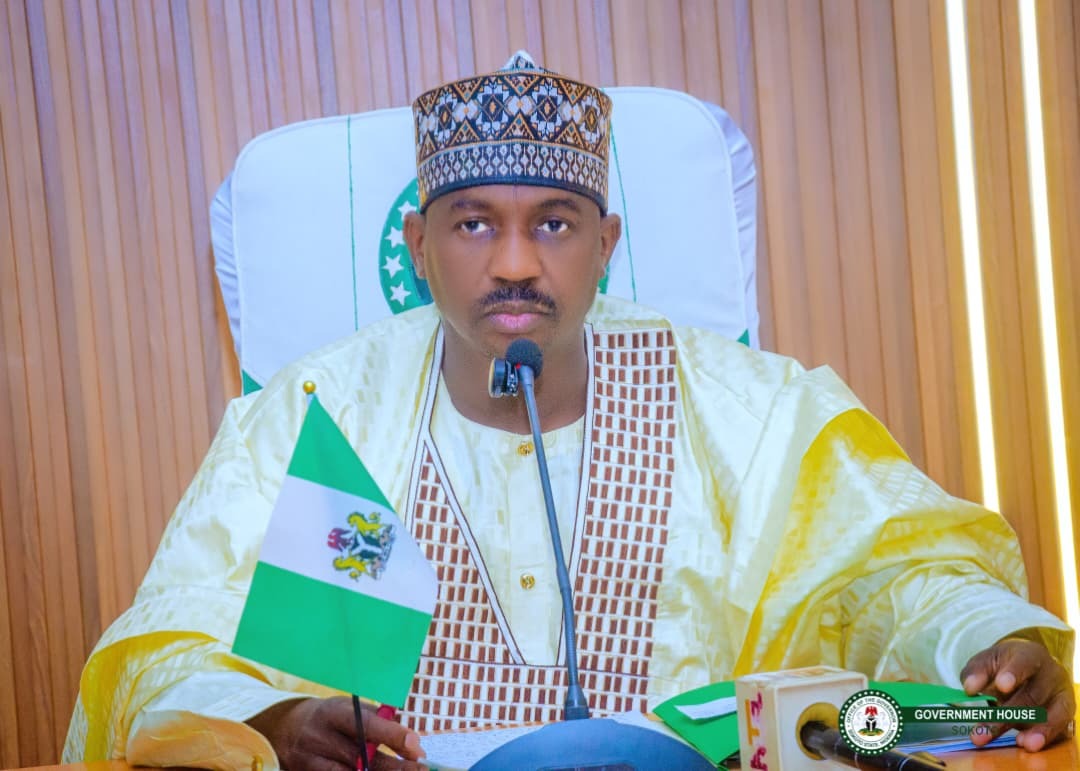
Governor Ahmad Aliyu Sokoto, who assumed office in 2023 under the APC banner, has already begun positioning himself for a second term bid. His administration has embarked on several infrastructural projects and welfare programmes, particularly targeting spiritual leaders, civil servants, and vulnerable groups across the state.
Political analysts observe that the governor’s stewardship, though not without criticism, has earned him considerable goodwill among sections of the Sokoto electorate. Sources within the state indicate that the payment of outstanding gratuities inherited from previous administrations, coupled with ongoing welfare interventions, has strengthened his political capital.
However, pundits caution that the governor must extend development beyond Government Reserved Areas (GRAs) to the ancient metropolitan city centre, where road infrastructure requires urgent attention. The concentration of politically active voters in these areas makes such considerations crucial for any candidate seeking re-election.
Zonal Dynamics and Historical Patterns
Since Nigeria’s return to democracy in 1999, Sokoto State has witnessed a rotational pattern in governorship succession. Attahiru Dalhatu Bafarawa (1999-2007) emerged from Sokoto-East, Aliyu Magatakarda Wamakko (2007-2015) from Sokoto-North, and Aminu Waziri Tambuwal (2015-2023) from Sokoto-South. The current governor, Ahmad Aliyu, hails from Sokoto-North, completing a full cycle.
While some political elites argue that zoning should not restrict the emergence of competent leadership, others contend that rotational arrangements promote inclusivity and prevent political marginalisation. The debate continues among stakeholders, with no consensus on whether the 2027 candidate must emerge from a particular senatorial district.
Opposition Forces Gather
The Peoples Democratic Party (PDP), which governed Sokoto for years before losing to the APC, is working to rebuild its structure ahead of 2027. Political heavyweights such as Senator Umaru Dahiru, Sa’idu Umar Ubandoma, and Yusuf Suleiman are being mentioned as possible contenders, though internal party wrangling at the national level may affect their chances.
The African Democratic Congress (ADC) is also positioning itself as an alternative platform, with some aggrieved politicians from both major parties reportedly considering a move to the emerging party. Meanwhile, Sheikh Bashir Ahmad Sani (Danfili) has publicly declared his intention to contest, adding religious and scholarly credentials to the mix.
Sheikh Ibrahim Liman Sifawa, who previously contested under the ADP, remains a notable figure whose potential candidacy could reshape calculations. Senator Abubakar Umar Gada, another 2023 contestant, may also re-enter the race depending on political realignments in the coming months.
The Wamakko Factor and APC Internal Dynamics
No discourse on Sokoto politics is complete without acknowledging the influence of Senator Aliyu Magatakarda Wamakko, whose political structure has endured for nearly two decades. His ability to mobilise grassroots support through consistent engagement with communities, attendance at social functions, and accessibility across social strata has become a template for political success in the state.
However, the APC is not without internal tensions. Skirmishes between the camp loyal to Senator Ibrahim Lamido and the dominant Wamakko-led faction occasionally surface, though recent developments suggest some figures are repositioning themselves within the larger ruling structure. The defection of Sani Yakubu from the House of Representatives back to the Wamakko fold illustrates the gravitational pull of incumbency and established political machinery.
Political analysts argue that Governor Ahmad Aliyu, widely regarded as Wamakko’s political mentee, benefits from this robust structure while also developing his own grassroots appeal through welfarist policies and religious patronage.
Voter Behaviour and Political Maturity
Observers note that Sokoto electorate has demonstrated increasing political sophistication over the years. Unlike states where money politics completely determines outcomes, Sakkwatawa (Sokoto people) have shown willingness to vote based on performance and personal qualities of candidates.
Historical precedents, particularly during the late 2000s and aspects of the 2023 elections, suggest that while financial inducements remain a challenge, many voters adopt the mindset of “collecting money but voting the right candidate.” This gradual evolution towards issue-based voting could benefit incumbents with verifiable achievements while challenging opposition candidates to present credible alternatives.
Cultural values of humility and regard, hallmarks of Wamakko’s political ideology, continue to resonate with Sokoto voters. Candidates who demonstrate consistent community engagement beyond election cycles tend to fare better than seasonal politicians who emerge only when political drums beat.
Security Challenges and Governance
The persistent insecurity affecting parts of eastern Sokoto remains a critical issue that will influence voter perceptions. Governor Ahmed Aliyu’s efforts to provide logistics and support for security agencies have been acknowledged, though citizens expect more decisive action to protect farming communities and restore normalcy to affected areas.
The Road Ahead
With approximately 18 months until the 2027 governorship poll, several variables will determine the outcome. These include:
· The incumbent’s performance and ability to address infrastructure gaps in metropolitan Sokoto
· Opposition parties’ capacity to forge credible coalitions and present appealing candidates
· Internal APC cohesion and management of succession expectations
· The influence of money politics versus genuine grassroots mobilisation
· Security improvements across the state
· Presidential election outcomes and their potential effect on voting patterns
Political analysts suggest that while incumbency provides significant advantages, complacency could prove costly. Governor Ahmad Aliyu must balance governance with political engagement, addressing citizens’ concerns while consolidating his support base.
For opposition contenders, the challenge lies in building structures capable of challenging the APC machinery while offering voters a compelling alternative vision for Sokoto’s development.
Conclusion
Sokoto State stands at a crossroads where performance, political structures, zonal considerations, and candidate acceptability will intersect to determine the 2027 governorship outcome. As political actors reposition across party lines, citizens watch with keen interest, hoping for elections devoid of rancour and characterised by issues rather than personalities.
The coming months will reveal whether Governor Ahmed Aliyu’s welfarist approach and infrastructural drive will secure him a second term, or whether opposition forces can unite behind a candidate capable of unseating an incumbent with significant institutional backing.
What remains certain is that Sokoto politics, shaped by its rich cultural heritage and evolving democratic consciousness, will once again demonstrate the resilience of its people in choosing leadership through the ballot box.
Muhammad Sajo writes from Sanyinna District, Tambuwal Local Government Area, Sokoto State. He can be reached at sajomuhammad@gmail.com