
By Comrade Salihu Dantata Mahmud
The national conversation surrounding the establishment of state police in Nigeria has reached a fever pitch, with President Bola Tinubu urging the National Assembly to expedite constitutional amendments to pave the way for its creation. But as someone who has followed this debate closely—and attended the House of Representatives dialogue at Abuja’s Sheraton Hotel where former Inspector-General Kayode Egbetokun offered a spirited defence of the existing structure—I must ask: are we genuinely solving a problem, or are we merely creating new ones?
If no one will speak truth to power, permit me to do so. Not everything is politics, and this particular proposal demands rigorous scrutiny before we rush headlong into a decision that could fundamentally alter Nigeria’s security architecture.
The Funding Question That Won’t Go Away
President Tinubu’s argument that state police will combat insecurity sounds plausible on the surface. But the devil, as always, resides in the details. Where precisely will governors obtain the enormous funds required to build training academies, procure arms and uniforms, and construct barracks and police stations from scratch?
Consider this: many state governors have demonstrated inability to effectively manage and fund their existing statutory responsibilities. State motor vehicle administration agencies, including Vehicle Inspection Offices that actually generate revenue, remain chronically underfunded and inefficient. State fire services across the federation operate with antique equipment and demoralised personnel. If governors cannot properly fund institutions that already exist and even generate income, what magical transformation will occur when they are handed responsibility for policing?
This is not Amotekun. State police cannot operate as a glorified neighbourhood watch. We are discussing formal security forces requiring patrol vehicles, sophisticated communication systems, regular salaries, and welfare packages attractive enough to insulate officers from corruption. The financial implications are staggering, yet curiously absent from the enthusiasm driving this debate.
A Federal Police Already Starved of Resources
Here is the uncomfortable truth: the Nigeria Police Force already possesses the institutional framework to address our security challenges. The NPF comprises larger, well-trained specialised squads including the Police Mobile Force, Marine Police, Border Police, Police Air Wing, Intelligence Response Squad, Special Tactical Squad, Special Intervention Squad, IGP Monitoring Squad, FCID, State SIBs, Counter Terrorism Unit, Special Protection Unit, and numerous others.
What these units lack is not constitutional authority—they possess that in abundance. What they lack is adequate funding, proper equipment, and the political will to deploy them effectively .
The Lagos State Commissioner of Police, Moshood Jimoh, recently fielded questions from residents about funding gaps and public trust during a televised town hall. Panellists pointed to structural weaknesses, arguing that “chronic underfunding of the Nigeria Police Force is a major contributor to insecurity.” Despite a N969 billion allocation in 2024, many divisional offices still operate with minimal funds, affecting logistics, mobility, and response time .
President Tinubu himself presided over a Police Council meeting in October 2025 that ratified an institutional framework for NPF reforms. The Minister of Police Affairs proposed increasing statutory deductions from the Federation Account from 0.5% to 1% to ensure stable funding for ongoing reforms . This suggests the executive branch recognises that funding—not structure—is the core challenge.
So why the sudden pivot to state police? It appears the President has succumbed to pressure from state governors rather than fixing what we already have.
The Political Manipulation Trap
My greatest fear—and it is a fear shared by numerous security experts—is that state police will become instruments of political oppression in the hands of governors .
Former FCT Police Commissioner Lawrence Alobi recently warned that the proposed creation of state police could undermine professionalism if politicians control the force. “State police has its pros and cons,” he acknowledged, “but the problem is when politicians are so concerned with power and money and how to grab power” .
We have already witnessed how political influence over police postings has weakened professionalism. Governors increasingly demand to decide who serves as Commissioner of Police in their states, a prerogative that properly belongs to the Inspector-General. This creeping politicisation, Alobi argues, “has already affected professionalism in the police force” .
Now imagine governors with direct control over police officers, recruitment, deployment, and funding. What safeguards will prevent state police from being deployed against political opponents, minority groups, or journalists who ask uncomfortable questions? Abuja-based police reform expert Dr. Salaudeen Hashim warns that Nigeria risks creating “ethnic police” rather than truly professional state police. In a heavily polarised nation, if governors control police forces without strong safeguards, there is genuine danger of marginalising minorities within states .
Retired Assistant Inspector-General Adisa Bolanta puts it even more starkly: state police would be “a recipe for disaster.” He argues that those championing the idea are largely motivated by personal interests rather than genuine security concerns .
What Stops Governors from Helping Now?
This question demands an answer: what prevents the same governors clamouring for state police from assisting the Nigeria Police Force with their substantial security votes?
Governors control security vote allocations running into hundreds of billions of naira annually across the states. Yet this expenditure is neither transparently audited nor clearly accounted for in law—it remains a carryover from military rule. If redirected into formal, accountable funding streams for the Nigeria Police, these resources could transform logistics, equipment procurement, welfare, housing, and operational readiness .
Some states already provide modest support. Niger State Governor Umaru Bago recently procured 25 additional vehicles for the Nigeria Police Command and is partnering to build barracks in Minna’s outskirts . But such gestures remain the exception rather than the rule. If governors genuinely prioritise security, they should demonstrate commitment by transparently funding the police force that already exists.
The Practical Realities We Ignore at Our Peril
From poor welfare to inadequate accommodation, godfatherism, favouritism, and a host of other challenges, the Nigeria Police lacks in so many areas. Presently, many officers do not have barrack accommodation and lack decent welfare packages. How will state police forces, starting from scratch, avoid replicating or even worsening these problems?
During the House of Representatives dialogue I attended, the immediate past police chief offered a strong defence for his opposition to state police. His concerns mirrored those of many security professionals: duplication of functions, jurisdictional conflicts, and the immense startup costs that financially struggling states cannot bear.
The UNDP, through its Supporting Police Accountability and Transformation Project, has invested in mobile clinics, barracks renovations, and training equipment for the NPF—acknowledging that strengthening the existing institution is the path to reform . International partners understand what our governors apparently do not: you fix what you have before creating something new.
A Timely Warning from a Fuji Legend
I watched the new Inspector-General constituting a committee on state police, and I must confess, I dey laugh. Not because the issue is humorous, but because we seem determined to complicate what should be straightforward.
The late Fuji creator Ayinde Barrister sang in his iconic album “The Truth”: “Oyinbo ilu wa pọ ju”—our English is too much in this land. Too much theory above practical. We analyse, debate, and theorise while practical solutions remain within reach.
Let us properly fund the Nigeria Police Force. Let us provide officers with decent accommodation, regular salaries, modern equipment, and the welfare packages they deserve. Let us remove political interference from police operations. Let us strengthen community policing partnerships rather than creating parallel structures.
These steps require no constitutional amendments, no new bureaucratic layers, no additional drains on state resources. They require political will and proper prioritisation.
Conclusion: Time Will Tell
Whether state police proponents succeed or fail, time shall tell. But as a security analyst who has served as Director of Security, Salute Nigeria Police, and former PA Media to the Interior Minister, I believe we are heading down a dangerous path.
The Nigeria Police Force, properly funded and insulated from political manipulation, can meet our internal security challenges. What we need is commitment to that goal, not distraction by fashionable proposals that ignore fundamental questions of funding, accountability, and political interference.
Haba jama’a, let us tell ourselves the truth: without addressing these foundational issues, state police will only create duplication, confusion, and potentially, disaster.
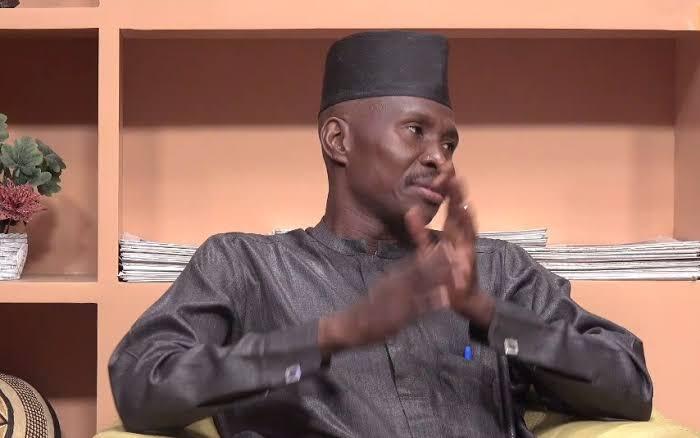
Comrade Salihu Dantata Mahmud is Director of Security, Salute Nigeria Police, a former Personal Assistant (Media) to the Interior Minister, and a Security Analyst.