
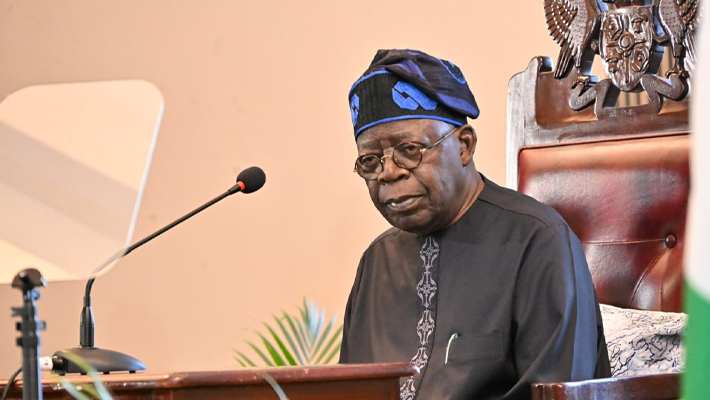
President Bola Tinubu has affirmed that Nigeria’s revenue base is on the rise, attributing this growth to ongoing reforms that are yielding significant outcomes.
In a statement released on September 4, 2025, by presidential spokesperson Bayo Onanuga, it was revealed that Nigeria is witnessing remarkable expansion in its non-oil revenue, supported by reforms aimed at enhancing fiscal stability, compliance, and digital tax administration.
During a meeting with a delegation from the Buhari Organisation, President Tinubu pointed out the substantial growth in non-oil revenues across all levels of government for the period from January to August 2025.
Total revenue collections reached ₦20.59 trillion, marking a 40.5% increase from ₦14.6 trillion during the same timeframe in 2024. The president noted that this performance aligns with expectations and is instrumental in achieving the government’s annual non-oil revenue objectives.
Furthermore, he highlighted that the federal government has refrained from borrowing from local banks since early 2025, a move reflecting enhanced fiscal discipline.
While non-oil tax revenues are on the rise, President Tinubu acknowledged that oil-based revenues continue to face challenges due to declining crude oil prices.
He emphasized that the increase in revenues has facilitated unprecedented allocations to states and local governments, thereby fostering grassroots development.
In July 2025, monthly FAAC allocations surpassed ₦2 trillion for the first time, providing crucial funding for investments in agriculture, infrastructure, and essential public services.
However, the presidency recognized that mere revenue growth is insufficient to achieve ambitious targets in education, healthcare, and infrastructure.
President Tinubu underscored that oil is no longer the primary driver of national revenue, marking a significant transformation in Nigeria’s fiscal landscape.
“Nigeria’s fiscal foundations are undergoing a transformation. For the first time in decades, oil is no longer the primary source of government revenue. The integration of reforms, compliance, and digitization is fostering a more resilient economy,” he stated.
He further revealed that the ₦20.59 trillion mobilized in eight months represents the highest revenue collection in recent history.
With ₦15.69 trillion in non-oil revenues, these now account for three-quarters of total revenue, indicating a decisive move away from oil dependency.
Although inflation and foreign foreign exchange revaluation played a role, the primary driver of this increase is attributed to reforms, including digitized filings, Customs automation, stricter enforcement, and broadened compliance.
In the first half of the year, ₦3.68 trillion was collected, which is ₦390 billion above target, already fulfilling 56% of the annual goal. This reflects systemic reforms rather than temporary gains, he noted.
President Tinubu also confirmed that FAAC allocations to states have risen, empowering local governments to spearhead development initiatives.
“For the first time, FAAC allocations reached ₦2 trillion in July, equipping states with the necessary resources to bolster grassroots development. The government confirms that collections are exceeding expectations, with final validation to be published by the Budget Office at the end of the year,” he added.
He reiterated the importance of expanding Nigeria’s revenue base and the tangible results produced by ongoing reforms.
“The priority remains translating these figures into real benefits for citizens—ensuring food security, creating jobs, and investing in infrastructure such as roads, schools, and hospitals,” he concluded.