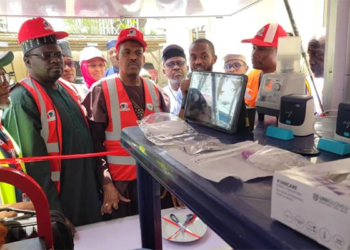


In a significant move to revolutionise Nigeria’s scientific landscape, the Federal Government is launching initiatives aimed at transforming research outcomes into commercially viable products and enterprises. This pivotal shift was the focal point of a strategic meeting held in Abuja, convened by the Federal Ministry of Innovation, Science and Technology. The gathering saw the convergence of state Commissioners for Science, Technology, and Innovation (STI), heads of agencies, and industry stakeholders, all united in their mission to develop a roadmap for the effective commercialisation of research findings.
### A Call for Transformation
Delivering a compelling keynote address, Dr. Kingsley Tochukwu Udeh, Minister of Innovation, Science, and Technology, underscored the urgent need for Nigeria to evolve from merely producing academic research to converting knowledge into tangible products, services, and businesses that can propel national development. He lamented the fact that despite substantial investments in research and development across universities, polytechnics, and research institutes, numerous innovations remain untapped.
“Too many valuable research outputs remain on laboratory shelves, in technical reports, or in academic journals without translating into products, services, or enterprises that can transform lives,” Dr. Udeh remarked. He highlighted that nations excelling in the global economy are those adept at commercialising scientific discoveries, asserting that “economic power today is defined not just by natural resources but by the ability to convert knowledge into value.”
Bridging the Gap
The minister announced the formation of a committee tasked with developing a National Policy on Commercialisation of Research and Development Results and Inventions. This policy aims to serve as a comprehensive blueprint for coordinating efforts between federal and state governments, ensuring that research outputs effectively transition into market-ready solutions.
Dr. Udeh emphasised the vital role of state governments in nurturing innovation ecosystems. He pointed out that industries, startups, and research institutions predominantly operate at the sub-national level, making it crucial for state-level initiatives to align with national objectives. “Innovation ecosystems are built not only at the federal level but within states where industries operate, SMEs grow, and local economies evolve,” he stated.
Innovative Funding Models
To facilitate this transformation, Dr. Udeh called for innovative funding models that support research commercialisation. He proposed exploring Public-Private Partnerships (PPPs), venture capital investments, state-level innovation funds, and industry-sponsored research programmes. “Public funding alone cannot drive this transformation. We must explore partnerships and create investor confidence through transparency, regulatory clarity, and protection of intellectual property,” he asserted.
A Strong Commitment
Earlier in the meeting, Mr. Philip Ndiomu Ebiogeh, Permanent Secretary of the ministry, echoed the urgent need to convert research knowledge into economic value. “Nigeria cannot afford to remain a nation where research findings gather dust on shelves. We must deliberately build systems that support patenting, prototyping, incubation, venture financing, and market access,” he urged. He underscored the strategic position of state commissioners in bridging the gap between laboratory discoveries and industrial applications, given their proximity to local innovation ecosystems.
Dr. Kazeem Kolawole Raji, Director-General of the National Board for Technology Incubation (NBTI), highlighted ongoing initiatives to foster young innovators. He introduced the NextGen Innovation Challenge, designed to encourage Nigerian youth to develop business-driven innovations. Dr. Raji revealed that the competition attracted approximately 3,000 innovative entries within three weeks last year, with over 1,000 applications already received for the 2026 edition.
“Our goal is to ensure that Nigerian youths become employers of labour. If each innovation creates jobs for 20 or 30 people, imagine the multiplier effect on employment and GDP,” he stated. Furthermore, the programme adopts a technology readiness level framework to assess innovations, effectively eliminating bureaucratic bottlenecks that often impede young innovators.
State-Level Engagement
Dr. Helen Adeniyi, Commissioner for Innovation, Science and Technology in Kogi State, lauded the federal government for convening the meeting and reaffirmed the state’s commitment to collaboration. “We have the human capability, the political will, and the natural resources to leverage innovation. Kogi State will continue to work with the federal ministry to support initiatives that promote research commercialisation,” she stated.
A Roadmap for the Future
The strategic meeting is anticipated to yield a national roadmap complete with timelines, responsibilities, and measurable targets aimed at fortifying Nigeria’s innovation ecosystem, boosting local manufacturing, and creating sustainable job opportunities. Dr. Udeh urged all stakeholders to ensure that the discussions culminate in concrete actions.
“Let us move from potential to performance, from ideas to industry, and from research to revenue,” he concluded, setting a vibrant tone for the future of Nigeria’s scientific research landscape.
Conclusion
As Nigeria embarks on this ambitious journey towards the commercialisation of scientific research, the collaborative efforts of government, industry, and academia will be paramount. By harnessing the nation’s intellectual resources and fostering an environment conducive to innovation, Nigeria has the potential to transition from a research-centric economy to a powerhouse of technological and commercial advancement. The time for action is now, and the stakes are high—ensuring that Nigeria not only participates in the global economy but thrives within it.