
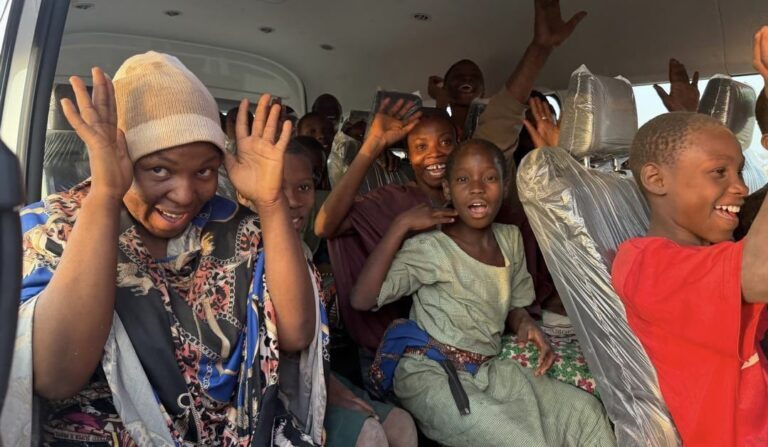
A damning new report from Save the Children International has laid bare the devastating impact of rampant insecurity on Nigeria’s schools, revealing that at least 1,683 learners were abducted and 184 killed between 2014 and 2022.
In a stark statement marking the 2026 International Day of Education, the non-governmental organisation detailed a national education system in profound crisis, crippled by banditry, terrorism, and chronic underinvestment. The figures underscore a terrifying reality for children attempting to learn in regions plagued by violence.
The report further notes the destruction of approximately 25 school buildings, transforming sanctuaries of learning into symbols of fear and displacement. This data, compiled by the NGO, paints a grim picture of a generation whose fundamental right to safe education is being systematically eroded.
Compounding this emergency, a recent UNICEF report indicates a staggering 10.5 million primary school-aged children in Nigeria—representing 25.6 per cent of this demographic—are not enrolled in school at all. Save the Children highlighted that within this alarming number, girls account for roughly 60 per cent of out-of-school children, facing disproportionate barriers due to insecurity, poverty, and societal norms.
“Without safe schools and an adequately funded education system, the potential of Nigeria’s young people, who make up over 60 per cent of the population, remains constrained,” the organisation’s statement declared.
A Call for Action on Safe Schools and Investment
Marking the global day of observance, Save the Children Nigeria is issuing an urgent call to the federal and state governments. The NGO demands significantly stronger public investment in education, the full implementation of the Safe Schools Declaration—an international commitment to protect education during conflict—and the establishment of robust, effective security measures to shield children and their learning environments.
The crisis extends beyond direct attacks. The education sector is described as being under severe strain from multiple fronts: pervasive “learning poverty” where children cannot read or understand basic text, critical teacher shortages, alarmingly low retention and completion rates, and a rapidly widening digital divide that excludes millions from modern skills.
“The above are challenges gripping Nigeria’s education system,” the statement read. “Young people are not just leaders of tomorrow. They are strategic drivers of change today.”
Youth as Co-Creators, Not Just Beneficiaries
Central to Save the Children’s message is a powerful appeal to recognise young Nigerians as active agents of solution. The organisation argues that youth must be embraced not merely as beneficiaries of aid, but as essential co-creators of education systems, policies, and innovations.
“We encourage young people to be active partners in shaping educational systems, policies, and innovations, rather than acting as passive recipients,” the NGO advised. “Their leadership is essential at a time when the education sector is strained.”
Duncan Harvey, Save the Children’s Country Director in Nigeria, emphasised the organisation’s commitment to this participatory approach. “We are committed to strengthening youth-led advocacy for Safe Schools implementation, promoting youth leadership in emergency education responses, and advancing skills development for adolescents affected by conflict and displacement,” Harvey stated.
The Broader Crisis: From Chibok to the Present
The 2014-2022 timeline referenced in the report is particularly poignant, as it begins with the year of the notorious mass abduction of more than 270 schoolgirls from Chibok in Borno State by Boko Haram insurgents. That event triggered global outrage and the #BringBackOurGirls campaign, but as the data shows, it heralded a horrific and sustained trend of targeting educational institutions.
In the years since, mass kidnappings for ransom from schools in states like Niger, Kaduna, Zamfara, and Katsina have become tragically frequent. These attacks have a dual devastating effect: they directly traumatise and endanger kidnapped pupils and their communities, while also instilling deep fear that leads to widespread school closures and plummeting enrolment, particularly for girls.
The destruction of school infrastructure further exacerbates the problem, creating long-term physical barriers to resuming education even when relative calm returns.
The Path Forward: Integration, Security, and Funding
Experts argue that addressing this multifaceted crisis requires an integrated, multi-agency strategy. The implementation of the Safe Schools Declaration must move from policy parchment to practical reality, involving the training and deployment of specialised security personnel to protect schools in high-risk zones, alongside community-based monitoring networks.
Furthermore, significant budgetary allocation for education is paramount. Nigeria’s funding for education has consistently fallen short of the UNESCO recommendation of 15-20 per cent of the national budget. Increased investment is critical to rebuild destroyed facilities, hire and train more teachers, provide psycho-social support for traumatised children, and develop alternative learning solutions, such as secure digital platforms, for areas where physical attendance remains too dangerous.
The call to harness youth leadership is seen as a vital component. Engaging students and young advocates in designing safety protocols, awareness campaigns, and community dialogue initiatives can foster resilience and create more locally relevant solutions.
As the world reflects on the importance of education for peace and development this International Day of Education, the situation in Nigeria stands as one of the most urgent tests. The figures—1,683 kidnapped, 184 killed—are not mere statistics but represent a profound national emergency that threatens the country’s social fabric and future stability. The collective potential of millions of young Nigerians hangs in the balance, contingent on decisive action to reclaim the classroom from the grip of violence.