
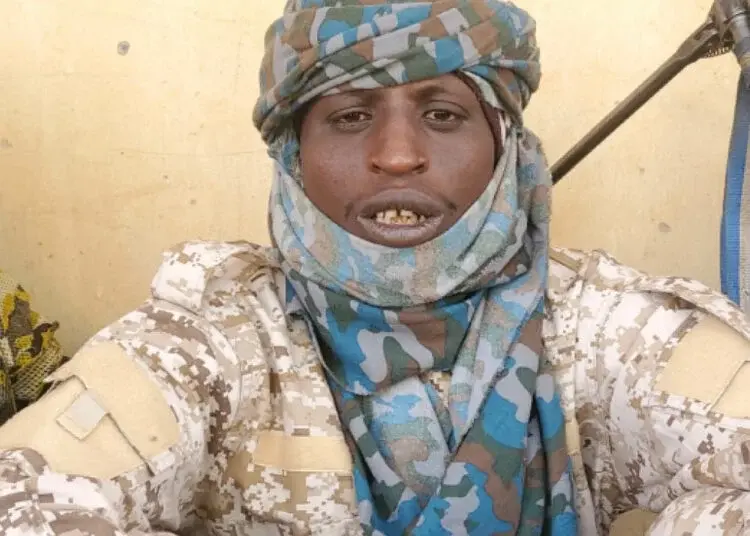
In a significant turn of events, notorious terrorist leader Bello Turji has surrendered his weapons and released 32 hostages, following a peace initiative facilitated by Islamic clerics in Zamfara State.
This development was announced by prominent Islamic scholar Musa Yusuf, commonly known as Asadus-Sunnah, during a religious gathering in Kaduna on Monday. Yusuf revealed that this breakthrough resulted from a series of discussions held in July between the clerics and Turji’s faction in the Fakai forest of Shinkafi local government area.
“We engaged with Mr. Turji, Dan Bakkolo, Black, Kanawa, and Malam Ila. Contrary to rumors, Dan Bakkolo is alive. These individuals have been terrorizing the region, but they have agreed to the peace proposals, including the surrender of some arms as a sign of their commitment to the peace process,” Yusuf stated.
He noted that local residents from Shinkafi had invited the clerics, seeking assistance in regaining access to their farmlands, which had been under the group’s control for an extended period.
The arms were surrendered in three phases, allowing local farmers to safely return to their lands bordering Turji’s territory. “In addition, he (Turji) released 32 kidnapped individuals as part of the peace agreement,” Yusuf said, sharing a video of the freed captives making their way out of Turji’s camp. Among those rescued were women and children, some of whom had endured nearly four months in captivity.
“Disturbingly, several women reportedly gave birth during their ordeal, and one suffered a snake bite,” Yusuf disclosed. He also highlighted that the region has experienced relative tranquility since the dialogue commenced, allowing farmers to cultivate their lands without fear of violence.
“We agreed that the Fulanis should be allowed to move freely without facing stereotypes or violence from vigilantes,” Yusuf stressed, underscoring the importance of peace and reconciliation among all communities involved.
While the dialogue is ongoing, the cleric clarified that Turji was not required to surrender all his weapons to avoid leaving him exposed to rival factions that might oppose the peace initiative. “The clerics continue to persuade Turji toward total peace. However, demanding the complete surrender of arms could make him vulnerable to attacks from groups resistant to the peace process,” he explained.
Yusuf also issued a warning to religious figures criticizing the dialogue on social media, cautioning that such remarks could escalate tensions and undermine the fragile progress achieved thus far. He acknowledged that while the initiative may not eradicate all terrorist activities in Zamfara State, communities in Turji’s area are already witnessing increased stability.
He commended federal and state efforts, praising President Bola Tinubu, National Security Adviser Nuhu Ribadu, Zamfara State Governor Dauda Lawal, and Senator Shehu Buba for their support of non-military approaches to addressing insecurity in the region.
“This is why we urge everyone to collaborate with us to foster peace and end the bloodshed in Zamfara. Guns and airstrikes will not deter us, as we are not afraid of death,” Turji was quoted as saying in a video clip from October, emphasizing that military action alone will not resolve the crisis. He also criticized the ongoing political strife between Governor Lawal and former Governor Bello Matawalle, now Minister of State for Defence, describing their rivalry as harmful to the community’s well-being.
“The blame game surrounding the deteriorating security situation between Governor Lawal and Bello Matawalle is purely political. Neither politician seems to prioritize the welfare of the people,” Turji remarked.