
By Ali Abare
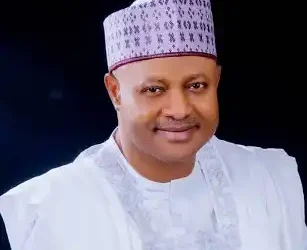
When Governor Abdullahi Sule appointed Ibrahim Sarki Adamu as Executive Chairman of the Nasarawa State Internal Revenue Service, NSIRS, in April 2026, few outside government circles knew much about him. There were even dissentions from some quarters but Governor Sule held his ground.
One hundred days later, marked on Wednesday, August 12, the tax administrator has put his name on the state’s revenue books, and the Board marked the milestone with a week of activities that brought staff, taxpayers and top government officials together in Lafia.
Adamu, a Fellow of the Association of National Accountants of Nigeria and a Fellow of the Chartered Institute of Taxation of Nigeria, spent years at the Federal Inland Revenue Service, rising to Commissioner of Stamp Duty and later Comptroller of the FIRS Keffi branch, before his appointment to head the state agency. He is also a certified member of the Chartered Institute of Debt Recovery.
In an interview in his office in Lafia, he reflected on his first hundred days with visible satisfaction, thanking Governor Sule for the opportunity. His appointment did not happen in a vacuum.
The push to overhaul tax administration in Nasarawa State predates him by years and forms part of a broader effort by the Sule administration to widen the state’s revenue base beyond federal allocation. Since coming into office in 2019, the Governor has leaned on NSIRS to introduce the Central Billing and Tax Administration System and the Harmonised Revenue Law of 2020, reforms designed to automate collection, cut out human interference in remittances and grant the Board greater operational autonomy.
Under that earlier phase of reform, the agency was placed on a mandate to raise monthly collections toward 3 billion Naira. Adamu’s task, in effect, has been to build on that foundation and push the numbers further.
The results, by his own account, have been swift. The state’s monthly Internally Generated Revenue, which hovered between 2.2 billion and 2.5 billion Naira before he took over, rose to 4.3 billion Naira in his first month, before settling at 3.9 billion in June and 3.8 billion in July. The Board is now targeting 5 billion Naira in monthly collections before the end of the year, a goal Adamu ties to closer supervision of staff and the plugging of revenue leakages.
To reach that figure, he introduced biometric attendance for workers, fixed resumption at 8.30am and closing at 5pm, and instituted weekly Monday reviews where directors account for their departments and their challenges. He said Governor Sule had backed the reforms with logistics, including three new Hilux vehicles recently handed to the Board for operations across the state.
On the tax reforms that took effect in January, which exempt low income earners from Pay As You Earn deductions, Adamu said the Board was shifting more attention to property tax to cushion the expected drop in PAYE receipts, engaging two consultants to train staff on property tax and withholding tax on rented property as deliberate preparation for any shortfall.
The informal sector received particular attention. Adamu said the sector had underperformed for years, with officials collecting revenue and diverting it rather than remitting it to government coffers. The Board inherited a consultant already working in the sector and chose to strengthen that arrangement, now overseeing more than 80 consultants across the state.
To curb diversion, the Board has begun demarcating specific offices and areas of collection to each consultant, so that responsibility for any given area can be traced to a named individual. He identified the core obstacle to fixing the sector as legal rather than administrative, an unresolved clash between the state and local government councils over who has the right to collect tax.
His remedy, he said, was coordination rather than confrontation: a full stakeholder engagement bringing together NSIRS management, its consultants, local government revenue officers and council chairmen, with the Governor’s direct involvement, to allow the harmonised law to take full effect.
He disclosed plans to send audit teams to every local government in the state by September, warning that councils would either remit taxes properly or have the equivalent deducted from their allocations.
He linked part of the wider leakage problem to poor compliance with the Central Billing System, the digital platform introduced years earlier to route government payments through a single channel, noting that many ministries, departments and agencies were still paying manually rather than keying into the system. Defaulting agencies have been invited for meetings, with officials from the Federal Inland Revenue Service billed to hold a sensitisation session for them.
Beyond the numbers, Adamu said his broader ambition was institutional, to make Nasarawa State a one-stop shop for revenue collection in Nigeria, with sustained training for directors and staff to ensure the reforms outlast his tenure. He also pointed to the state’s proximity to the Federal Capital Territory as an untapped advantage, with plans to expand the network of offices collecting property tax from residents who work in Abuja but live and own property in Nasarawa.
He closed with an appeal to residents to embrace voluntary tax compliance, listing land rent, stamp duty, withholding tax on contracts, development levy and director fees among obligations residents should not evade.
The first 100 days in office was marked by a series of milestones. On the anniversary itself, NSIRS held a high-level Taxpayers Engagement and Sensitisation Programme at the 1st De Crown Luxury Hotel in Lafia, attended by the Head of Service, Barr. Abigail Waya; representatives of the Secretary to the State Government; the Accountant General, Dr. Musa Ahmed Muhammed; the Rector of Isa Mustapha Agwai Polytechnic, Associate Professor Nurudeen Mua’zu Maifata; Permanent Secretaries and other senior officials, alongside taxpayers, business leaders, bankers and MDAs.
At the event, Adamu unveiled the Board’s roadmap and operational framework towards a N100 billion revenue target, built around improved taxpayer registration and compliance, technology-driven administration and the elimination of leakages. “Nasarawa State has the legal framework, the natural resources, and the human talent. What remains is the discipline of execution,” he told participants, who also sat through technical presentations on cashless revenue collection and an interactive session with NSIRS directors.
Days earlier, the Chairman commended NSIRS staff for their role in the revenue growth recorded so far, urging them to sustain the momentum, remain professional and expect continued attention to their welfare. The commendation came during a paper presentation session on the use of artificial intelligence in office administration and on work ethics and emotional intelligence, presented by a software developer and the Secretary to the Board respectively.
NSIRS also formally handed over motorcycles to selected Zonal and Area Tax Offices to strengthen field operations, with Adamu urging beneficiaries to deploy them strictly for official duties, expand the tax base and improve taxpayer compliance. The ceremony, held at the Service’s Lafia headquarters, was witnessed by the former Commissioner for Lands and Survey, the Executive Chairman of Akwanga Local Government, and the Chairman of the Association of Local Governments of Nigeria in Nasarawa State.
His hundred days also coincided with outreach beyond the state. Adamu led a delegation to the Central Bank of Nigeria headquarters in Abuja to press for proper remittance of PAYE deductions belonging to CBN staff who work in the Federal Capital Territory but reside in Nasarawa, arguing that under the Personal Income Tax Act, workers are taxable where they reside.
The Board also earned a partnership award from the Federal Road Safety Corps for joint work on compliance and safety in the state, while Adamu himself holds the Integrity Icon of Nigeria award and the Corporate Ethics and Integrity Compliance Award from CESVO, both credited to his emphasis on transparency in revenue administration.
With Governor Sule’s tenure winding down in May 2027, Adamu said his focus over the coming months would be on locking in structural changes, from digital payment enforcement to property tax expansion, that can outlast the current administration.
Taken together with the reforms of previous years, the picture that emerges is one of an administration that has treated internally generated revenue not as a one-off drive but as a continuous project, passed from one reform-minded chairman to another.
Whether the Board hits its 5 billion Naira monthly target by December will offer the clearest measure yet of how far that project, and Adamu’s first hundred days in particular, have carried the agency.
Abare is the SSA on Media to Governor Abdullahi Sule.