

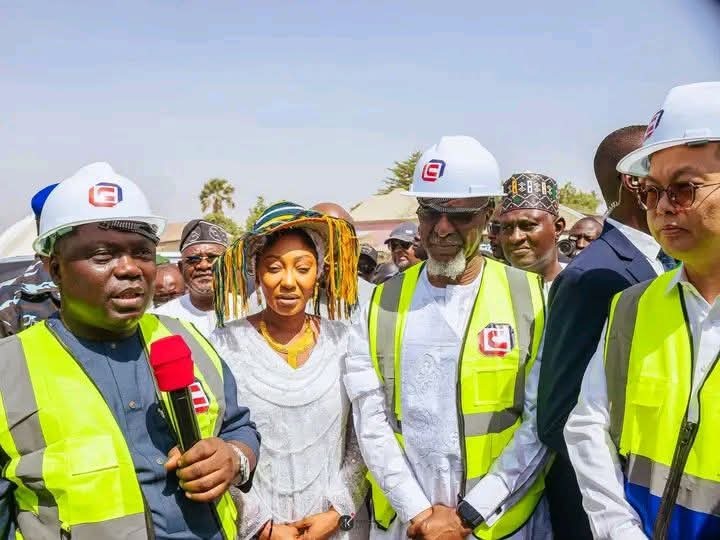
By Solomon Attah, Jalingo
The Federal Government has urged state governors to establish enduring institutional frameworks aimed at sustaining World Bank-supported projects beyond their initial implementation phases. This call to action was made by the Minister of Environment, Alhaji Balarabe Abbas Lawal, during the launch of Climate-Smart Initiatives, Clean Energy and Waste Management programmes in Jalingo, the capital of Taraba State. Alongside this, agricultural equipment was distributed under the Agro-Climatic Resilience in Semi-Arid Landscapes (ACReSAL) project.
Minister Lawal emphasised the critical importance of robust sustainability frameworks to preserve the outcomes of these interventions once donor funding concludes. He pointed out that the ACReSAL project is projected to wind down by 2028, underscoring the urgency for states to act swiftly and effectively to ensure the longevity of its benefits.
“ACReSAL is a project that will one day come to an end. I have been urging state governments and programme managers to create structures that will sustain its impact,” Lawal remarked. His statements resonated with the reality that numerous World Bank-funded initiatives in Nigeria have faltered post-funding, with many projects becoming inactive once financial support ceased.
The minister cited several instances where World Bank interventions, such as Agricultural Development Programmes (ADPs), have deteriorated into abandoned efforts following the withdrawal of funds. “In Nigeria, we have witnessed several World Bank interventions, including ADPs, which turned into carcasses after funding ended. In some states, projects became like ghost facilities once the World Bank departed,” he lamented.
Lawal acknowledged the World Bank’s continued commitment to supporting Nigeria through ACReSAL, revealing that a sum of N700 million has been allocated for the initiative, with plans to secure an additional N500 million to enhance ongoing activities. The ACReSAL project is aimed at addressing land degradation, improving water resource management, increasing vegetable production, and promoting afforestation in participating states.
In his address, Governor Agbu Kefas of Taraba State expressed his agreement with the minister’s vision, stating that he plans to upgrade the ACReSAL project into a full-fledged institutional framework as part of his administration’s commitment to sustainability. The initiative will now operate as the Taraba State Agro-Climatic and Watershed Management Agency, ensuring that environmental protection, watershed restoration, climate resilience, and sustainable agricultural support become permanent responsibilities of the government rather than merely temporary projects.
Governor Kefas described the launch as a significant milestone for the state, noting that the cheque presentation during the ceremony symbolised more than just financial support; it represented a commitment to fairness, responsibility, and people-centred development. The Governor’s proactive stance demonstrates a recognition of the necessity for lasting institutional mechanisms to uphold the benefits of World Bank initiatives.
Aishat Barade, the Commissioner for Environment and Climate Change, reinforced the importance of strategic leadership and planning. She stated that the successful rollout of ACReSAL’s climate-smart and clean energy initiatives exemplifies what can be achieved through deliberate planning and a clear development agenda led by the state government.
Barade highlighted the need for a collective approach to climate change, urging all stakeholders to collaborate in building resilient systems that can adapt to environmental challenges. She reiterated the significance of the event, stating that it showcased the potential of well-orchestrated public policy and community engagement.
The overarching message from the Federal Government and state officials is clear: without the establishment of sustainable institutional frameworks, the gains made through World Bank projects risk being lost once funding concludes. The call for governors to take proactive steps in institutionalising these initiatives is not just a plea; it is a necessary strategy for ensuring the long-term success of developmental projects in Nigeria.
As the ACReSAL project moves forward, it sets a critical precedent for future initiatives. The establishment of dedicated agencies and institutional mechanisms can serve as a model for other states, highlighting the need for commitment beyond mere project completion. This approach will not only enhance accountability but also ensure that the benefits of international support are felt long after the financial backing has ended.
In conclusion, the Federal Government’s call for state governors to institutionalise World Bank projects is a vital step towards achieving sustainable development in Nigeria. By creating enduring frameworks that prioritise environmental protection and sustainable practices, the country can foster a resilient future that benefits all citizens. The actions taken today will determine the legacy of these projects and the overall well-being of future generations.