
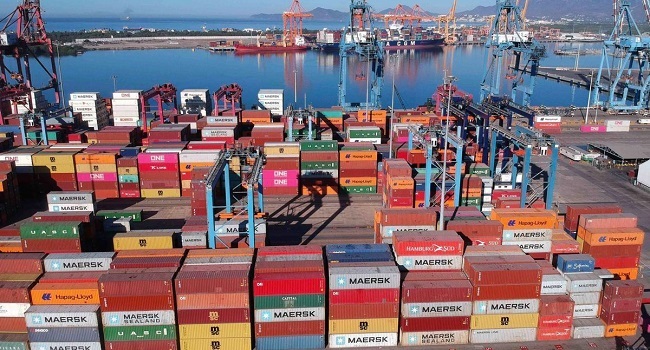
The Federal Government has intensified its efforts to establish the National Single Window at Nigeria’s ports by 2026.
Vice President Kashim Shettima stated that the initiative aims to streamline port documentation, reduce human interaction, and enhance transparency in cargo clearance processes. He described the plan as a “game changer” for port operations.
Speaking at the second meeting of the Ports and Customs Efficiency Committee held at the Presidential Villa, Shettima indicated that the policy aims to significantly reduce cargo clearance times.
“By the end of 2026, we aim to bring down the average cargo clearance time in Nigeria to under seven days,” he said.
He noted that the objective is to position Nigerian ports among the top three most efficient trade gateways in Africa.
Shettima asserted that the implementation of the National Single Window in the first quarter of 2026 would revolutionise port operations across the nation.
He lamented that the cost of clearing goods in Nigeria is 30 per cent higher than in many regional counterparts, pointing out that such inefficiencies deter investment, inflate consumer prices, and diminish export competitiveness.
“Our ports experience cargo dwell times that are 475 per cent above the global average benchmark. We cannot afford to continue on this trajectory,” he remarked.
The Vice President instructed the Nigerian Ports Authority (NPA), Nigerian Customs Service (NCS), NAFDAC, SON, and other relevant agencies to develop a roadmap for an effective weights and measures framework.
He explained that this framework would ensure fairness in trade by verifying weighing equipment and protecting consumers from fraud.
According to him, accurate measurement is essential for efficiency and adherence to global trade standards.
### Enhancing Efficiency
Shettima expressed optimism that the forthcoming Executive Order on Joint Physical Inspection, awaiting President Bola Tinubu’s approval, would address long-standing bottlenecks.
“It heralds a new era where agencies collaborate and systems communicate effectively,” he stated.
He emphasised that the new order would ensure predictability, transparency, and speed in port operations.
The Vice President urged cooperation among agencies, declaring that the time for isolated operations is over.
“No reform succeeds without ownership,” he affirmed.
He called on all port-related agencies, including NPA, Customs, NAFDAC, NDLEA, SON, Immigration, and Quarantine Service, to function as a unified value chain.
“Inter-agency rivalry must yield to collaboration,” he asserted. “Our efficiency hinges on our ability to work together.”
Zahrah Audu, the Director-General of the Presidential Enabling Business Environment Council (PEBEC), highlighted the impact of inadequate port operations on the Ease of Doing Business.
She urged stakeholders to enhance efficiency, stressing that the committee’s efforts reflect a collective commitment to making Nigeria’s ports globally competitive.
Mr Abubakar Dantsoho, the Managing Director of the Nigerian Ports Authority, emphasised that achieving efficiency is impossible without collaboration.
“Without cooperation and partnership, efficiency at the ports cannot be realised,” he stated.
He noted that the Customs and Ports Efficiency Committee has made progress through joint inspections and boarding by relevant agencies.
Dantsoho identified technology adoption, infrastructure upgrades, and human capacity development as priorities for enhancing port competitiveness.
He added that these initiatives would ensure Nigeria remains relevant in both regional and global trade.