
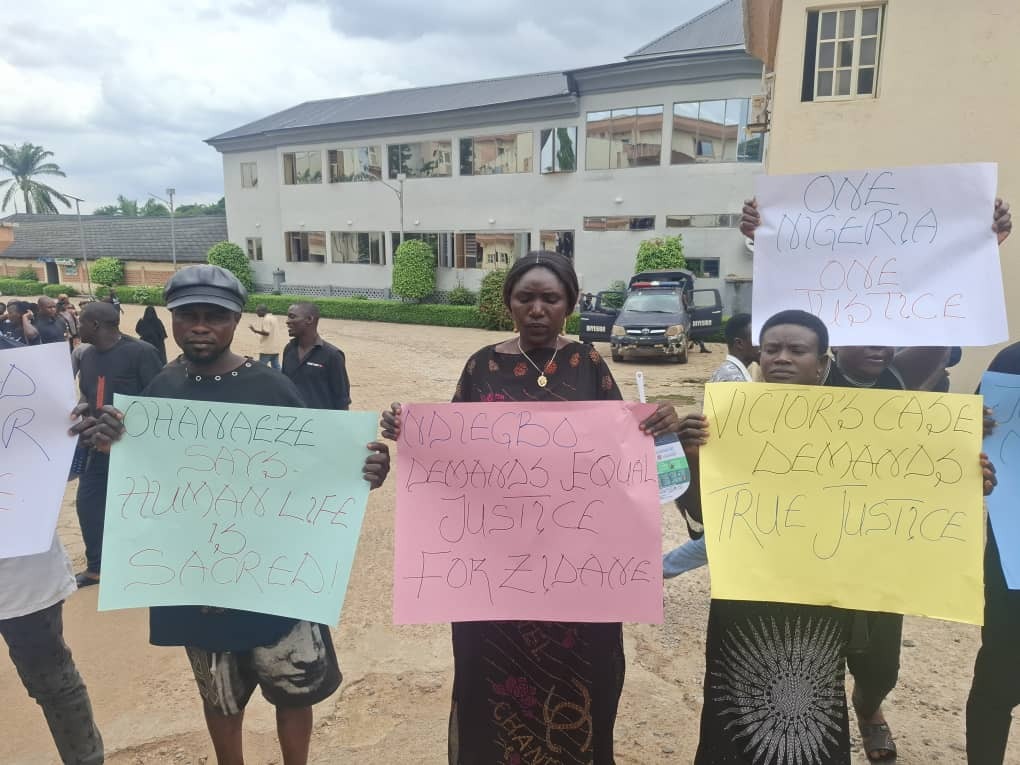
Kafanchan, Kaduna State – A coalition of youth groups from Nigeria’s Middle Belt, Ohanaeze Ndigbo, Afenifere, and PANDEF has called for an independent review of the death sentence handed to Mr Victor Solomon, known as “Zidane”, describing the case as a pivotal test of justice and human rights in the country.
The demand came during an international press conference on Thursday in Kafanchan, themed: “A Life Hangs in the Balance: The Case of Victor Solomon and the Imperative of Justice in Southern Kaduna.”
Speaking on behalf of the coalition, Comrade Samuel Wuya, Kaduna State Chairman of the Middle Belt Youth Forum, stressed that the groups were acting not as political or ethnic partisans but as “citizens of conscience” concerned with fairness, due process, and the sanctity of life.
Mr Solomon, a member of the Adara community in Southern Kaduna, was sentenced to death by hanging by a Kaduna State High Court on 6th January 2026, following charges linked to violent communal clashes in Kajuru Local Government Area.
The coalition noted that Mr Solomon had been discharged and acquitted in a separate case of criminal conspiracy and attempted culpable homicide on 21st May 2024. However, he was later convicted in another case involving conspiracy, grievous harm, and culpable homicide.
Although the Kaduna State Government—through the Attorney-General and Commissioner for Justice, Mr James Kanyip—has maintained that the two cases are distinct and that due process was observed, the coalition argued that lingering concerns remain over the broader context of the trial and the protracted communal crisis in Southern Kaduna.
The region, they said, has endured years of deadly violence, displacement, and unresolved attacks on indigenous communities. Any death sentence emerging from such a conflict, they warned, demanded the highest standards of scrutiny and transparency.
The coalition called on Governor Uba Sani to exercise his constitutional powers to grant a stay of execution pending an independent review. They also urged the judiciary to ensure fairness in the appellate process and to facilitate an independent assessment of the trial proceedings.
Further appeals were made to the Federal Government and the National Human Rights Commission to monitor the case closely, while the United Nations, African Commission on Human and Peoples’ Rights, and other international bodies were asked to intervene.
The groups stressed that the case had transcended an individual trial, becoming a symbol of the wider struggle for justice, accountability, and peaceful coexistence in conflict-affected communities across Nigeria.
Following the press conference, the coalition staged a solidarity march through the streets of Kafanchan.