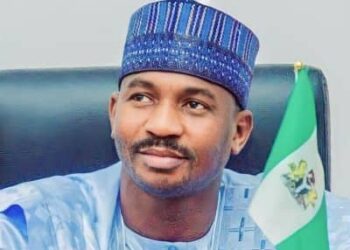
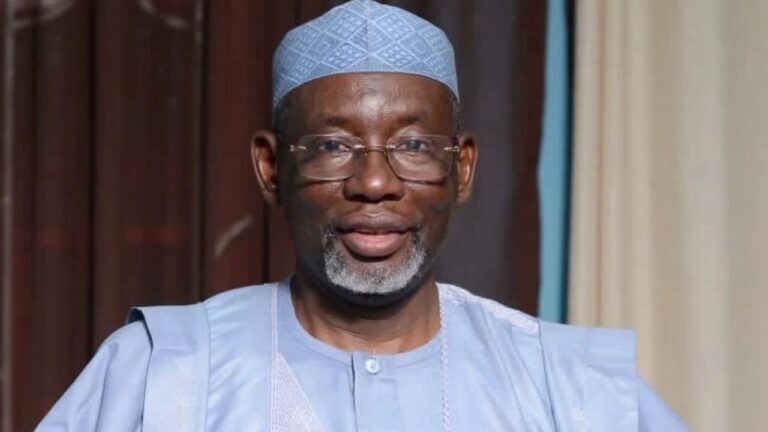
Mas’ud Naruwa, chairman of the Jigawa House of Assembly’s nutrition committee, has announced a significant initiative to commit at least 1% of the state’s annual budget to nutrition beginning in 2026.
This declaration was made during a press briefing on Thursday in Kaduna, on the second day of a high-level stakeholders’ meeting focused on fostering cross-sector collaboration to combat malnutrition. The event was organized by the Jigawa government with support from UNICEF.
Naruwa noted that during a UNICEF seminar in Lagos, members of the assembly pledged to work towards this budget allocation. “Currently, Jigawa is on track to meet this target, with N4.7 billion allocated across various ministries and agencies for nutrition in 2025,” he stated. “By 2026, we aim to formalize the 1% allocation.”
He emphasized that achieving this goal would be transformative in the battle against malnutrition and could set a precedent for other states. “This commitment represents a promise to future generations. Nutrition is not merely a health issue; it is a vital economic driver. Healthy children become productive citizens who can advance our state.”
Naruwa also revealed that each member of the House of Assembly has contributed N10 million towards nutrition initiatives in their constituencies, totaling N300 million for 2025, viewing this as just the beginning.
Sibu Abdullahi, chairman of the state chapter of the Association of Local Governments of Nigeria (ALGON), highlighted local governments’ readiness to support state efforts through community-driven programs. “Some of our leaders may not have experienced proper nutrition in childhood, and we see the consequences in their performance. We cannot afford to let this happen again, which is why we are prioritizing investments in our children now,” he remarked.
Abdullahi commended Governor Umar Namadi for prioritizing health and placing nutrition at the forefront of state initiatives. “Initially, each local government contributed N250,000 monthly to the Masaki program, aimed at improving nutrition. This contribution has now increased to N500,000 monthly, dedicated solely to nutrition. Starting in 2026, every local government will allocate 1% of its budget to this cause. This marks a revolutionary step that will benefit every ward, family, and child in Jigawa State,” he stated.
Earlier, Karanveer Singh, nutrition manager for UNICEF at the Kano Field Office, underscored the urgent need for collective action due to alarming rates of child malnutrition in Northern Nigeria. “Many children in Jigawa, Katsina, and Kano are chronically malnourished. Stunting affects not only a child’s physical growth but also their cognitive development, leading to irreversible consequences,” he explained.
Singh reiterated the economic implications of neglecting malnutrition, asserting, “Every stunted child represents a lost opportunity for both the state and the nation. Conversely, every well-nourished child is an investment in Nigeria’s future. That’s why early prevention is crucial, especially in the formative years. UNICEF proudly supports Jigawa in this ambitious initiative.”
(NAN)