
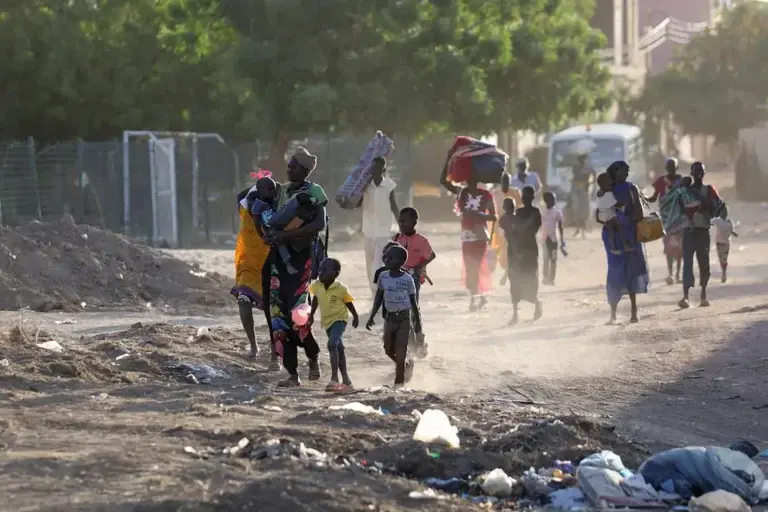
The World Health Organisation (WHO) has cautioned that Sudan’s cholera outbreak is likely to deteriorate further, as intensifying conflict, mass displacement and the impending rainy season converge to deepen the country’s humanitarian catastrophe.
Since the outbreak was declared on 27 June, at least 114 fatalities and more than 1,300 infections have been recorded across multiple states. The worst-affected regions – Darfur and Kordofan – remain largely inaccessible to aid and healthcare workers, severely hampering response efforts.
Speaking from Libya via video link, WHO representative Dr Shible Sahbani described the situation as alarming, citing a case fatality rate of 13.7 per cent. “Cholera is back,” he told journalists in Geneva. “The rainy season is expected to worsen the situation.”
Sudan currently faces the world’s largest humanitarian emergency, with over 33 million people in need of assistance and 21 million requiring health services, according to the WHO.
Mr Sahbani expressed particular concern for al-Obeid, the besieged capital of North Kordofan, where health facilities are overwhelmed and access is severely restricted amid fierce clashes between the Sudanese army and the paramilitary Rapid Support Forces (RSF). He warned that the city risks becoming a “second al-Fashir” – or worse – following the RSF’s capture of al-Fashir in North Darfur last year after a protracted siege.
Cholera, a severe and potentially fatal diarrhoeal disease, spreads rapidly when sewage and drinking water supplies are inadequately treated – conditions exacerbated by the seasonal downpours now beginning across the region.