By: Ibrahim Kaula Mohammed
There is an old saying that your reputation arrives before you do. In March 2026, Katsina State did not need to introduce itself. Its reputation had already done the talking.
For the cultural activities lined up for 2026 Eid-el-Fitri celebration in Katsina, seventeen foreign diplomats touched down at the Umaru Musa Yar’adua International Airport. Arguably, it was not their first time hearing about Katsina. For some, it was not even their first time coming to see it for themselves. They arrived from Belgium, Egypt, the Netherlands, Spain, Poland, Switzerland, Slovakia, Belgium, Argentina, Congo and Italy.
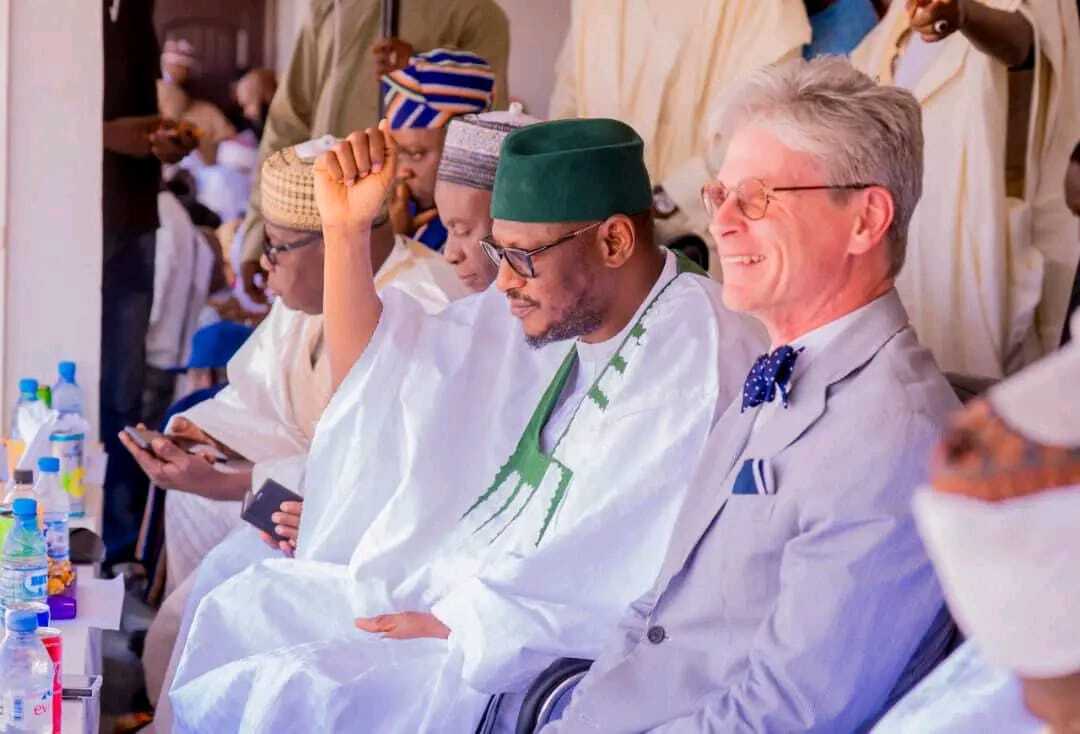
Other top leaders are UN International Commission for Peace and Good Governance to Ghana, and the American based Investor doubled as the CEO/Founder, NewGlobe Inc., Mr. Kay Kimmelman. The United Nations Resident Coordinator in Nigeria, Mr. Mohammed Malick Fall, was also in the mix. These are not men and women who travel on sentiment. They move on intelligence, reputation, and confidence.
And what difference does Katsina make this year? Last year, ten diplomats made the trip to Katsina’s Eid-el-Fitri cultural fiestas . This year, seventeen showed up. That is not a coincidence. That is a verdict.
Katsina is so blessed with Dikko Radda—governor who does not send others what he can do himself. He did not delegate reception to receive the August visitors that marched-in in March. He showed up himself at the airport, alongside his Deputy, Hon. Faruk Lawal Jobe, and personally led the delegation to the palace of the Emir of Katsina, His Royal Highness Alhaji Abdulmumini Kabir Usman. In the world of diplomacy, that kind of gesture speaks a language. It implies, ‘a leeader who walks with his guests is a leader who values what they represent.’ Radda did not just open the door — he walked them through it, and what he chose to show them was no accident.
The Katsina Durbar is not entertainment. It is identity in motion. Horse riders from 28 districts paraded in full regalia, carrying centuries of history on their backs. The beats of the kalangu and algaita drums echoed across Kofar Soro as royal contingents moved with a grace that no rehearsal could manufacture. This is tradition that has survived empires, colonial rule, and the noise of modernity — and it still stands.
When Governor Radda stood before those seventeen envoys at the Hawan Sarki and told them that their presence reflected growing global confidence in Katsina State, he was not flattering his guests. He was stating a fact. And the Emir of Katsina, His Royal Highness Alhaji Abdulmumini Kabir Usman, sharpened that point when he said that peace and development depend on cooperation, mutual respect, and collective responsibility. That was not ceremony. That was the blueprint of a society that has chosen to move forward.
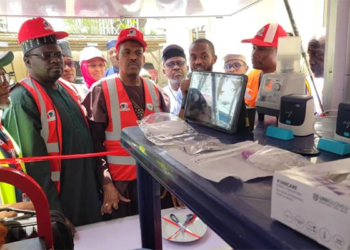
Beyond the spectacle of culture and diplomacy, the delegation was taken to places where governance speaks in practical terms. At the Katsina Agricultural Mechanization Centre, the envoys witnessed firsthand the scale of investment in modern farming, from tractor deployment to mechanized support systems designed to boost productivity across the state.
They also visited the state-of-the-art Dialysis Centre, where the government’s commitment to saving lives and strengthening healthcare delivery was on full display.
The reaction was immediate and telling. The diplomats were visibly impressed by what they saw, not as a showpiece, but as working systems with real impact on ordinary people.
They commended Governor Radda for his innovative drive, noting that such forward-thinking investments in agriculture and healthcare are the kind that translate vision into measurable progress.
The diplomats then moved to Daura for the Hawan Magajiya, where royal horsemen paid homage to the Emir of Daura in a procession that left the visitors visibly moved. A Cultural Night featuring dambe wrestling, kokowa, algaita, and kakaki performances added another layer to the rich experience. By the time the week was over, Katsina had not just hosted a festival — it had hosted a masterclass in cultural diplomacy.
A Quick Stop at Katsina Smart Schools
One of the quietest but most powerful moments of the entire visit came at Dumurkul Smart Secondary School in Dora. The school was not yet commissioned. Paint was still drying in some corners. But what the diplomats saw was enough to make the Netherlands Ambassador, Amb. Bengt van Loosdrecht, stop and speak. He commended the Katsina State Government openly for its investment in quality education and modern learning infrastructure.
Diplomats from nations where education is treated as seriously as national security do not distribute praise like handshakes at a wedding. When one pauses at your unfinished school and calls it impressive, something genuine is going on. You could recall Governor Radda’s vision for these schools is clear. It exists for children from rural and disadvantaged backgrounds, completely free of charge, equipped with 24-hour electricity, ICT classrooms, hostels, and internet access. Three such schools now stand across Katsina’s three political zones.
This is the kind of investment that does not show results in the next budget cycle. It shows results in the next generation. And that is precisely the point.
Now to A Well That Has Outlived Empires
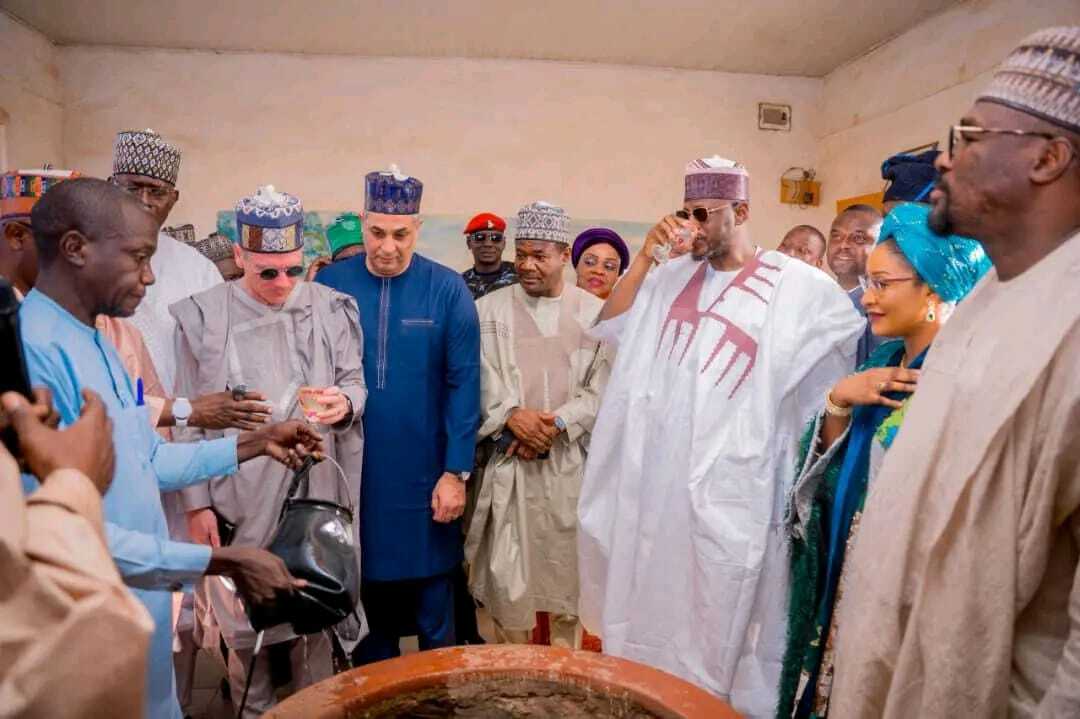
From the classroom, the delegation walked into history at the ancient Kusugu Well in Daura — approximately 2,005 years old, standing quietly like an elder who has seen everything and forgotten nothing. Governor Radda understands that history is not a relic to be locked in a museum. It is a living asset, and a state that knows where it came from walks with far more confidence towards where it is going.
The Egyptian Ambassador, Amb. Mohamed Fouad — a representative of one of the oldest civilisations on earth, a nation that has guarded the Pyramids for thousands of years — paused at that well and nodded in respect. When Egypt looks at your heritage and approves, you have passed a test that no committee can set.
Now to what made everything else possible — security. None of the Durbar, none of the diplomacy, none of the school and heritage visits happened by luck. Seventeen diplomats moved freely from airport to palace, from school to ancient well, from Katsina to Daura, without a single incident. In a region that the national headlines have not always been kind to, that is not a footnote. That is the headline.
Let no one misread the situation — the fight against non-state actors in Katsina is ongoing. Bandits and criminal elements still exist, and the government is not pretending otherwise. But the establishment of the Katsina Community Watch Corps, the deepening of community-based intelligence networks, and the deployment of both military and non-military approaches to conflict have begun to turn the tide. Security is being treated not as a purely military problem, but as a social contract — one where every community is a stakeholder and every citizen is a frontline.
The fact that the world came, saw, moved around freely, and left with smiles is the clearest evidence yet that Katsina is not the state some distant commentators have painted it to be. The road is not fully clear, but the direction is unmistakable.
Distinguished readers, beyond the colour and culture, Governor Radda placed a ledger of delivery before his international guests. A 2026 budget built entirely on community needs assessments. Each of the 361 communities received over ₦10 million to address locally identified priorities. Forty thousand metric tonnes of fertiliser distributed annually at subsidised rates. Over 400 tractors deployed across all 34 local government areas. More than 85 secondary schools completed, over 7,000 teachers recruited. A world-class dialysis centre commissioned, an imaging facility nearing completion, and over 250 primary healthcare centres upgraded. And perhaps most strikingly — over ₦45 billion in inherited pension liabilities cleared.
Serious investors and diplomatic partners do not respond to rhetoric. They respond to receipts. Katsina presented its receipts, and the world responded by sending more people to look.
What do the Diplomats Left With?
They came for the Durbar. They left with pledges covering bilateral education, agricultural transformation, food security, small and medium enterprise development, women empowerment, and technology. The Executive Secretary of the Katsina State Development Management Board, Mallam Mustapha Shehu, coordinated the strategic engagement sessions, and the conversations were not ceremonial. They were the kind of deliberate, structured discussions that produce actionable partnerships.
As the popular saying goes, you do not get a second chance to make a first impression. Katsina did not need one. The impression it made in those few days in March 2026 was first, lasting, and impossible to ignore.
From ten diplomats last year to seventeen this year — that single statistic captures the arc of Katsina’s rising profile under Governor Radda better than any speech could. The world does not increase its investment of attention in a place that is going backwards. It doubles down on places that are moving forward.
Katsina is moving forward. The fight for complete security continues, the work of development is unfinished, and the governor himself would be the first to say so. But what the 2026 Eid-el-Fitri fiestas demonstrated, in full colour and before the eyes of the world, is that Katsina State is open — open for culture, open for investment, open for partnership, and open for the future.
Governor Radda seems to understand something that many leaders miss: that culture is currency, infrastructure is credibility, and security is the only genuine invitation a state can extend to the world. Katsina extended that invitation. The world did not just accept — it sent more people than the year before.
And that says everything. That says how Dikko Radda is rebuilding the world’s confidence in Katsina state. Let the good work continue, the people’s GOVERNOR.
Ibrahim Kaula Mohammed is the Chief Press Secretary to the Governor of Katsina State