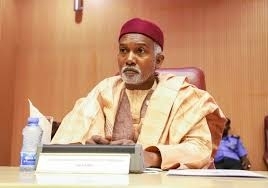

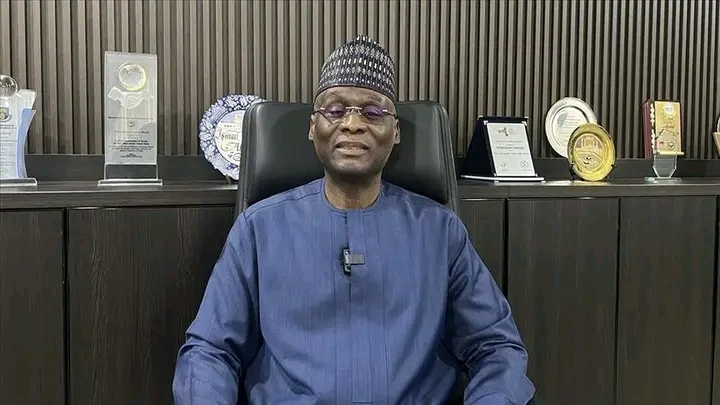
In a decisive move aimed at reinforcing the leadership of Nigeria’s premier Hajj regulatory body, President Bola Ahmed Tinubu has nominated Ambassador Ismail Abba Yusuf as the new Chairman and Chief Executive Officer of the National Hajj Commission of Nigeria (NAHCON). The nomination, which is now awaiting confirmation by the Nigerian Senate, was communicated in a formal letter dispatched to the Senate President, Senator Godswill Akpabo, on Tuesday.
The appointment, made in accordance with the enabling provisions of Section 3(2) of the NAHCON Act, 2006, is expected to be fast-tracked by the upper legislative chamber. President Tinubu’s letter urged the Senate to accord the nomination “expeditious consideration and confirmation,” underscoring the administration’s resolve to ensure seamless operations at the commission ahead of the next Hajj season.
Ambassador Yusuf, a distinguished career diplomat, brings to the role a wealth of experience in international relations and public service. Until his nomination, he served with distinction as Nigeria’s Ambassador Extraordinary and Plenipotentiary to the Republic of Türkiye, a posting he held from 2021 to 2024. His tenure in Ankara was marked by robust bilateral engagements, including the strengthening of trade, defence, and cultural ties between Nigeria and Türkiye.
The nomination follows the resignation of Professor Abdullahi Saleh Usman, who stepped down this week after approximately 14 months at the helm of the commission. While the presidency has not officially detailed the reasons for Professor Usman’s departure, sources within the administration indicate it was a voluntary resignation, clearing the path for a new leadership direction at NAHCON.
A Seasoned Administrator Takes the Helm
Ambassador Yusuf’s emergence as the preferred candidate signals the administration’s intent to place a seasoned technocrat with diplomatic finesse at the head of an agency that manages one of the largest religious pilgrimages in the world. His extensive background in foreign service is expected to be particularly advantageous in navigating the complex multilateral engagements required for the smooth conduct of the Hajj.
A product of Nigeria’s elite Foreign Service corps, Yusuf rose through the ranks over a career spanning more than three decades. Before his posting to Türkiye, he held several pivotal positions within the Ministry of Foreign Affairs, including directorial roles that focused on African affairs and consular services. Colleagues describe him as a meticulous administrator with a reputation for integrity and a deep understanding of protocol.
His appointment is also being interpreted within diplomatic circles as a strategic move to reinforce Nigeria’s standing with Saudi Arabian authorities and other key stakeholders in the Organisation of Islamic Cooperation (OIC). The Hajj operation involves intricate coordination with foreign governments, particularly the Kingdom of Saudi Arabia, on matters ranging from visa allocations to airlifting arrangements and accommodation logistics.
The Weight of the NAHCON Mandate
NAHCON, established by Act of Parliament in 2006, is statutorily mandated to license and regulate all aspects of the Hajj and Umrah operations in Nigeria. It oversees the welfare of hundreds of thousands of Nigerian pilgrims annually, manages the country’s Hajj savings scheme, and liaises with Saudi authorities to secure favourable terms for Nigerian pilgrims.
The commission has, in recent years, faced mounting scrutiny over issues of transparency, efficiency, and the rising cost of pilgrimage. Stakeholders in the private sector, including licensed tour operators and civil society groups, have consistently called for reforms to enhance accountability and service delivery.
Ambassador Yusuf’s nomination therefore comes at a critical juncture. Industry observers will be watching closely to see whether his diplomatic acumen can translate into tangible improvements in the pilgrim experience. His immediate tasks, upon confirmation, will include preparing for the 2025 Hajj exercise, negotiating with Saudi service providers, and addressing lingering concerns about the backlog of unpaid subsidies to state pilgrims’ welfare boards.
Senate Confirmation Process
The ball is now in the court of the Nigerian Senate. The President’s letter, addressed to Senator Akpabio, formally requests that the chamber invoke its constitutional powers of confirmation. The NAHCON Act mandates that the appointment of the chairman be subject to the advice and consent of the Senate.
It is anticipated that the nomination will be referred to the Senate Committee on Foreign Affairs or the Committee on Establishment and Public Service for screening. Given the non-controversial nature of the appointment and the nominee’s unimpeachable credentials, political analysts expect a smooth confirmation process, barring any unforeseen objections.
Senate sources have indicated that the leadership is disposed to expedite the screening to avoid a leadership vacuum at the commission. The outgoing chairman, Professor Usman, is expected to hand over formally once the Senate gives its nod.
Reactions from the Sector
Reactions to the nomination have begun trickling in from various quarters. The Nigerian Association for Pilgrims Affairs and several state pilgrims’ boards have welcomed the appointment, expressing optimism that Ambassador Yusuf’s international exposure will modernise the commission’s operations.
“Ambassador Yusuf understands the mechanics of high-level diplomacy. Hajj is not only a spiritual exercise but also a massive logistical and diplomatic undertaking. We believe his background will bring a new perspective to NAHCON,” a senior official of one of the northern state pilgrims’ boards commented.
Conversely, some civil society organisations focused on anti-corruption have urged the nominee to prioritise transparency from day one. They have called for the automation of Hajj fare payments and a stricter licensing regime for tour operators to prevent exploitation of pilgrims.
A New Chapter for Pilgrim Welfare
President Tinubu’s choice also reflects a broader pattern in his administration’s approach to appointments—favoring professionals with verifiable track records over political loyalists. Since assuming office, the President has emphasised merit and competence as the cardinal principles guiding his personnel selections.
Ambassador Yusuf’s nomination is thus emblematic of this philosophy. His career trajectory, devoid of the partisan entanglements that often characterise such appointments, positions him as a reformist figure capable of steering NAHCON towards greater accountability.
The coming weeks will be pivotal. As the Senate gears up for the screening exercise, the focus will remain on how the seasoned diplomat intends to tackle the perennial challenges facing the commission. For the millions of Nigerian Muslims who undertake the sacred journey to Mecca each year, the hope is that Ambassador Yusuf’s leadership will herald an era of efficiency, dignity, and spiritual fulfilment.
His confirmation, widely expected to be a formality, will mark the formal beginning of that assignment—one that carries not only administrative weight but profound religious and national significance.