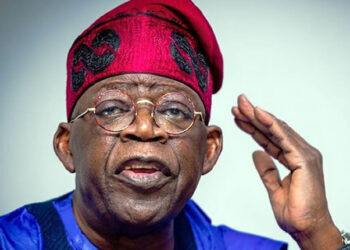

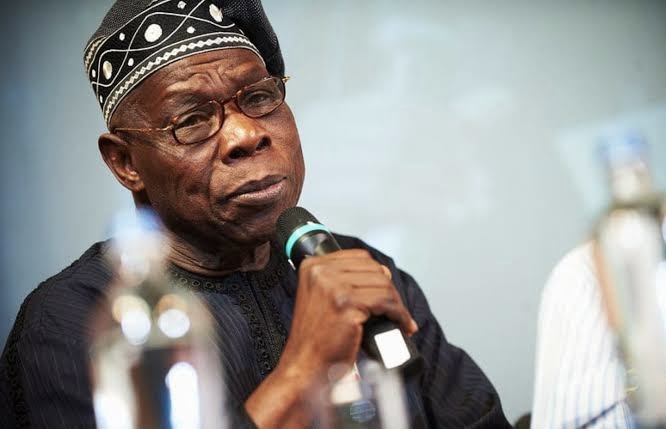
The Presidency has responded to former President Olusegun Obasanjo, asserting that he lacks the credibility to criticise President Bola Tinubu regarding the deteriorating security situation in the country.
Speaking at an event in Jos, Plateau State, on Friday, Obasanjo expressed his profound concern about the escalating insecurity in Nigeria. He suggested that Nigerians have a right to seek foreign intervention, citing what he described as the government’s failure to adequately protect its citizens.
However, the government contended that terrorism began to take root during Obasanjo’s administration, implying that the current security challenges are a legacy from his time in office.
The Presidency also condemned Obasanjo for suggesting that President Tinubu should seek assistance from foreign nations if he fails to address Nigeria’s security issues, labelling such a proposal as an abdication of responsibility and emphasising that advocating for external intervention in the nation’s internal affairs is not indicative of true leadership.
These comments were relayed in a post by the Special Adviser to the President on Media and Public Communication, Sunday Dare, on his verified X account.
In its critique of Obasanjo, the Presidency stated that before advising the surrender of Nigeria’s sovereignty to foreign nations, the former President should reflect on his own failure to act when terrorism first began to take hold during his tenure.
“Recent remarks by a former President and several habitual presidential aspirants attempting to portray the Tinubu administration as ‘unable to protect Nigerians’ are not only hypocritical but ignoble. They disregard the harsh reality: Nigeria is facing terrorists. All of them. By every definition, be they international, regional, or local.
“Yet the very individuals who looked away when these threats first emerged now seek to pass judgment. Nigerians are more discerning.
“The suggestion that Nigeria should effectively subcontract its internal security to foreign governments is not statesmanship; it is capitulation. Before recommending such surrender, the former President should contemplate what he failed to do when these terrorists began to organise under his watch,” the statement asserted.
The Presidency stressed that it is an undeniable reality that the country is under attack by terrorists, and no euphemism can change this harsh truth.
“The individuals killing Nigerians, raiding villages, kidnapping innocents, destroying infrastructure, and challenging state authority are terrorists — whether they fly a foreign flag or none at all.
“Nigeria today faces a multilayered terrorist ecosystem that includes: internationally designated terror organisations; ISIS-linked and al-Qaeda-linked franchises across the Sahel; local violent extremist groups masquerading as bandits; cross-border terrorist cells exploiting porous borders; ideological insurgents; and criminal-terror hybrids operating in ungoverned spaces.
“These actors collaborate. They share funding, ideology, weapons, intelligence, and logistics. Their goal is singular: to dismantle the Nigerian state and subjugate its people. Let us call them what they truly are: terrorists,” the Presidency stated.
It accused Obasanjo’s administration of allowing terrorism to take root by failing to take timely action.
“It is a historical fact that the ideological seeds and early cells of Boko Haram were nurtured during Obasanjo’s civilian presidency. As they recruited, indoctrinated, established camps, and openly challenged authority, the state failed to act with the necessary urgency.
“What began as a preventable extremist sect transformed into a violent insurgency; a cross-border terrorist franchise; a regional menace aligned with global jihadist movements.
“For the leader under whom the first seeds of terrorism were allowed to germinate to now issue public lectures is not only ironic, it is reckless.”
The Presidency further clarified that while Nigeria is open to international cooperation in addressing its security challenges, it will not outsource its security or surrender its sovereignty.
“Nigeria will cooperate internationally, yes, but it will not raise a white flag because someone who once had the opportunity lost their nerve,” the statement asserted.
The government underscored the importance of global partnerships, particularly with the United States and other allied nations, in addressing the transnational nature of the threat.
“Nigeria requires the support and understanding of the United States, and that cooperation is already underway,” the Presidency added.
“Of course, collaboration with other allied nations is also crucial. The crime at hand is transnational, and every ungoverned space must come under scrutiny.”