
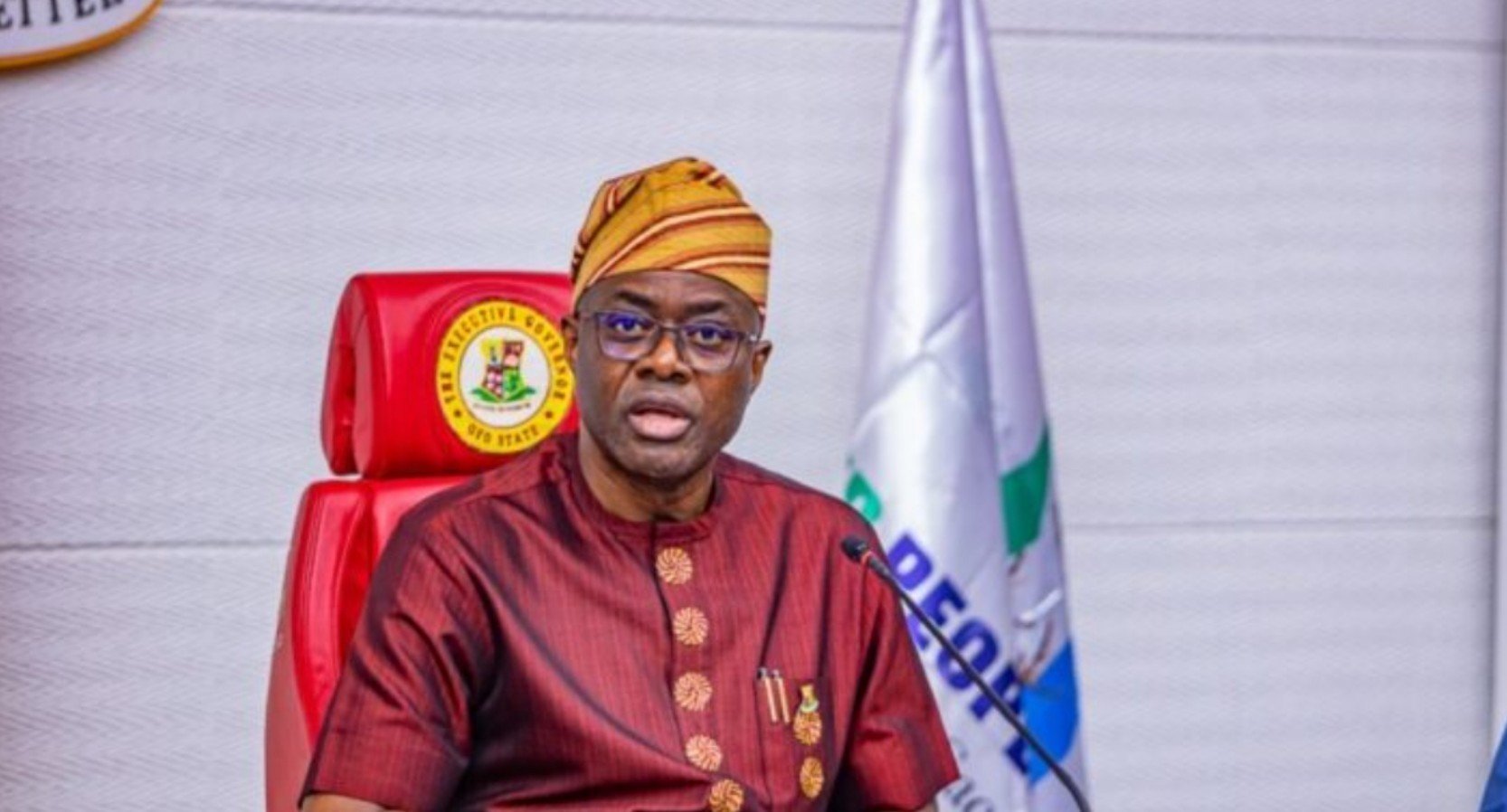
Seyi Makinde, governor of Oyo state, says Nigerians are asking the wrong questions in the debate over the gains from petrol subsidy removal.
Makinde, the Allied Peoples Movement (APM) presidential candidate, made the comment in a newsletter on Thursday, where he outlined his views on the subsidy debate and his Reset Nigeria Agenda.
The debate has intensified in recent weeks, with opposition presidential candidates, including Atiku Abubakar, president candidate of the African Democratic Congress (ADC), criticising the Bola Tinubu administration over its handling of the funds saved from subsidy removal.
On August 19, Taiwo Oyedele, minister of finance and coordinating minister of the economy, said the removal of the subsidy had mobilised N15.8 trillion for the federation between June 2023 and December 2025.
Atiku vowed to restore the subsidy if elected, noting that the Tinubu administration has failed to account for the savings from its removal.
Tinubu, however, dismissed the proposal as evidence of “serious ignorance of governance and economy”, saying some states struggled to pay salaries and pensions before he assumed office.
Makinde said the debate had been framed for too long as a choice between subsidising petroleum products and allowing Nigerians to pay the full market price.
He noted that the more important issue was how petrol prices should be determined in an oil-producing country such as Nigeria.
“I believe we are asking the wrong question. The more important question is: what is the right pricing framework for an oil-producing country like Nigeria?” Makinde said.
He said countries adopt different approaches to determining petroleum prices, adding that Nigerians should demand greater clarity from the Tinubu administration on the calculations behind the current pump prices.
“What Nigerians deserve to know is the current pricing framework and the assumptions that determine what we pay at the pump: the crude price benchmark, refining costs and margins, exchange-rate assumptions, logistics and distribution costs, taxes and levies, and the other variables included in that calculation,” he said.
“These should be publicly accessible and sufficiently clear for Nigerians to interrogate the basis of the price they are paying and compare it with the alternatives.”
The governor also rejected the argument that Nigerians should pay more for petrol to discourage its smuggling into neighbouring countries.
“We should also reject the argument that Nigerians must pay more for petroleum products simply to eliminate the price difference that makes smuggling into neighbouring countries profitable,” he said.
“Nigerians should not be made to bear the cost of government’s inability to secure its borders.”
Makinde said successive administrations had introduced policies accompanied by promises of better living conditions, yet many Nigerians remained trapped in poverty.
“Too many of our people are still trapped in poverty. Too many families work hard without experiencing real progress,” he said.
“Too many young Nigerians are unable to see a clear path from education to opportunity. Insecurity continues to disrupt lives and livelihoods, while many of the institutions created to serve the people do not work as effectively as they should.”
He said Nigeria’s challenges went beyond the individuals occupying public office at any given time, arguing that the country needed to confront the systems and institutions responsible for poor outcomes.
“We must address the systems, institutions and structures that continue to reproduce outcomes that do not serve the majority of our people,” he said.
Makinde said the question of petrol subsidy should therefore be viewed within the broader issue of how Nigeria manages its petroleum sector and economy.
“The petroleum question should therefore not simply be whether subsidy should return or remain removed,” he added.
“In the coming weeks, we will put forward our alternative and allow Nigerians to judge it for themselves.”