

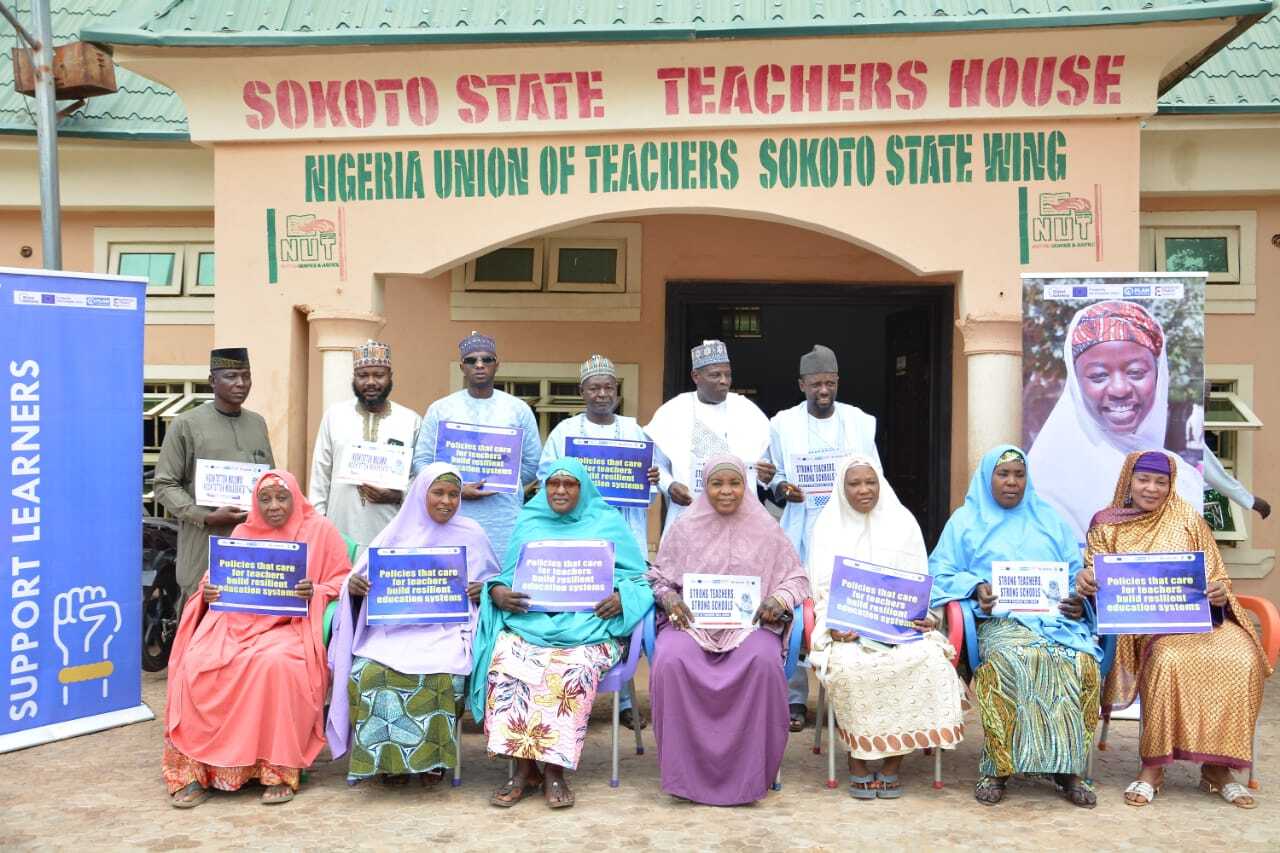
A major educational initiative has equipped thousands of teachers in Sokoto with enhanced skills and support, as part of a programme designed to strengthen learning in crisis-affected regions.
The “Building Resilient Education Systems” project, funded by Expertise France and implemented by Save The Child Initiative (STCI) Nigeria in partnership with Plan International Ireland, Plan International Nigeria, and the Forum for African Women Educationalists (FAWE), places teachers at the heart of educational recovery efforts.
The programme recognises that educators in conflict-affected areas face persistent challenges that undermine their capacity to deliver quality instruction. Addressing these obstacles requires a comprehensive approach encompassing policy reform, strategic deployment, and improved incentives.
Advocacy for Female Leadership
Speaking at a Joint Advocacy Roundtable on “Advancing Female Teachers’ Leadership in Educational Institutions” held at the Sokoto State Nigeria Union of Teachers secretariat, Comrade Nafisa Mahmud, State Coordinator of the Nigeria Women In Education Network (NIWEN), described the gathering as more than an event—it was a call to action.
“Education is the cornerstone of development, and women have always been at the heart of nurturing knowledge and shaping future generations. Yet their representation in leadership positions remains limited,” Mahmud stated.
She commended Expertise France and STCI alongside other partners, emphasising that the programme reflects a shared conviction that when women lead, communities flourish and societies advance.
“Together, we are creating a platform where voices can be heard, experiences shared, and strategies developed to break barriers and open doors for women in leadership,” she added.
Project Scope and Impact
The initiative, operating across Adamawa and Sokoto states, is designed to support teachers’ professional development, strengthen educational frameworks, and address teacher shortages in crisis environments. It focuses on pre-primary, primary, and lower secondary education levels.
Community-based strategies are being employed to foster teacher integration and retention, while policy frameworks are being developed to promote career progression for educators.
With thousands of teachers already trained in Sokoto, the project aims to positively impact the lives of over one million indirect beneficiaries across the state, marking a significant step toward building a more resilient educational system in northern Nigeria.