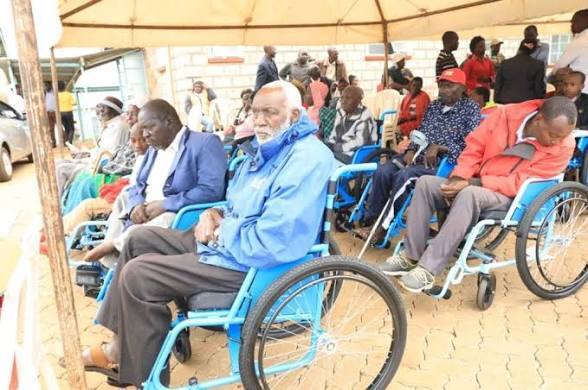
The Sustainable Families Healthcare Foundation (SFHF) has engaged media organisations to promote inclusive, accurate, and balanced reporting on persons with disabilities (PWDs) in Nigeria, as part of a new project aimed at creating nationwide awareness about disability rights.
Speaking during an interaction with journalists, the Executive Director of SFHF, Peters Ogunmayin, commended the media for its role in promoting the rights and dignity of persons with disabilities, noting that the media plays a critical part in shaping public perception, advocating for policy reforms, and enhancing the visibility of PWDs.
“We are focusing on disability awareness to educate all Nigerians. Today, we are engaging the media and persons with disabilities to strengthen their capacity to share information and return to their communities better informed,” she said.
She added that the programme seeks to inform the public about the Disability Act and its provisions, which have been approved by the Federal Government and enacted into law. “For the FCT, implementation is ongoing, while some states have already begun working on theirs. That is why we are creating awareness and building capacity to help stakeholders understand the content of the policy and their roles,” she stated.
Media’s Role in Shaping Narratives
In his remarks, Chairman of the National Association of Persons with Physical Disabilities (NAPWPD), FCT chapter, Christ Agbo, emphasised the importance of the media in shaping societal attitudes.
“The media changes the narrative in society. It is key to disability advocacy because it can help change perceptions about persons with disabilities,” he said.
Agbo called for improved training for journalists to ensure proper understanding and reporting of disability issues. He also highlighted challenges faced by persons with disabilities in the FCT, particularly in infrastructure, accessibility, and policy implementation. According to him, many roads lack sidewalks, and where they exist, they are often inaccessible to wheelchair users or visually impaired persons due to poor design, obstruction by traders, or open manholes.
He further questioned the implementation of policies such as the five per cent employment quota for PWDs and the limited number of inclusive schools in the FCT, stressing the need for a dedicated agency in the FCT to address these gaps and coordinate interventions.
Call for Capacity Building
Also speaking, disability expert, Musa Muazu, described the media as a vital gateway to society. “Where our voices cannot reach as individuals or communities, the media can. There are ways of communicating without distorting or discriminating,” he said.
He stressed the need for media practitioners to be trained on disability awareness and inclusive reporting, noting that Nigeria still faces challenges in addressing discrimination against persons with disabilities.
Muazu revealed that while 27 out of Nigeria’s 36 states have disability laws and 23 have established agencies, the Federal Capital Territory (FCT) is still working towards setting up a commission to implement its disability policy. “We are hopeful that before 2027, the FCT will have an agency to implement its disability policy, considering its status as the nation’s capital,” he added.