

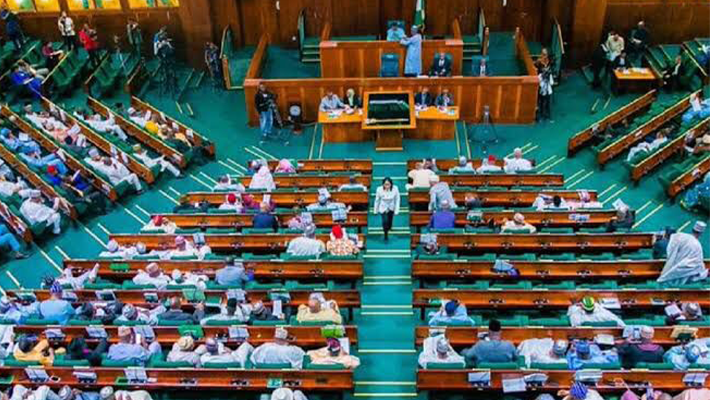
The House of Representatives has urged the Federal Ministry of Education and the West African Examination Council (WAEC) to suspend the planned computer-based examination policy set to begin in 2026.
This request followed the adoption of a motion by Kelechi Nwogu (PDP-Rivers) during Thursday’s plenary session.
Mr Nwogu, in moving the motion, explained that WAEC is responsible for conducting higher education entry qualifying examinations for students in senior secondary schools.
He noted that higher education institutions require candidates seeking admission to possess at least five credits, including English and mathematics, in WAEC or its equivalent.
The lawmaker highlighted that the portal for the 2025 West African Senior School Certificate Examination (WASSCE) results was shut down due to technical issues, which adversely affected the candidates.
According to him, the Federal Ministry of Education plans to conduct the 2026 WASSCE in March, employing the computer-based examination (CBE) format.
“We are concerned that despite the protests from the National Union of Teachers and heads of schools, both public and private, particularly in rural areas hosting over 70 per cent of the students, the Federal Ministry of Education has stated that there will be no reversal of this decision.
“Recognising that computer-based examinations require fully equipped halls with functional computers, internet access, and a reliable power supply, whether from the national grid or backup generators, we are aware that approximately 25,500 schools across the country have candidates for the 2026 examination, which is expected to be conducted simultaneously over four months from March to July. Additionally, it is evident that most urban schools, and even fewer rural schools, lack functional computers and qualified computer teachers, meaning that many students have never used computers before.”
Mr Nwogu pointed out that unlike the Joint Admissions and Matriculation Board (JAMB), candidates for WAEC are expected to take at least nine subjects, which include practical, objective, and theoretical questions.
He argued that it is premature to implement this policy without adequate preparation, suggesting that the Federal Ministry of Education and WAEC should have at least three years to plan for a rollout by the 2029/2030 academic year.
The lawmaker asserted that allowing the CBE policy to proceed would have devastating consequences for students’ 2026 WAEC results, leading to widespread failure, frustration, drug abuse, and other social issues.
The House urged the Federal Ministry of Education, in collaboration with state ministries, to incorporate the recruitment of computer teachers and necessary infrastructure into the budgets for 2026, 2027, 2028, and 2029.
The lower legislative chamber also resolved that thorough monitoring of the provisions in private schools must be conducted prior to the policy’s commencement in 2030.
The House mandated the committees on Basic Examination Bodies, Digital and Information Technology, and Basic Education and Services, among others, to ensure compliance and report back within four weeks for further legislative action.
(NAN)