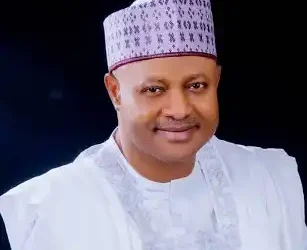


By Dr Ja’ida-Kuman Kato
Yobe State faces real and historic challenges in education, and available data helps explain why. LiteracyLiteracy levels are among the lowest in the country, with reports putting the state’s literacy rate at just 7.23 percent, the lowest nationwide. Out of school rates are also among the highest. Recent surveys estimate that about 62.9 percent of children aged 6-15 in Yobe are out of school, translating to more than 427,000 children. At earlier points, estimates reached as high as 658,000. This reality places Yobe behind most Nigerian states, with a large share of its children excluded from basic schooling and secondary school transitions. Overcrowded classrooms in towns such as Potiskum and weak facilities across rural areas compound these challenges, leading to poor outcomes and limited preparation for national exams.
Governor Mai Mala Buni’s administration has taken deliberate steps to address this situation by declaring a state of emergency on education and significantly expanding resources. His government has rebuilt more than 300 schools damaged by insurgency and constructed over 627 new classrooms, while renovating 448 others. More than 85,000 sets of classroom furniture have been provided, alongside 2,200 for teachers. Sanitation, water and safety infrastructure has been expanded with 178 toilet blocks, 35 solar powered boreholes, fencing for 61 schools, and solar electrification in 72 schools. These efforts not only improve the learning environment but also encourage attendance and retention.
Teacher recruitment and training has been a major focus, with over 5,000 new teachers employed and more than 9,400 trained in recent years. To reduce financial barriers, the state covers WAEC, NECO, NABTEB, NBAIS and BECE fees for students in public schools, spending billions of naira to ensure that young people can sit for these vital exams. Scholarships have been expanded through the Recovery Through Education and Scholarships initiative, supporting more than 38,000 domestic students each year and offering opportunities abroad. Girls’ education has also received attention through the construction of new Government Girls Senior Secondary Schools, enrollment drives, and programs to mainstream vulnerable children, including almajiri pupils, into formal education. Conditional cash transfers are currently reaching about 60,000 pupils, providing families with incentives to keep their children in school.
Almajiranci deserves particular attention because it is a root cause of large numbers of street children and of persistent out of school figures across northern states. Almajiranci originally referred to a traditional system of Qur’anic learning where children studied under scholars, but in many places it has evolved into a pattern where children live apart from families and spend much of their time begging or doing odd jobs to survive. Tackling this requires both respectful recognition of religious schooling’s role and practical reforms that offer safe alternatives. Creating dedicated almajiri schools or integrated model schools is a proven pathway. Such schools combine Qur’anic instruction with formal subjects, provide boarding or safe day school options, include vocational and life skills training, and deliver psychosocial and health services. They also require registration and support for malams, training so teachers can deliver both religious and basic literacy and numeracy, and child protection safeguards that eliminate street begging. Complementary measures that dissuade parents from placing children on the streets include conditional cash transfers or stipends tied to school attendance, school feeding, free uniforms and exam fee waivers, community based livelihoods programs for families, and visible engagement with religious and traditional leaders to build trust. Several states and development partners are piloting and scaling such integrated approaches, and the federal government and partners are now coordinating national frameworks to mainstream almajiri children into formal education. Yobe’s own budgetary allocation for almajiri schools and its mainstreaming plans are an example of how a state can both respect cultural context and create practical alternatives for vulnerable children.
These interventions are important steps, but more can be done to improve outcomes such as performance in WAEC, NECO and JAMB, as well as enrollment and retention. Expanding conditional cash transfers and scholarships, especially for girls, would further reduce economic pressures that force children out of school. Scaling up school feeding beyond senior secondary to include primary schools could improve concentration, nutrition and attendance. Rehabilitation and electrification programs should continue, ensuring safe classrooms with reliable power for evening study and digital access.
Teacher development will remain central. Continuous in service training, mentoring and clear career incentives will improve instruction quality and directly affect exam performance. Introducing remedial classes, mock exams and exam prep programs across secondary schools can help students feel better prepared and reduce malpractice. For girls, ensuring safe school routes, adequate sanitation, menstrual hygiene support and visible female role models in teaching are essential to keeping them in school. Community engagement with traditional and religious leaders can reinforce positive messages around girls’ education and counter cultural barriers.
Flexible learning programs are also necessary to reach children who have already missed years of schooling. Evening or shift schools, accelerated learning modules and partnerships with NGOs can help reintegrate these children into the system. Strengthening state level data systems will allow Yobe to target interventions, track progress, and demonstrate accountability, which in turn will attract further federal and donor support.
A central piece of this effort is the involvement of traditional and religious leaders, who are gatekeepers in a deeply cultural and religious society. Engaging these leaders on the importance of education and how it can transform the fortunes of Yobe is vital. They hold influence within communities and can help shift mindsets that may resist modern schooling. By enlisting them as champions of both formal and integrated education, the government can build trust, expand enrollment, and strengthen outcomes. When religious and cultural leaders actively encourage families to send children to school, particularly girls, resistance softens and uptake grows. Using these leaders as a pipeline to communicate the benefits of education ensures that messages reach the grassroots in a culturally acceptable way, making reforms more sustainable.
Governor Buni’s administration has shown commitment through investment and policy action. To sustain progress, implementation must remain consistent, transparent and community-driven. With steady focus on infrastructure, teachers, exam readiness and gender equity, Yobe can reverse years of decline and move toward becoming a model for educational recovery in northern Nigeria. The early signs are promising. By building on them with urgency and inclusiveness, the state can deliver stronger schools and brighter outcomes for our children.
Ja’ida-Kuman Kato PhD, is a Consultant Gender, Education, Human Rights, Development, Strategy, Leadership, Alternative Security.