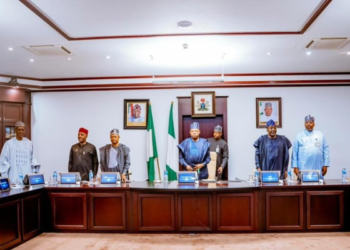
Festus Keyamo, minister of aviation and aerospace development, will host the maiden edition of the Nigeria Aircraft Acquisition and Investment Summit (NAAIS) on April 1 and 2 in Lagos.
According to Tunde Moshood, special adviser on media and communications to the minister, the summit marks a defining step in reshaping Nigeria’s aviation financing landscape.
He said the summit will bring together international aircraft lessors, global aviation financiers, airline operators, airport concessionaires, policymakers and institutional investors to explore opportunities in Nigeria’s aviation market and discuss pathways for aircraft acquisition and infrastructure investment.
“Africa is projected to be the fastest-growing aviation region globally, with passenger traffic expected to grow at approximately 6% annually through 2044. Within this trajectory, Nigeria stands as a natural anchor market for long-term aviation and airport infrastructure expansion,” the statement reads.
“Despite its demographic and economic scale, Nigeria remains structurally underserved in aviation capacity. The market currently supports approximately 15–16 million annual air passengers, with projections indicating growth to 25.7 million passengers by 2029 — a clear reflection of strong underlying demand.
“The country remains a key aviation gateway in West Africa, with direct international air links to over 30 destinations across Africa, Europe, the Middle East, Asia, and North America. This connectivity underpins trade, diaspora engagement, tourism, and business mobility, reinforcing Nigeria’s strategic role as a regional hub.
“However, despite having Africa’s largest population base — estimated at over 220 million — Nigeria ranks only as the continent’s fifth-largest aviation market by seat capacity. The country currently operates approximately 1.16 million monthly scheduled airline seats.
“In contrast, Egypt, with about 120 million people, offers roughly 2.98 million monthly seats; South Africa, with 65.5 million people, operates around 2.60 million seats monthly; while Morocco, with just 39 million people, provides approximately 2.03 million seats monthly. These comparisons highlight a significant capacity shortfall in Nigeria — not demand saturation — presenting substantial headroom for fleet expansion and infrastructure development.”
According to the statement, Africa is projected to require more than 1,600 new aircraft deliveries between 2025 and 2044, driven by passenger growth and fleet replacement needs, with Nigeria accounting for a substantial share of this demand.
Moshood said the summit will provide a platform for dialogue between Nigerian airlines and global aircraft lessors, while also exploring financing solutions tailored to local airline realities.
He said the summit will also examine investment frameworks for airport concession programmes, discuss risk mitigation strategies to strengthen investor confidence, and support the development of Nigeria’s aircraft leasing ecosystem.
“The summit reflects a deliberate policy shift towards structured engagement with international capital markets and aircraft leasing institutions, ensuring Nigeria carriers have improved access to competitive aircraft financing while positioning the country as a secure and bankable aviation investment destination,” he added.
Moshood said the summit aims to close Nigeria’s aircraft capacity gap and unlock the next phase of aviation-led economic growth by bringing global investors directly into conversation with regulators and operators.