
The National Economic Council (NEC) has formed a committee on livestock development to expedite the implementation of livestock production across the country.
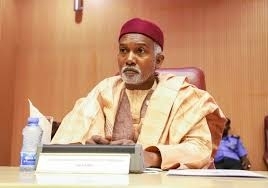
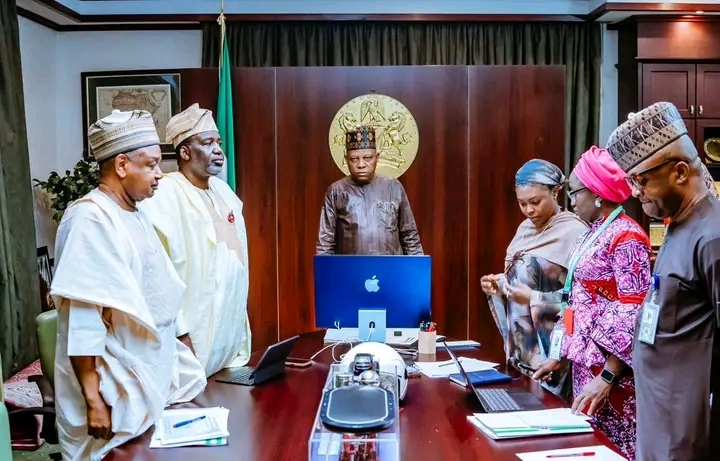
The committee was established on Wednesday during the 155th NEC meeting, chaired virtually by Vice-President Kashim Shettima.
It includes one representative from each of the six geo-political zones: Bauchi for the North-East, Niger for the North-Central, Ondo for the South-West, Imo for the South-East, Cross River for the South-South, and Kebbi for the North-West.
Additional members consist of the ministers for livestock development, agriculture and food security, budget and economic planning, as well as the senior special assistant to the president on agribusiness.
The council has instructed the committee to review the recommendations of the Presidential Livestock Reform Committee and the proposals from the Ministry of Livestock Development, as well as to identify states willing to participate in the programme.
During the Federal Executive Council meeting on 10 December, President Bola Tinubu directed NEC to collaborate with the Ministry of Livestock Development to create a roadmap for transforming the industry.
The ministry prepared a proposal, which was presented for the council’s endorsement, aimed at modernising Nigeria’s livestock sector into a peaceful and profitable engine of national development.
Mr Shettima, as chairman of NEC, stated that a practical, enduring, and nationally accepted solution to the farmer-herder crisis is essential for ensuring food security in the country.
He emphasised that while food security is a moral obligation to citizens, it can only be achieved through effective solutions to the ongoing crisis.
“We must recognise with deep regret the profound distrust caused by this violence, arising from a practice that should have remained a cornerstone of our food security and rural economy.
“The loss of lives, destruction of homes, and devastation of farmlands must cease.
“We cannot accomplish the fundamental task of feeding ourselves unless we find a lasting, practical solution to the farmer-herder crisis.
“Food security is a moral duty to our people,” he stated.
The vice-president attributed the mismanagement of long-standing tensions between farmers and herders as the root cause of the conflicts that have strained community ties across Nigeria.
He lamented how what began as a coexistence challenge has escalated into cycles of violence that have persisted too long without a sustainable resolution.
“Today, this violence knows no bounds. It has become a shared nightmare, affecting every region, disrupting livelihoods, and eroding trust among neighbours who once depended on each other for survival.”
Mr Shettima commended Mr Tinubu’s bold initiative to transform livestock production in Nigeria, particularly by integrating the sector as a key component of the national economy.
He urged state governors to take the presentations on livestock development from the Ministry of Livestock Development and the Presidential Livestock Reform Committee (PLRC) seriously.
He also encouraged governors to seize opportunities within the sector for economic transformation, conflict resolution, and peace restoration in various regions.
Mr Shettima noted that President Tinubu recognised the vast potential within the sector by establishing a dedicated ministry for livestock development.
He assured that the recommendations from the PLRC and the Ministry of Livestock Development would receive priority under the Tinubu administration.
The vice-president called for the support of sub-national governments to fully exploit the numerous opportunities in the sector.
“The presentations made to us today provide critical insights into the responses needed to tackle these challenges.
“They directly address the need to stabilise our food systems, restore confidence in rural economies, and alleviate the security pressures arising from competition over land, water, and livelihoods.
“At their core, these presentations aim to dispel the false dichotomy between agriculture and security by illustrating that both are essential pillars of national stability,” he added.
Addressing journalists after the NEC meeting, the Minister of Budget and National Planning, Abubakar Bagudu, praised Mr Tinubu for establishing the Ministry of Livestock Development.
He stated, “Livestock development is a vital national economic activity. Every part of Nigeria has its own strengths.
“The central challenge is to recognise this as an economic activity and to unite in supporting its modernisation to contribute to national economic growth and prosperity, while also addressing the conflicts associated with some of its practices.”
(NAN)