
The Jigawa State Government has launched a major agricultural intervention programme targeting 90,000 smallholder farmers across the state, with plans to distribute fertilisers, agricultural inputs, and 6,000 solar-powered water pumps.
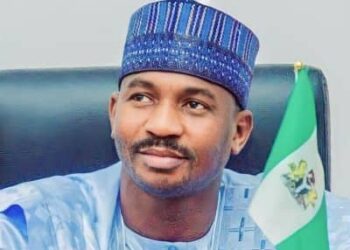
Governor Umar Namadi announced the initiative on Saturday in Dutse during the official flag-off of the 2026 Wet Season Agricultural Support Programme. He revealed that 50,000 farmers would benefit directly from state funding, while an additional 40,000 would be supported through a partnership involving the Bank of Agriculture (BOA) and StarAgri.
The programme also includes the distribution of 1,185 motorcycles to extension workers to enhance service delivery and outreach to rural communities.
Mr Namadi said the intervention was designed to encourage irrigation activities, reduce production costs, and strengthen extension services. He noted that the scheme aims to address persistent challenges facing farmers, including inadequate access to quality inputs, rising energy costs, and escalating production expenses.
The governor highlighted that the state had already provided viable interventions to 250,000 farmers under its agricultural transformation programme. Achievements to date include the deployment of 1,700 extension agents, the provision of 450 tractors and 70 combine harvesters, the establishment of 20 modern greenhouses, and the development of four climate-smart agriculture centres. Additionally, the government has rehabilitated the Kuda and Dembo dams and created 200 commercial rice processing clusters.
“It is against this background that we are flagging off the 2026 Wet Season Agricultural Support Programme, to help farmers enter the season with the inputs, equipment and services they need for productive cultivation,” the governor stated.
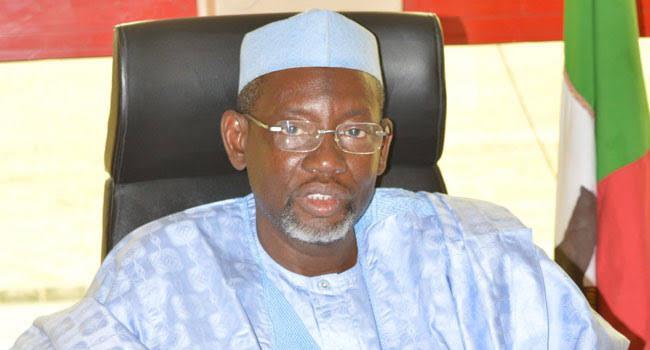
Speaking at the event, Commissioner for Agriculture and Natural Resources, Muttaka Namadi, said the interventions were designed to improve access to quality inputs, strengthen extension services, promote climate-smart agriculture, and ensure the timely availability of fertilisers at affordable prices.
Similarly, Saifullahi Umar, Director-General of the Jigawa State Agricultural Transformation Agency (J-ATA), said the distribution of fertilisers, inputs, and equipment would reduce production costs, improve farmers’ incomes, and bolster food security. He emphasised that the intervention would boost agricultural productivity and create sustainable jobs for youths.
“To improve farmer incomes, we must increase yield per hectare. To create sustainable jobs for our teeming youth, we must make farming a business, not a struggle for survival,” Mr Umar said.
Ayo Sotinrin, Managing Director of the Bank of Agriculture, urged farmers to utilise the inputs effectively to maximise their production output. “Farm with purpose and apply your inputs correctly. The harvest you produce is not just feeding your family, it is feeding the nation and strengthening the economy,” he said.
Sunday Eyal, Managing Director of Star Agri West Africa Ltd., commended the state government’s investment in agriculture, noting that Jigawa’s warehouses were among the best-equipped compared to those in other states.
Ya’u Idris Maiunguwa, Chairman of the All Farmers Association of Nigeria (AFAN) in the state, praised the governor for his sustained support for smallholder farmers. He confirmed that beneficiaries were selected based on merit, with farmers’ association leaders playing a key role in identifying genuine farmers across communities.