
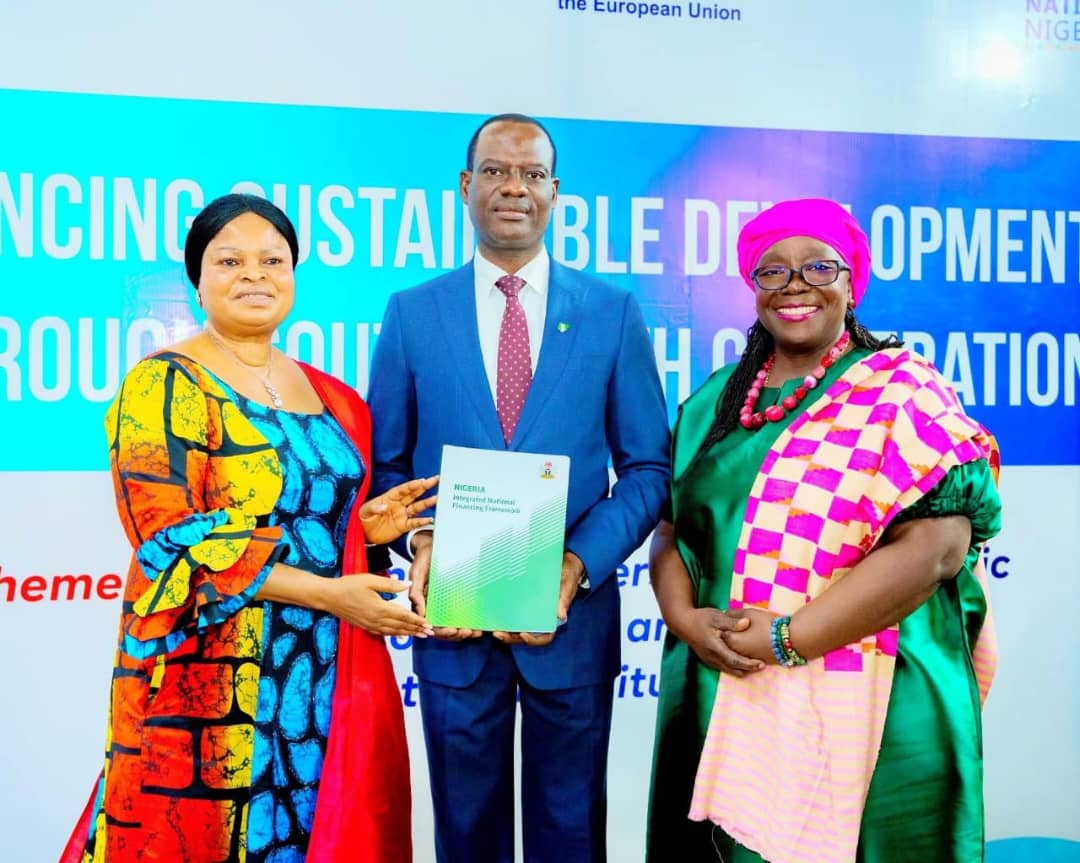
With just four years remaining to achieve the Sustainable Development Goals, the Integrated National Financing Framework (INFF) has emerged as a critical instrument for mobilising domestic resources across Africa. Launched at the previous United Nations General Assembly, the framework is now gaining traction, with Ethiopia becoming the first country to commence full implementation.
Nigeria’s Senior Special Assistant to the President on SDGs, Princess Adejoke Orelope-Adefulire, has been instrumental in fostering high-level strategic engagements between Nigeria and Ethiopia. These collaborations align with President Bola Ahmed Tinubu’s Renewed Hope Agenda, extending its impact beyond national borders.
Having made significant strides in SDG implementation, Nigeria is now doubling its efforts through strategic partnerships with neighbouring and distant countries alike. The framework draws financial support from multilateral institutions, governments, non-governmental organisations, philanthropists, and the private sector—through the Private Sector Advisory Group—to address economic, social, and recurring challenges across nations.
The recent exchange programme, organised in partnership with the United Nations Development Programme and the European Union, underscored Nigeria’s growing leadership in INFF implementation. The country’s experience now serves as a model for other African nations seeking to strengthen domestic resource mobilisation, enhance public financial management, and attract private investment.
Crucially, the framework extends beyond federal structures to include state governments and the Federal Capital Territory. This sub-national focus is vital for strengthening fiscal policies and advancing critical public services, including primary healthcare, basic education, water supply, sanitation, agriculture, infrastructure, and local economic development.
According to Nigeria’s SDGs leadership, the INFF provides governments with a comprehensive platform for coordinating domestic resource mobilisation, improving expenditure efficiency, and deploying innovative financing mechanisms.
“The INFF recognises that achieving sustainable development cannot rely solely on traditional public financing,” Orelope-Adefulire stated. “Strengthening fiscal capacity at the sub-national level is not merely a technical exercise; it is a strategic imperative.”
The framework has garnered commendation from local and international institutions, with the Nigerian government lauding SDGs leadership for establishing a transformative approach capable of enhancing both socio-economic development and fiscal capacity.
Ethiopia’s active participation in the three-day high-level programme signals its commitment to the framework, raising optimism that funding constraints—both local and domestic—will soon become a thing of the past as African nations prepare for the final phase of the 2020-2030 Agenda.