
Members of the Arewa Grassroots Leaders Assembly (AGLA), has commended the leadership of the Independent National Electoral Commission (INEC) for what they described as significant strides in electoral integrity and reform recorded in recent elections conducted in the country.
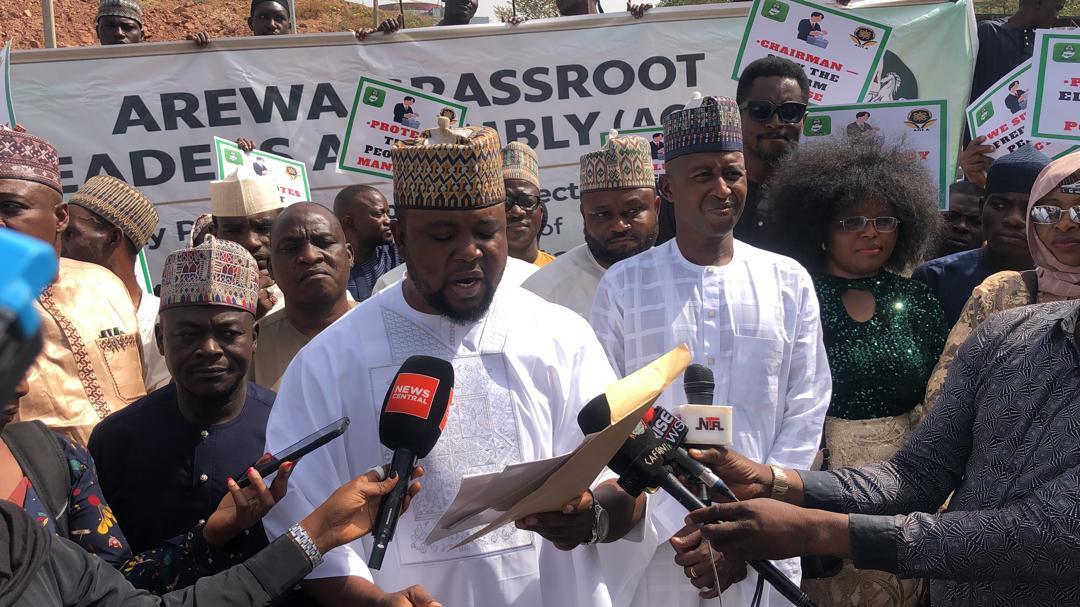
Addressing journalists during a peaceful solidarity rally at the INEC headquarters in Abuja, the National President of AGLA, Mr. Onogu Collins, said the gathering was not in condemnation, but in commendation of the Commission’s recent performance.
“We have gathered peacefully today at the headquarters of INEC to lend our voice, not in condemnation but in commendation. This is a solidarity protest and a protest of encouragement. Nigeria sees the progress, and we ask that it continues,” he said.
Collins praised the leadership of the INEC Chairman, Professor George Amupitan, stating that since assuming office in October 2025, he has demonstrated “administrative will, institutional courage, and commitment to electoral reform.”
According to the group, the Commission successfully conducted three major electoral exercises within a short period — the Anambra State Governorship Election, the Federal Capital Territory (FCT) Area Council Elections, and by-elections in Kano and Rivers States.
“These elections, by domestic and international observers, were largely peaceful, procedurally transparent, technologically progressive, and administratively coordinated,” Collins stated.
AGLA specifically commended improvements to the INEC Results Viewing Portal (IReV), describing the upgrades as a measurable step forward in Nigeria’s electoral technology evolution.
Collins listed key enhancements observed during the FCT Area Council elections and subsequent by-elections, including improved server uptime, faster upload speeds, and dual-layer validation mechanisms requiring presiding officers to upload polling unit results sheets and input party scores into the BVAS device.
“The upgraded IReV system demonstrated improved server stability and faster upload speeds compared to previous electoral cycles. The system architecture ensured that votes entered could not exceed accredited voters, thereby protecting result integrity,” he said.
He added that the digital audit trail generated traceable metadata such as device ID and upload timestamps, supporting post-election audit capability and reinforcing public confidence.
“Citizens and political parties were able to view polling unit results in near real-time, reinforcing electoral openness,” Collins noted.
While commending the Commission, the group urged INEC not to relent but to consolidate on the gains recorded.
“Electoral reform is not an event; it is a journey. We urge the Chairman and the Commission to strengthen result management systems, expand technology deployment, deepen staff training, and collaborate with relevant stakeholders to establish backup networks in areas with limited connectivity,” Collins said.
He also called on political actors, media organisations, and citizens to support electoral institutions constructively and avoid misinformation capable of eroding public trust.
“Nigeria’s democracy is safe when elections are credible. Concerns should be raised responsibly and factually,” he added.
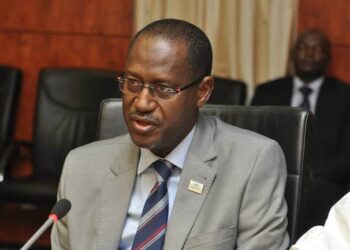
Responding, an INEC National Commissioner, Mr. Abdullahi Zuru thanked the group for the show of support and assured Nigerians that the Commission would not relent in its mandate.
“We shall not relent. We will continue to ensure that whatever is necessary to make our democracy thrive, we shall do it. All we ask is the understanding and cooperation of Nigerians,” Zuru said.
He explained that the INEC Chairman was away on official assignment, but would be briefed on the visit and the group’s message of encouragement.
Zuru emphasized that all actions taken by the Commission are in the national interest.
“Anything done under his leadership is done in the name and interest of Nigeria. We remain committed to progress and continuous improvement,” he stated.
The solidarity rally concluded with calls for sustained transparency, protection of votes, and continued technological advancement in Nigeria’s electoral process.