
• Home
  • News
  • Politics
  • Business
  • Entertainment
  • Education
  • Health
  • Opinion
  • Sports
  • More…
    • About
    • Privacy Policy
    • Advertise
Friday, September 4, 2026
  • Login
No Result
View All Result
NEWSLETTER
Elanza News
  • Home
  • News
  • Politics
  • Business
  • Entertainment
  • Education
  • Health
  • Opinion
  • Sports
  • More…
    • About
    • Privacy Policy
    • Advertise
  • Home
  • News
  • Politics
  • Business
  • Entertainment
  • Education
  • Health
  • Opinion
  • Sports
  • More…
    • About
    • Privacy Policy
    • Advertise
No Result
View All Result
Elanza News
Home Opinion

From e-wallet to factories: Nigeria’s long walk from farm subsidies to agribusiness money

Ojimaojo Abubakar by Ojimaojo Abubakar
September 4, 2026
in Opinion
0
From e-wallet to factories: Nigeria’s long walk from farm subsidies to agribusiness money
0
SHARES
1
VIEWS
FacebookTwitterWhatsappEmailTelegram

Nobody who has watched Nigerian agriculture for a decade believes the journey from emergency relief to real industry is neat. It is messy. Governments learn, unlearn, and sometimes start again. Policy papers pile up. Banks still treat the farm as a gamble. Tomatoes still rot on the road between Kano and Lagos.

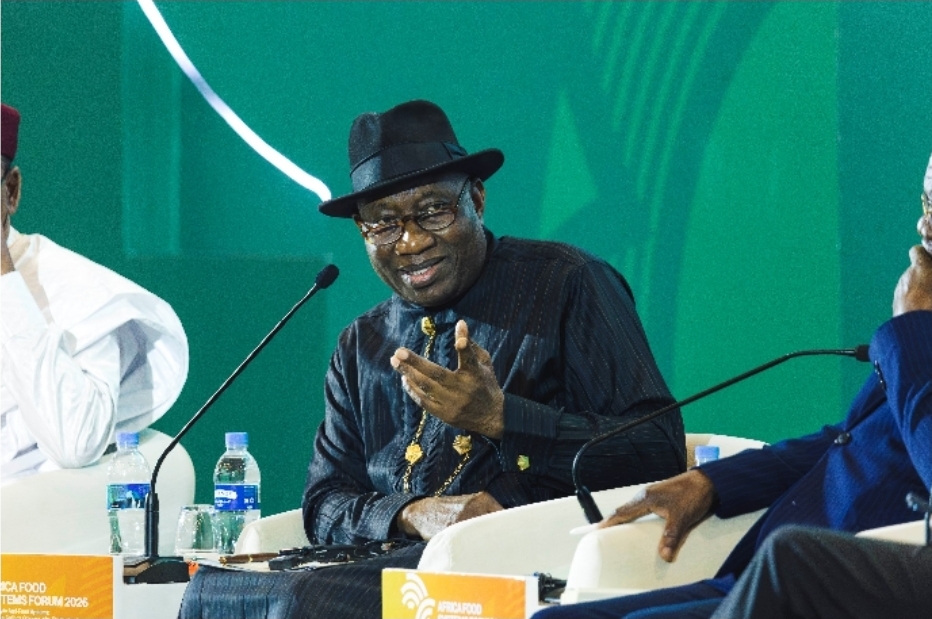
That unfinished story was on the table this week in Kigali, at the Africa Food Systems Forum, where former President Goodluck Jonathan sat with other retired African leaders on the Council of the Wise and spoke to a hall full of young people who want agriculture to pay like a profession, not a last resort.

Jonathan went back to the beginning of his attempt to modernise the sector. The e-wallet, rolled out under the Agricultural Transformation Agenda, did something simple and politically dangerous: it put fertiliser and seed subsidies on farmers’ phones instead of leaving them in the hands of the usual middlemen. The old patronage machine hated it. Farmers who had never seen a bag of genuine fertiliser suddenly got one.

RelatedPosts

Why leaders in Kigali want food corridors and how AGRA fits in

Two Decades After Kofi Annan’s Clarion Call: Hailemariam Dessalegn’s Valedictory Challenge to Africa at AFSF 2026

Breaking West Africa’s $3.5B Rice Import Trap: Inside Liberia’s $908M Blueprint Unveiled at Kigali Deal Room

Coupled with the Central Bank’s risk-sharing work through NIRSAL, the scheme made it slightly less suicidal for commercial banks to lend. Doctors, lawyers and engineers who once would not have touched a farm started asking questions about land and off-takers.

ALSO READ:  "Why I Pay Taxes"By Salisu Na'inna Dambatta

That was the foundation. It was never the whole house.

On the margins of the same Kigali meeting, AGRA’s Nigeria country director, Dr Rufus Idris, put the current problem more bluntly. Giving a farmer seed and fertiliser is no longer the hard part. The midstream is. Processing plants that actually work. Buyers who show up with money when the harvest comes. Storage that does not turn maize into mould. Banks that can look at agriculture as an asset class instead of a charity case.

That is the shift AGRA says it is now making with the Federal Ministry of Agriculture and Food Security and with state governments: less obsession with input distribution, more work on the parts of the chain where Nigeria haemorrhages value. The Nigeria Postharvest Systems Transformation Programme — NiPHaST — sits at the centre of that bet. Officials have put the annual waste at about ₦3.5 trillion. The programme is being sold as a multi-billion-dollar push to cut that loss and build processing and aggregation businesses that young people and women can actually own, not just labour in.

Idris framed it as Nigeria trying to live up to the Kampala CAADP Declaration: build state capacity that lasts beyond one person, set up delivery units that can be held to account, and use blended finance so private money does not have to carry all the risk alone.

Jonathan’s point to the young crowd in Kigali was less technical and more political. Phones and credit lines can move a system. They cannot hold it together. That takes institutions that remember what worked, and public-private deals that survive election cycles.

ALSO READ:  Barrister Kamoru Ogunlana; A Round Peg In A Round Hole at NASS

Nigeria has done the first act — the digital subsidy, the farmer registers and the attempt to break the fertilizer cartel. The second act is harder: factories, cold rooms, warehouse receipts, and banks that do not vanish at the first delayed rainfall. If that piece holds, the e-wallet will look like what it was meant to be: not a clever project, but the first brick in a market that can feed the country and still make money.


Previous Post

ADC Cross River Structure Under Pressure As Chieftain Backs Makinde

Next Post

Why leaders in Kigali want food corridors and how AGRA fits in

Ojimaojo Abubakar

Ojimaojo Abubakar

Abubakar Ojimaojo is a graduate of Mass Communication, political and football analyst currently work at elanzanews.ng as Editor. He pride himself as skilled wordsmith with a passion for delving into contemporary political issues on both national and international scale.

Related Posts

Why leaders in Kigali want food corridors and how AGRA fits in

Why leaders in Kigali want food corridors and how AGRA fits in

by Ojimaojo Abubakar
September 4, 2026
0

This week in Kigali, at the Africa Food Systems Forum, former African leaders said Africa’s borders are now part of...

Two Decades After Kofi Annan’s Clarion Call: Hailemariam Dessalegn’s Valedictory Challenge to Africa at AFSF 2026

Two Decades After Kofi Annan’s Clarion Call: Hailemariam Dessalegn’s Valedictory Challenge to Africa at AFSF 2026

by Ojimaojo Abubakar
September 3, 2026
0

KIGALI, RWANDA — Twenty years after the late UN Secretary-General Kofi Annan issued a historic call to spark a uniquely...

Breaking West Africa’s $3.5B Rice Import Trap: Inside Liberia’s $908M Blueprint Unveiled at Kigali Deal Room

Breaking West Africa’s $3.5B Rice Import Trap: Inside Liberia’s $908M Blueprint Unveiled at Kigali Deal Room

by Ojimaojo Abubakar
September 3, 2026
0

KIGALI, RWANDA — Across West Africa, a single crop has come to embody both macroeconomic vulnerability and the urgent fight...

Next Post
Why leaders in Kigali want food corridors and how AGRA fits in

Why leaders in Kigali want food corridors and how AGRA fits in

Recommended

Arsenal close to €10m Vieira sale to Hamburg

Arsenal close to €10m Vieira sale to Hamburg

5 days ago
Peller Unites APM Candidates, Executives Ahead Of 2027 Oyo North Poll

Peller Unites APM Candidates, Executives Ahead Of 2027 Oyo North Poll

4 days ago

Popular News

  • Residents flee as flood ravages 10 communities in Kebbi – NEMA

    Residents flee as flood ravages 10 communities in Kebbi – NEMA

    0 shares
    Share 0 Tweet 0
  • Arewa Youths Urge Wike To Restore DRTS Officers On Abuja Roads

    0 shares
    Share 0 Tweet 0
  • Drama In FCT Polls As APC, PDP Candidates Step Down For Each Other

    0 shares
    Share 0 Tweet 0
  • Boost Military Morale Through Positive Coverage, Media Told

    0 shares
    Share 0 Tweet 0
  • NDC Guber Candidate Sani Abbas Urges Kaduna Stakeholders To Unite

    0 shares
    Share 0 Tweet 0

Connect with us

Facebook Instagram Twitter Youtube
Elanza logo

Elanza News is your NO 1 online platform for all news update.
#SayNoToFakeNews
Contact Us

Category

  • Arts & Literature (26)
  • Business (860)
  • Education (285)
  • Entertainment (475)
  • Health (261)
  • National (3,449)
  • News (11,135)
  • Opinion (493)
  • Politics (2,333)
  • Science (15)
  • Security (421)
  • Sports (789)

Newsletter

© 2023 Elanza News - The No 1 online news platform

Welcome Back!

Login to your account below

Forgotten Password?

Retrieve your password

Please enter your username or email address to reset your password.

Log In
No Result
View All Result
  • Home
  • Politics
  • Business
  • Science
  • National
  • Entertainment
  • Sports
  • Health

© 2023 Elanza News - The No 1 online news platform