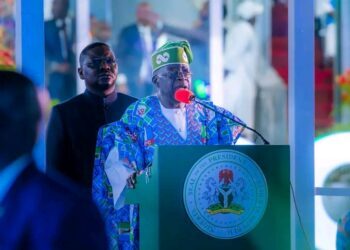


The Federal Government remains steadfast in its commitment to enhancing food security in Nigeria, despite facing significant funding constraints. Aliyu Abdullahi, the Minister of State for Agriculture and Food Security, made this assertion during the 2026 budget defence session hosted by the Joint National Assembly Committees on Agriculture, Production, Services, and Rural Development in Abuja on Tuesday.
Focus on Increasing Food Production
Mr Abdullahi highlighted ongoing initiatives aimed at boosting food production, strengthening sustainability, and stabilising the nation’s food supply. He noted that, despite high input costs and structural challenges affecting farmers across the country, there have been marginal increases in agricultural output, as indicated by government surveys.
“Despite prevailing financial constraints, Nigerian farmers have shown strong commitment to production,” he stated. However, sustaining these gains requires addressing the systemic challenges that producers face nationwide.
Funding Shortfalls Impacting Agricultural Progress
The minister disclosed that approximately 30 per cent of the 2025 capital allocations, amounting to roughly N18 billion, has yet to be released. “Only funds tied to constituency-related projects have seen partial disbursement, with about N19.8 billion released so far,” he explained. Limited capital releases have hindered programme execution and restricted the ministry’s capacity to enhance support for farmers.
For the 2026 fiscal year, the agricultural sector is projected to receive a total allocation of about N1 trillion, with the Federal Ministry of Agriculture and Food Security expected to receive approximately N262 billion for capital expenditure and around N19.18 billion for recurrent costs, including personnel and overheads.
Rising Input Costs as a Major Concern
The minister underscored that the most pressing issue for farmers is the escalating cost of inputs, particularly fertiliser. This increase is driven by broader macroeconomic pressures that are beyond the ministry’s direct control. “Gas pricing policies significantly affect manufacturers’ ability to produce affordable fertiliser for Nigerian farmers,” Mr Abdullahi noted.
He also pointed out that taxation policies on agrochemicals and pesticides are inflating production costs, forcing farmers to juggle rising expenses with consumer expectations for lower food prices.
To address these challenges, Mr Abdullahi urged lawmakers to support interventions that improve access to agricultural inputs, promote domestic fertiliser production, and alleviate cost pressures throughout the agricultural value chain.
Legislative Support Critical for Agricultural Sustainability
Bello Ka’oje, Chairman of the House Committee on Agricultural Production and Services, cautioned that reduced funding for the agricultural sector could undermine Nigeria’s food security ambitions and hinder economic recovery. He stated that the committee’s review would align with the Renewed Hope Agenda of President Bola Tinubu, focusing on strategies for food self-sufficiency, mechanisation, youth empowerment, and import substitution.
Senator Saliu Mustapha (APC-Kwara), Chairman of the Senate Committee on Agriculture, echoed these sentiments, urging the federal government to prioritise adequate funding and timely resource allocation to safeguard food security and support economic growth.
“Low implementation of capital projects in the 2025 budget constrained productivity in the sector,” Mr Mustapha remarked. He noted that while total national expenditure is projected to rise to N58.47 trillion in 2026, the allocation for the agriculture ministry has decreased from N2.22 trillion in 2025 to N1.45 trillion.
Commitment to Effective Resource Utilisation
Both lawmakers assured that the National Assembly would collaborate with the ministry to ensure that the 2026 budget translates into tangible benefits for Nigerians. The focus will be on effective resource utilisation to enhance productivity and foster food security.
In conclusion, while the Federal Government faces significant challenges in funding, its commitment to improving food security in Nigeria remains unwavering. With support from the legislature and strategic interventions, there is hope for a more sustainable agricultural sector capable of meeting the needs of the nation.