
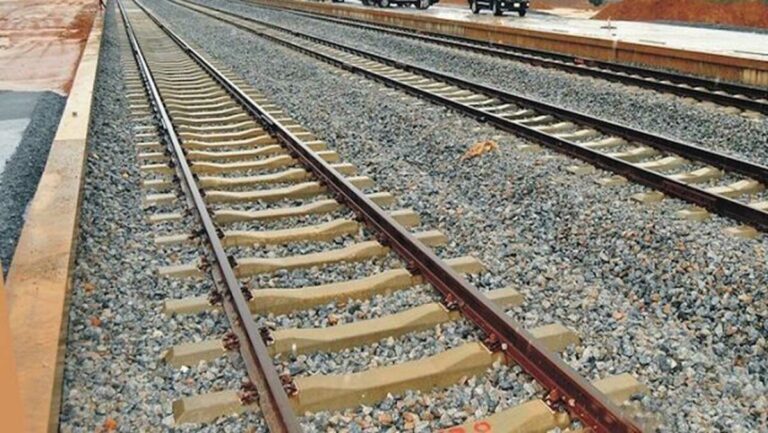
In a landmark decision set to redefine urban mobility in northern Nigeria, the Federal Government has approved the development of a metropolitan rail service for Kano State, with a projected budget of one trillion naira (approximately £500 million). The ambitious infrastructure project, hailed as a transformative intervention, aims to alleviate chronic traffic congestion, stimulate economic growth, and position Kano as a modern transport hub.
The announcement was made public by the Kano State Governor, Alhaji Abba Kabir Yusuf, while addressing the state’s delegation at the 2025 National Qur’anic Recitation Competition in Borno. Governor Yusuf characterised the approval as a pivotal moment for the ancient city, underscoring the federal administration’s commitment to equitable regional development and sustainable urban planning.
“This project is designed to deliver a modern, efficient, and affordable mass transit system for the people of Kano,” Governor Yusuf stated. “It will seamlessly connect key commercial districts, residential areas, and transport terminals, dramatically enhancing daily mobility for millions of residents.”
The governor’s remarks, detailed in an official communiqué issued by his spokesperson, Sanusi Bature Dawakin-Tofa, on Thursday, outlined a vision extending far beyond mere transportation. He emphasised the metro rail’s potential as a catalyst for commerce, investment, and an improved quality of life.
A Strategic Investment for Economic Revitalisation
Kano, Nigeria’s second-largest commercial centre and a historic crossroads of trans-Saharan trade, has long grappled with the pressures of rapid urbanisation. Its bustling economy and growing population have stretched existing road infrastructure to its limits, leading to significant productivity losses and environmental challenges due to incessant traffic gridlock.
The proposed metropolitan rail network is strategically conceived to untangle this congestion. By providing a reliable, high-capacity alternative to road travel, the system is expected to reduce journey times, lower transportation costs for citizens, and improve the overall flow of goods and labour. Economists predict a direct boost to trade, with easier access to markets like the famed Kantin Kwari Textile Market, Sabon Gari, and the Kano Economic City.
“By enhancing connectivity, we are not just moving people; we are moving the economy forward,” Governor Yusuf explained. “This project will stimulate trade and investment, attract new businesses, and ultimately position Kano as a premier logistics and transportation nexus in northern Nigeria and across the West African region.”
Governor Pledges Collaboration and Transparency
Acknowledging the scale and complexity of the undertaking, Governor Yusuf pledged his administration’s full cooperation with relevant federal agencies, including the Federal Ministry of Transportation and the Nigeria Railway Corporation, to ensure smooth and timely implementation. He placed a particular emphasis on governance and accountability.
“My administration is fully committed to working in tandem with all federal bodies to see this project to fruition. We will insist on the highest standards of transparency and accountability throughout the procurement and construction phases,” he assured. This commitment is likely aimed at assuaging public concerns over the management of large-scale infrastructure budgets in the country.
The governor extended formal gratitude to the Federal Government for the initiative, reaffirming Kano State’s alignment with national policies aimed at infrastructural development. “We appreciate this significant initiative and reaffirm our commitment to keying into all supportive federal policies designed for progress. This metro rail is a testament to what can be achieved through collaborative governance,” he said.
Project Specifications and Anticipated Impact
While the initial announcement confirms the project’s approval and broad objectives, detailed technical specifications, exact routes, and a phased implementation timeline are anticipated in the coming months. Typically, a metropolitan rail project of this magnitude would involve multiple lines connecting the city centre with outlying suburbs, industrial clusters, and major entry points like Mallam Aminu Kano International Airport and the main railway station.
Urban planners highlight that such systems often trigger organised urban renewal around stations, fostering the development of commercial hubs and improved housing. The project is also expected to generate thousands of jobs during construction and create permanent skilled employment opportunities in operational and maintenance roles thereafter.
Furthermore, by encouraging a shift from private vehicles and informal transport, the metro rail promises substantial environmental benefits, including reduced carbon emissions and improved air quality in the metropolitan area.
A Signal of Broader Ambitions
The approval of the Kano metro rail is being interpreted by analysts as a significant signal of the Federal Government’s renewed focus on critical transport infrastructure outside the nation’s capital. It follows other major rail initiatives and suggests a strategic intent to decongest ports and boost interstate connectivity, with Kano serving as a northern anchor.
The success of this project could serve as a blueprint for other major Nigerian cities facing similar mobility crises. As details emerge, stakeholders from the private sector, civil society, and the international community will be watching closely, with many anticipating competitive tendering for the design, financing, and construction contracts.
For now, the citizens of Kano have been offered a vision of a less congested, more connected, and economically dynamic future. The ₦1 trillion investment represents not just steel and concrete, but a substantial bet on the productivity and potential of northern Nigeria’s largest and most historically significant city. The path to realisation will be complex, but the formal approval marks a decisive first stride towards a modernised Kano, firmly on track for the 21st century.