

By Mibzar Nixon Jallo, Abuja
The Managing Director and Chief Executive Office of the Ministry of Finance Incorporated (MOFI), Dr. Armstrong Takang, has called for more direct government involvement in the business of driving economic growth, explaining that it will play a critical role in achieving national development.
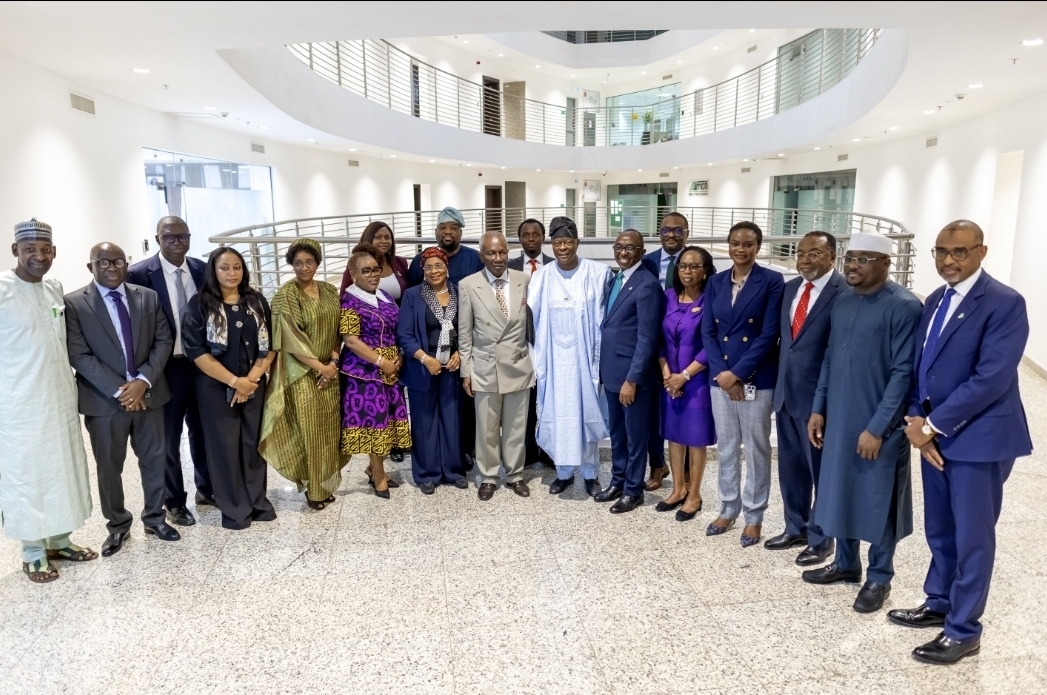
The chief executive officer of MOFI who was dismissing the notion that the government should not be involved in the business of driving economic growth in Nigeria, made the call, recently in Abuja during the official launch of the MOFI Excellence Awards and the inauguration of its award panel.
Takang said apart from the fact that the government plays regulatory role in driving economic activities, it can also leverage on its sovereign status to drive business and create opportunities for the private sector flourish.
“The government has a pivotal role to play because of its sovereign status and its ability to access resources that the private sector cannot. There are certain amounts of capital the government can mobilize where private companies simply don’t have access to”.
“It is a fallacy to suggest that only the private sector can grow businesses. At MOFI, we believe the government can leverage its sovereign status to drive business and create opportunities for the private sector, especially where they lack the necessary capital. The private sector still needs the government. And we believe state-owned enterprises have a significant role to play in the economy”.
While revealing that over the past year, MOFI has embarked on an ambitious reform agenda to transform how Nigeria manages its public assets and investments, the managing director said they have launched the MOFI Corporate Governance Scorecard which will now institute an awards programme that recognises outstanding performances and translate reform ideas into tangible outcomes.
He said the excellence awards sit within a broader reform agenda, which MOFI has been championing over the past two years, adding that as the Federal Government’s investment vehicle and asset manager, MOFI’s mandate is to professionalise, optimise and unlock value from the public portfolio, while strengthening governance, transparency and accountability across State-Owned Enterprises.
“Strengthening corporate governance reduces fiscal risks, improves the quality-of-service delivery, supports better financial performance and makes these enterprises more attractive partners for private capital. In doing so, it supports the broader objectives of the Renewed Hope Agenda: restoring macro-economic stability, mobilising investment, creating jobs and delivering tangible improvements in the lives of Nigerians”.
“The MOFI Corporate Governance Scorecard is built around key pillars that reflect global best practice but have been adapted to Nigeria’s context – effectiveness and independence of boards; robustness of the control and risk management environment; strategic alignment and performance management; quality and timeliness of financial reporting and disclosure; and emerging but increasingly important areas such as ESG, innovation, stakeholder engagement and sustainability”, he added.
Takang who also noted that the MOFI Excellence Awards will incentivise agencies to adopt best practices, spur improvements across the board, also emphasized that it will ensure that Nigerian SOEs are seen as dynamic, well-managed organisations and having the capacity to contribute meaningfully to national development goals.
He further stated that the award ceremony which will be taking place next year will an evidence-based process, not a popularity contest, explaining that the final evaluative judgement will rest with this Panel in order to give the process its independence and having integrity.
“From a process perspective, the road to the inaugural awards in 2026 is structured and deliberate. In the coming months, portfolio companies will submit the documentation and data required for their Scorecard assessments, which an independent consultant will review, validate and, where necessary, supplement through engagement with boards and management. Once this technical work is complete, the consolidated findings will be presented to Awards Panel, whose task is to provide independent oversight, challenge and judgement by reviewing score distributions, interrogating outliers and confirming which entities genuinely meet the threshold for recognition in each category. We expect this to be an evidence-based process, not a popularity contest; the final evaluative judgement will rest with this Panel. That is what gives the process its independence and its integrity”, he further stated.