Abuja, Nigeria – In a stunning diplomatic rebuff, the Saudi Arabian Minister of Hajj and Umrah, Dr Tawfiq bin Fawzan Al-Rabiah, pointedly avoided the headquarters of Nigeria’s National Hajj Commission (NAHCON) during his official visit this week. This snub came after the commission, under its Chairman Professor Abdullahi Saleh Pakistan, allegedly expended approximately N17 million on lavish preparations and issued a compulsory stay-at-home directive for staff.
The incident has sparked a major scandal, exposing profound protocol breaches, allegations of financial impropriety, and a desperate bid by an embattled chairman to burnish his image, according to extensive investigations and insider accounts obtained by Elanza News.
A Costly No-Show
Dr Al-Rabiah arrived in Abuja on the afternoon of Tuesday, 4th February 2026, on a tour of key Hajj nations including Malaysia, Indonesia, Turkey, and Egypt. He was received at the airport by protocol officials from the Ministry of Foreign Affairs and, after last-minute negotiations, a contingent of NAHCON board members led by Professor Pakistan.
Contrary to a parallel schedule orchestrated by NAHCON, the Saudi minister proceeded directly to the Ministry of Foreign Affairs headquarters in the Central Business District for a bilateral meeting with his counterpart, Ambassador Yusuf Maitama Tuggar. He departed Nigeria for Egypt the following day, Wednesday, without setting foot in the Hajj House, NAHCON’s elaborately prepared headquarters.
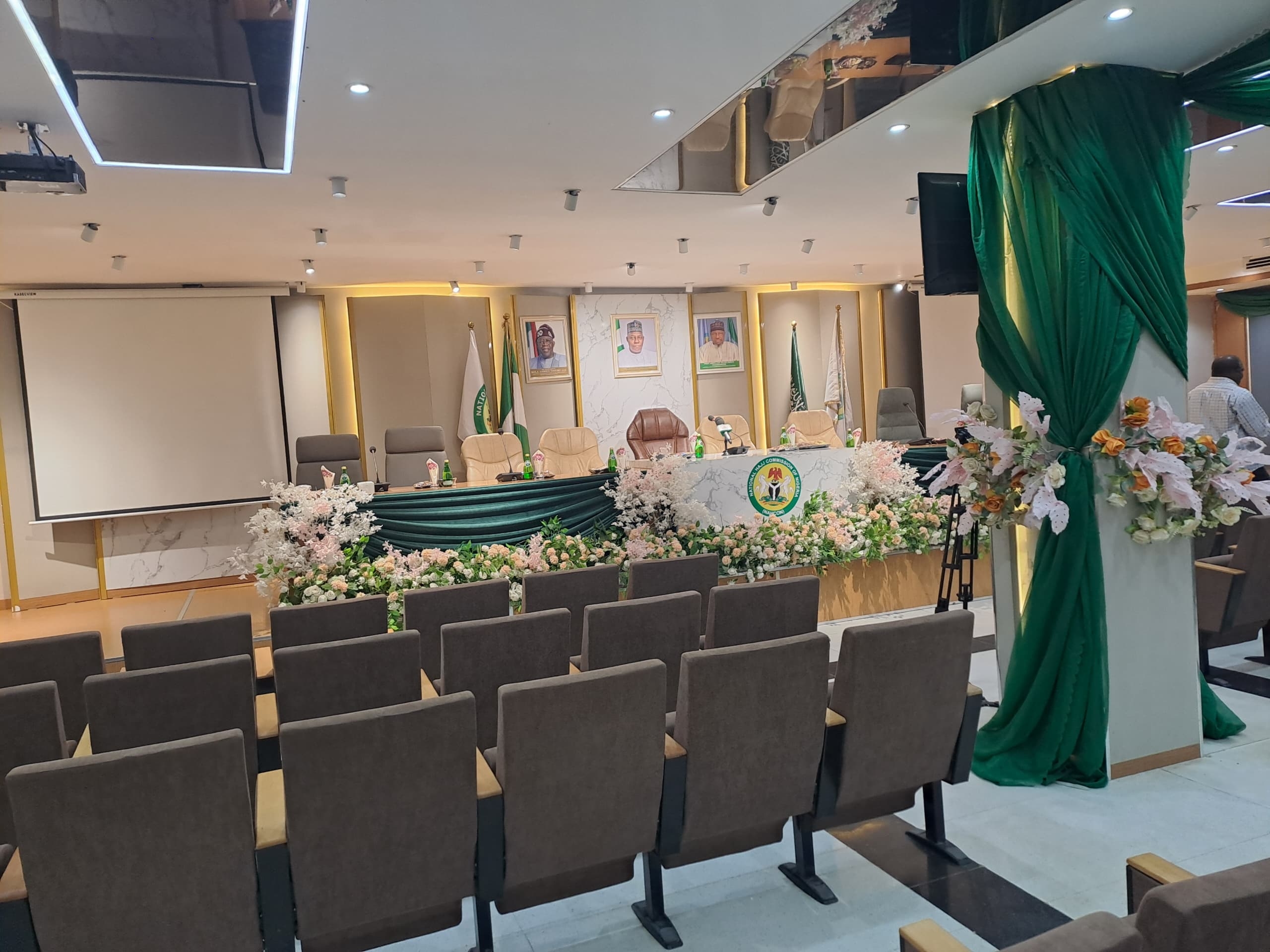
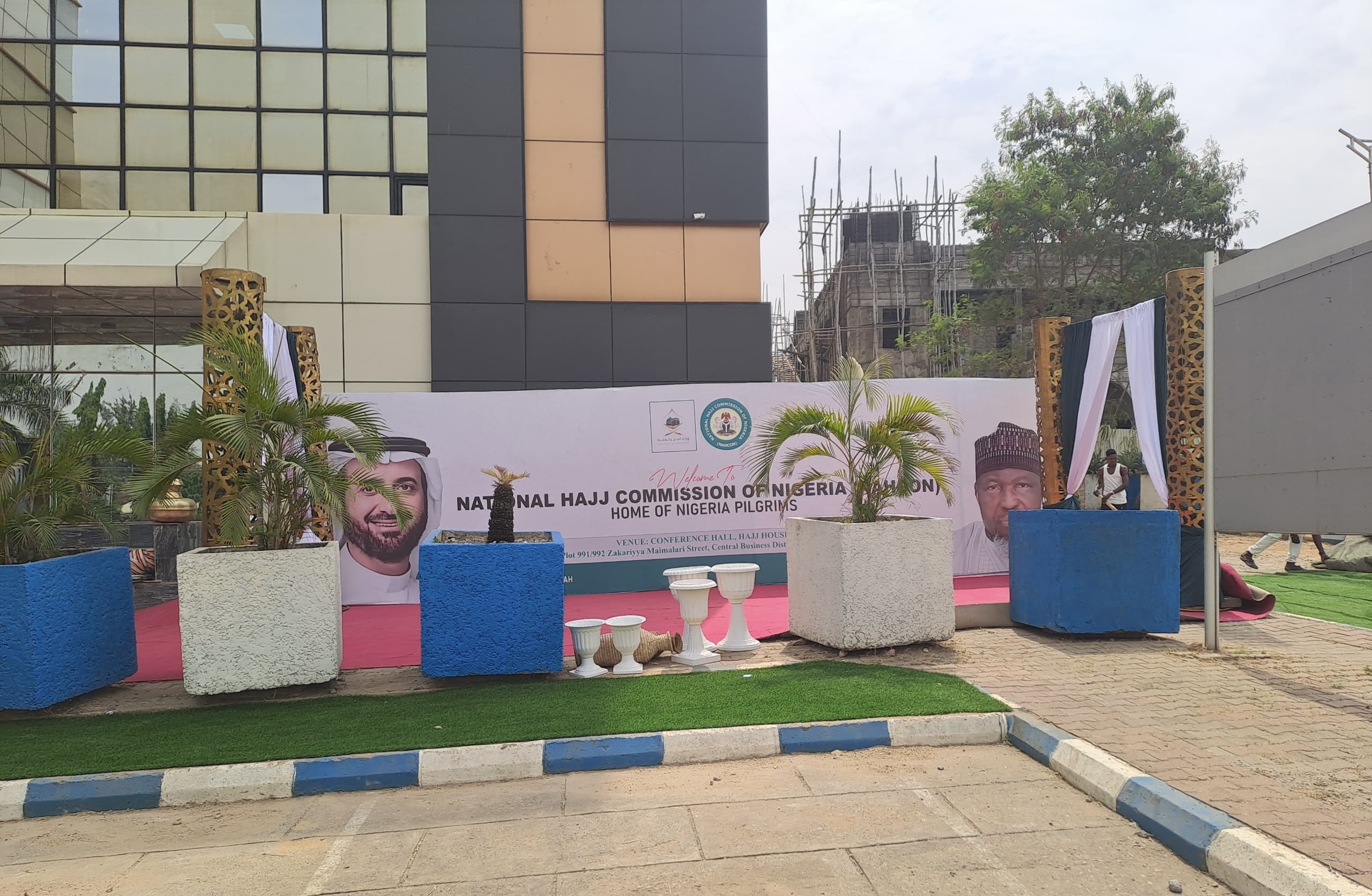
Elanza News can reveal that in anticipation of the visit, NAHCON management authorised the expenditure of around N17 million to refurbish and decorate the Hajj House. This included hiring event planners to create an Arabian-themed setting in the main meeting hall, laying extensive red carpets, and commissioning a buffet of Middle Eastern cuisine. Notably, large banners featuring the images of Dr Al-Rabiah and Professor Pakistan were displayed at the premises—conspicuously omitting President Bola Tinubu, Vice President Kashim Shettima, or Foreign Minister Tuggar.
“It was a great opportunity for Professor Pakistan to make some public relations stunts,” a senior NAHCON official, speaking on condition of anonymity, disclosed. “Given the controversies surrounding him—EFCC investigations, allegations of corruption, a vote of no-confidence from the board—he saw this visit as a rare chance to burnish his battered public image.”
A Breach of Protocol and an “Illegal” Holiday
The chairman’s actions have been condemned by seasoned diplomats and civil servants as a severe breach of official protocol. Insiders state that Professor Pakistan initiated plans to host the minister without substantive consultation with the Foreign Ministry, the Vice President’s Office, or the Saudi Embassy.
“It is puzzling that Mr Pakistan was even announcing that he would receive the Saudi minister, who is not his guest in the first place,” a NAHCON staff member said. “The Saudi minister is a guest of the federal government, and the Nigerian Foreign Minister is his host. This is Diplomacy 101.”
In a move described by a former federal director as “illegal and reprehensible,” Professor Pakistan further declared a mandatory stay-at-home day for all non-essential NAHCON staff on Tuesday. An internal circular cited “environmental constraints” and “unavailability of parking space” due to the anticipated event. Security personnel were also deployed to restrict parking on Zakariya Maimalari Street for the day.
“Declaring a public holiday is an apparent usurpation of powers that doesn’t fall within his purview,” the retired bureaucrat stated. “It is a crude circumvention of Public Service Rules.”
Guests Left in a Perfumed Hall
The commission had invited CEOs of state pilgrim boards, Hajj airline executives, and leaders of private tour operators to the anticipated reception. One airline executive, who travelled from Kano for the event, recounted the scene to Elanza News.
“We were seated in a well-decorated hall, continuously perfumed with smoky Oud incense. They told us the visitor would arrive by 2 pm, then 4 pm. He never did,” the executive said. After 5 pm, guests were informed the chairman would address them, but he did not appear. “After a moment of culinary indulgence, we all dispersed without anyone telling us why the august visitor didn’t come.”
By Wednesday afternoon, event planners were seen dismantling the unused decorations.
The Official Meeting and Further Embarrassment
The only official engagement was the meeting at the Foreign Ministry. A copy of the agenda obtained by Elanza News listed nine items, including a “Spotlight on Hajj and Umrah” and a “Meeting with Hajj and Umrah stakeholders at NAHCON headquarters.” The latter was never attended.
During the meeting, another protocol misstep occurred. While Ministers Tuggar and Al-Rabiah delivered their remarks in English, Professor Pakistan chose to address the gathering in Arabic—a language not officially recognised for such federal government proceedings.
“This was another avoidable embarrassment,” a former foreign ministry bureaucrat fumed. “Nigeria’s official language is English. He embarrassed our country.” This incident has heightened existing concerns within the Hajj industry about the chairman’s reliance on interpreters for official English correspondence.
The Saudi delegation’s perspective remains discreet. Notably, as of Friday, 6th February, the Saudi Ministry of Hajj and Umrah’s official website and verified social media channels carried no mention of the Nigerian leg of the minister’s tour.
A Context of Decline and Crisis
This fiasco occurs against a backdrop of reported declining fortunes for Nigeria’s Hajj management. Insiders cite that under Professor Pakistan’s leadership, Nigeria’s longstanding rating with Saudi authorities has plummeted. This has been accompanied by an unprecedented reduction of Nigeria’s 2026 Hajj quota to 40,000 slots, down from the original 95,000, ejecting the nation from its historic position as the world’s fifth-largest Hajj contingent.
“With the coming of Professor Pakistan, an Arabic teacher with zero experience in administration and logistics, those achievements recorded by his predecessors have crumbled,” a commission insider lamented.
Foreign Ministry Clarifies Stance
When contacted by Elanza News, Alkasim Abdulkadir, spokesperson for the Foreign Minister, provided a clear protocol perspective that underscored NAHCON’ misalignment.
“The Saudi visitor is an honourable minister. Therefore, protocol-wise, the visiting minister must engage with his opposite counterpart. That is why he paid a courtesy call to the Honourable Minister of Foreign Affairs,” Abdulkadir stated. He confirmed he was unaware of any arranged event at NAHCON’s headquarters, describing the commission as “simply an agency of the government.”
Analysis: A Symptom of Systemic Ills
This episode transcends a mere logistical failure; it is a symptom of deeper institutional and governance issues. The alleged diversion of N17 million without due tender process, the usurpation of authority in declaring a work-free day, and the blatant disregard for diplomatic protocol suggest a leadership operating in isolation from established governmental structures.
The snub from the Saudi minister is a potent diplomatic signal, likely reflecting concerns over the management and stability of Nigeria’s Hajj apparatus. For the Nigerian government, it presents an urgent need to scrutinise not just a single event’s fallout, but the health of an institution critical to the religious and financial well-being of tens of thousands of its citizens annually.
The ball is now in the court of the supervising Office of the Vice President and anti-graft agencies. Whether this costly misadventure will trigger consequential accountability or fade as another footnote in Nigeria’s chronicle of institutional impunity remains to be seen.