
By Luka Binniyat
The Minister of Defence, General Musa Gwabin Musa (rtd), has now settled down to duty after days of unanimous, tumultuous applause and ululation from virtually every section of Nigeria — including many who ordinarily loathe the government of President Bola Ahmed Tinubu.
The only tiny, largely unseen groups that may have despised his appointment are the same forces that General Musa — now simply called “Musa” by admirers — is expected to neutralise. Their silence is understandable.
In recent memory, no political appointee has been relieved of duty in a manner that triggered such spontaneous national disapproval and instantly elevated the individual to near-heroic status as did the retirement of General Christopher Musa as Chief of Defence Staff (CDS). It was strange, almost un-Nigerian.
Our tradition is cynical joy when officials are removed. Banner headlines scream “SACKED!” Social media erupts in mockery.But this was different.Likewise, Nigerians are usually indifferent to new appointments.
Beyond family members and political associates, the general public shrugs indifferently. “Na him turn to chop,” is the common refrain.
Not so with the appointment of General Musa (rtd) as Minister of Defence.“Musa” at the Gate of the NationIncidentally, Musa is the very name many Southerners derogatorily use for Hausa-speaking security guards (maigaurd) who man gates of offices and private homes, especially in the South.
“Wetin Musa no go see for gate?” is a familiar expression funnilyingly deployed when ‘musa’ encounters bizarre or dangerous situations that would bewilder even passersby.Today, however, Musa has been handed a far humongous gate.
He is now saddled with guarding the entire gates of Africa’s most populous nation — nearly one million square kilometres of land, over 200 million souls, and assets running into hundreds of trillions of naira and most of a national pride.With terrorists, bandits, and allied violent criminal networks refining their craft of public destruction daily — and with the United States breathing fire down President Tinubu’s neck over what it insists is a “Christian genocide”, — the task before Nigeria’s new ‘maiguard’ is nothing short of Herculean.
A Soldier Forged by Nearly Four Decades of WarUnlike many security political appointees who merely read security briefs, Musa has lived through war.
He spent 39 years in uniform, bearing arms, commanding troops, coordinating intelligence, and managing complex military bureaucracy at the apex level. He has seen battlefields, he has buried colleagues, knew traitors and saw bravery.
His experience in combat, intelligence, and administration towers above that of the average Nigerian senior officer.
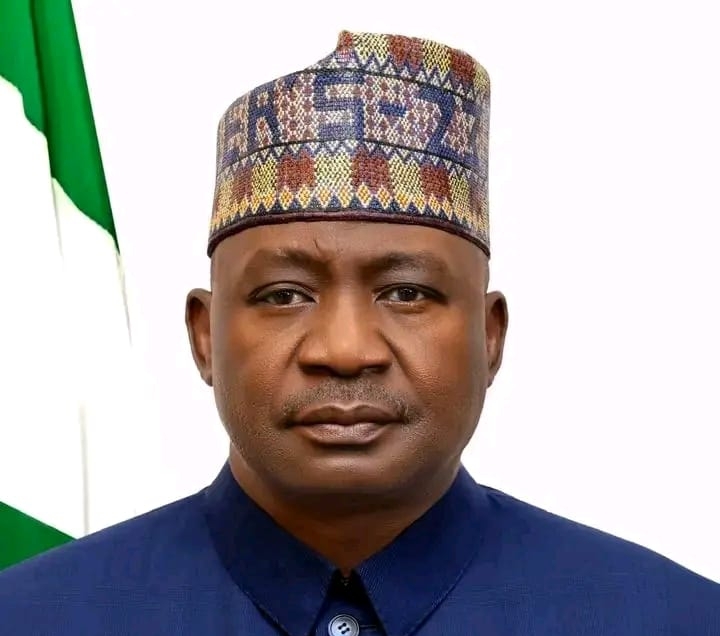
His Ministerial Uniform In fact he has been so much in uniform that even in his retirement, he has designed his own uniform for his new job – a thick, bluish embroidered Hausas’ hula or cap, worn over a meticulously sewn jacket, marking his transition from combat fatigues to his ministerial uniform to show that he is still in another form of military service.
Yet, no matter the attire, Musa remains what he has always been — a man ranked exceptionally high in integrity, competence, professionalism, and patriotism.
By any honest metric, he stands above every single member of the Tinubu cabinet today.And therein lies the danger! From Military Order to Political TreacheryFor 39 years, Musa was a soldier.
He received orders and obeyed. He issued orders and they were obeyed: Obedience. Discipline. Loyalty. Orderliness.
These were the codes. These virtues defined his career.
Suddenly, he now sits in a Federal Executive Council populated largely by professional politicians — a class infamous for indiscipline, treachery, corruption, greed, fifth-column activities, and in many cases, glaring incompetence.He is not merely a change of workplace. He is a collision of ethics and work culture.
A Brewing Conflict at the Apex of SecurityThe clearest fault line within Nigeria’s security architecture today is the conflicting worldview between General Musa on one side, and the National Security Adviser, Nuhu Ribadu, alongside the Minister of State for Defence, Bello Matawalle, on the other. Two of them are Fulani.
While serving as CDS, Musa repeatedly insisted that banditry and terrorism are not issues for negotiation, and that appeasement only emboldens criminals.
In contrast, Ribadu and Matawalle — along with a former Defence Minister, Mohammed Badaru — actively encouraged Northern governors to hold so-called “peace meetings” in open town squares, where bandits arrived in hundreds, fully armed, speaking with brazen arrogance to terrified communities. Nigerians do see it as peace-building.
They consider it as a humiliation of the state.Matawalle and the Burden of Damaging AllegationsBello Matawalle is widely viewed as a sympathiser of bandits.
An old video resurfaced showing him defending bandits with the infamous line: “Not all bandits are bad.”One of his aides (Musa Mohammed Kamara) has openly affirmed that Matawalle maintained friendly relationships with notorious bandit leaders — some of them on the Nigerian military’s wanted list, with bounties on their heads.
He affirmed taking hundreds of millions of Naira, to bandits leaders, on the instructions of Matawale; including gifts of vehicles and bulk purchases of cows stolen by the bandits among others.
Most damning is the case of Bello Turji, a vile serial murderer, kidnapper, extortionist, and arsonist, who recently appeared in a video confirming he met Matawalle at the Government House in Gusau — though denying he collected money.
Matawalle admits dealings with bandits but claims it was a government-wide consensus involving external stakeholders. He insists he is a victim of blackmail by political enemies.
The Question of Moral RectitudeWhat baffles Nigerians and external observers alike is this:How does a man so deeply entangled in allegations of cordial relationships with mass murders and spending hundreds of millions appeasing them while their victims got no justice nor relieve, retain the moral confidence to remain in office? More troubling still is President Tinubu’s silence.
In functioning democracies, such an official would at least be asked to step aside — even under the polite fiction of “health reasons” commonly used by this administration — pending an independent investigation.
Instead, Matawalle has approached the courts to silence critics and media houses, attempting to bury scrutiny.
But the call for his removal is only getting louder.
And this is one of the men General Musa must work with daily.Ribadu and the Politics of AppeasementThen there is the National Security Adviser.
Nuhu Ribadu once publicly downplayed the enormity of Nigeria’s crisis by telling the world that no part of Nigeria is under terrorist or bandit occupation — a statement contradicted by facts on the ground.
Ribadu is widely seen as the architect of the appeasement doctrine — pardons, negotiations, and alleged monetary incentives to armed groups.
Former Kaduna State Governor, Nasir el-Rufai, himself not a paragon of integrity, accused Ribadu of facilitating monthly payments to bandits to reduce killings and kidnappings.
Ribadu has said that el-Rufai was lying. Whether true or not, the public perception about that policy is corrosive.
Why is Ribadu still in office when insecurity has worsened and public confidence has collapsed? Can he forged a positive working partnership with the retired general in view of their glaring disagreements in the policy of pardon to terrorists? An Undeclared War and an Unbalanced CommandNigeria is, by all reasonable definitions, in an undeclared war.
It is a war prosecuted largely by armed Fulani militias and allied terror networks spreading from the Sahel into Nigeria’s forests, farmlands, and highways.
The grim news of killings, mass kidnapping and associated violence carried out by them daily is major news content these days.With two Fulani men, already maligned by appeasement policies toward armed groups widely perceived as Fulani-dominated, sitting atop the security pyramid, Musa’s chances of success are structurally constrained Why Musa Will Succeed — If Tinubu ActsGeneral Musa can succeed.He has the experience.
He knows the terrain and knows all the Commanders who must defer to him, not only as the Minister of Defense, but as their professional senior. He has moral authority to be trusted with public funds.
He has the professional clarity to prosecute a real war against terror.But he cannot succeed alone.President Tinubu must make a decisive choice: whether Nigeria’s security architecture will be governed by professional military logic or ethnic-political appeasement.Removing Bello Matawalle, who appears barely literate, and Nuhu Ribadu is not an ethnic purge; it is a strategic reset. It will signal seriousness to the armed forces, restore public confidence, reassure victims, and tell terrorists that Nigeria is done negotiating its own demise.With a unified command structure aligned to Musa’s doctrine of use of force and universal approved none-kinetic approach — not appeasement — Nigeria can begin to reclaim its gates.And then, truly, we shall say: Wetin Musa no go see for gate and e no deal with?