

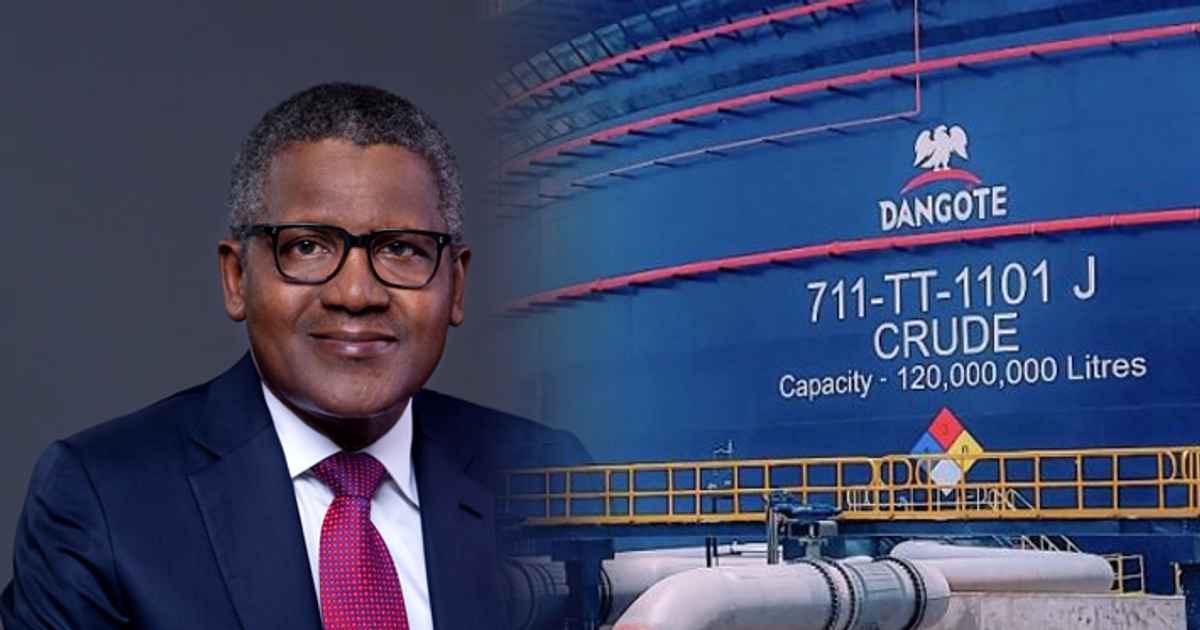
The Depot and Petroleum Products Marketers Association of Nigeria (DAPPMAN) has raised serious concerns, alleging that Dangote Refinery is offering petroleum products at lower prices to foreign buyers compared to local Nigerian marketers.
This claim challenges the widely held belief that the refinery is the definitive answer to Nigeria’s fuel supply challenges. DAPPMAN revealed that the refinery currently fulfills only 30 to 35 percent of the nation’s petrol requirements, with the remaining 65 percent still being imported by its members and other marketers.
In a comprehensive statement released on Saturday, Executive Secretary Olufemi Adewole expressed grave concerns over the escalating tensions between the refinery and the National Union of Petroleum and Natural Gas Workers (NUPENG). He felt it necessary to address what he termed “inaccurate or misleading claims” that could jeopardize the interests of other companies within the sector.
“The notion that the stability of Nigeria’s downstream sector relies solely on one refinery is both misleading and overlooks the broader industry context,” Adewole remarked. He highlighted the ongoing efforts of his members to ensure fuel accessibility over the years, noting their investments in infrastructure and resilience during challenging economic times.
Adewole was particularly critical of Dangote’s pricing strategies, arguing that the refinery’s widely publicized price reductions were not merely patriotic gestures but were strategically planned to disadvantage competitors.
“These price drops often coincided with periods when other importers had shipments en route or in storage, resulting in price shocks that hindered competition,” he noted.
The core of his allegation centered on the refinery’s habit of offering lower prices to international customers while charging local buyers more. “This practice contradicts claims of prioritizing Nigerians and imposes an undue burden on domestic businesses,” he asserted.
DAPPMAN also categorically rejected any implication that its members import substandard fuel, asserting that all imports undergo rigorous independent testing. “Ironically, the same refinery that claims superiority has frequently sought waivers to distribute products with sulphur levels exceeding approved limits,” Adewole added.
Moreover, the association dismissed the notion of ‘free delivery’ from the refinery, clarifying that marketers must lift a quarter of their allocations directly from Dangote using company-owned trucks, for which they incur commercial charges.
In closing, Adewole emphasized that while the Dangote Refinery is a significant player in the market, it cannot be viewed as the sole solution. “The health of Nigeria’s downstream sector is not reliant on a single facility,” he concluded. The association called for constructive dialogue and responsible communication among all stakeholders to foster market stability.