By Abubakar Yusuf
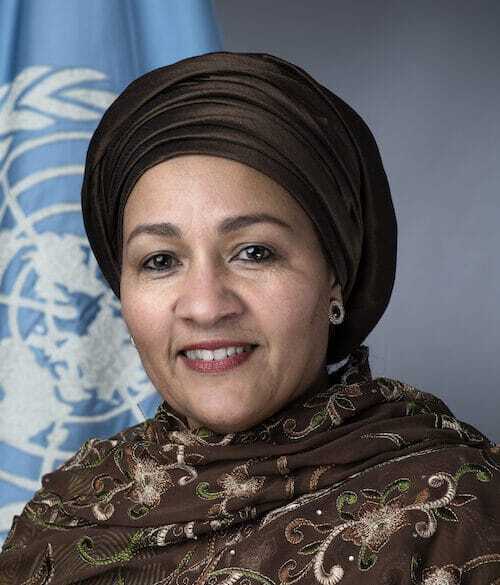
In a remarkable tenure spanning nearly a decade, Amina J. Mohammed, the United Nations Deputy Secretary-General from Nigeria, has exemplified diplomatic resilience and administrative excellence. Since her initial appointment in 2017 and subsequent reappointment in 2022, her leadership has garnered international acclaim, with UN Secretary-General António Guterres highlighting her significant contributions to global development.
## A Legacy of Leadership
Amina Mohammed’s journey within the United Nations is marked by her unwavering commitment to addressing critical global challenges. Guterres, recognising her exceptional capabilities, stated, “After being elected, I have the pleasure to invite the Deputy Secretary-General to remain in my second mandate, and I hope she will accept.” Mohammed’s response, “absolute honour,” reflects her dedication to the role and the mission of the UN.
Her reappointment not only underscores her competence but also positions her as a strong candidate for the Secretary-General role in 2027. The Secretary-General’s acknowledgment of her qualities during her first term reinforces the notion that meritocracy remains vital in international leadership.
An Advocate for Sustainable Development
As an accomplished administrator and politician turned diplomat, Mohammed has played a pivotal role in organising the annual United Nations General Assembly (UNGA) for nine consecutive years. Her efforts have focused on uplifting developing and underdeveloped nations from the grips of poverty and addressing pressing issues such as health crises, social inequality, and climate change.
Her extensive experience in managing collaborations among nations is unparalleled, demonstrating her ability to foster dialogue and inspire collective action on a global scale. The Sustainable Development Goals (SDGs) have been a focal point of her initiatives, positioning her as an essential figure in promoting sustainable development worldwide.
Navigating Humanitarian Crises
Throughout her tenure, Mohammed has adeptly navigated numerous humanitarian and natural crises, securing vital support for development initiatives across various regions. Her collaboration with the African Union (AU) and other regional bodies has been instrumental in fostering resilience and promoting sustainable practices.
As Special Adviser to Ban Ki-moon on post-2015 development planning, she was a key architect of the 2030 Agenda for Sustainable Development, which serves as a blueprint for global prosperity and wellbeing. Her insights have been crucial in shaping policies that address the interconnected challenges faced by nations today.
A Commitment to Gender Equality
A steadfast advocate for gender equality, Mohammed has spearheaded initiatives aimed at empowering women and girls. From 2002 to 2005, she coordinated the Task Force on Gender and Education for the United Nations Millennium Project, championing education as a fundamental right and a catalyst for development.
Her tenure as the Senior Special Assistant to the President of Nigeria focused on the Millennium Development Goals (MDGs), where she was charged with coordinating the nation’s debt relief funds to achieve these goals. Her innovative approaches to poverty reduction and public sector reform have set a precedent for effective governance and development in Nigeria and beyond.
Global Influence and Recognition
Mohammed’s influence extends beyond her roles within the UN; she has served on numerous international advisory boards and panels, shaping global development agendas. As a member of the UN Secretary-General’s High-level Panel on Post-2015 Development Agenda, she acted as a conduit between various stakeholders, ensuring a cohesive approach to sustainable development.
Her leadership on the Advisory Board of the UNESCO Global Monitoring Report on Education highlights her dedication to advancing educational equity and quality worldwide. Mohammed’s involvement in the Independent Expert Advisory Group on the Data Revolution for Sustainable Development further underscores her commitment to leveraging data for informed decision-making.
Ministerial Leadership and National Impact
From November 2015 to February 2017, Mohammed served as Nigeria’s Federal Minister of Environment in President Muhammadu Buhari’s cabinet. In this role, she represented Nigeria in the AU Reform Steering Committee, actively contributing to regional development initiatives. Her resignation in February 2017 paved the way for her appointment as Deputy Secretary-General of the UN, where she continues to lead transformative efforts.
## A Vision for the Future
Looking ahead, Amina J. Mohammed’s trajectory suggests a bright future for global diplomacy and development. Her unique blend of administrative acumen, political insight, and diplomatic finesse positions her as a key player in shaping policies that will impact generations to come.
Her commitment to sustainable development, gender equality, and international cooperation reflects a deep understanding of the complexities of today’s world. As she continues her journey at the United Nations, the potential for her ascent to the Secretary-General role in 2027 remains a tantalising prospect for many.
Conclusion
Amina J. Mohammed’s exemplary career at the United Nations is a testament to her dedication, resilience, and vision for a better world. As she navigates the challenges of global governance, her leadership serves as an inspiration for future generations of diplomats and leaders. The impact of her work—addressing poverty, promoting education, and advocating for sustainable practices—will resonate long after her tenure, ensuring that her legacy endures in the annals of international diplomacy.
For more insights on global leaders and their contributions to sustainable development, stay tuned to Elanza News.