

By Nahum Sule, Jalingo
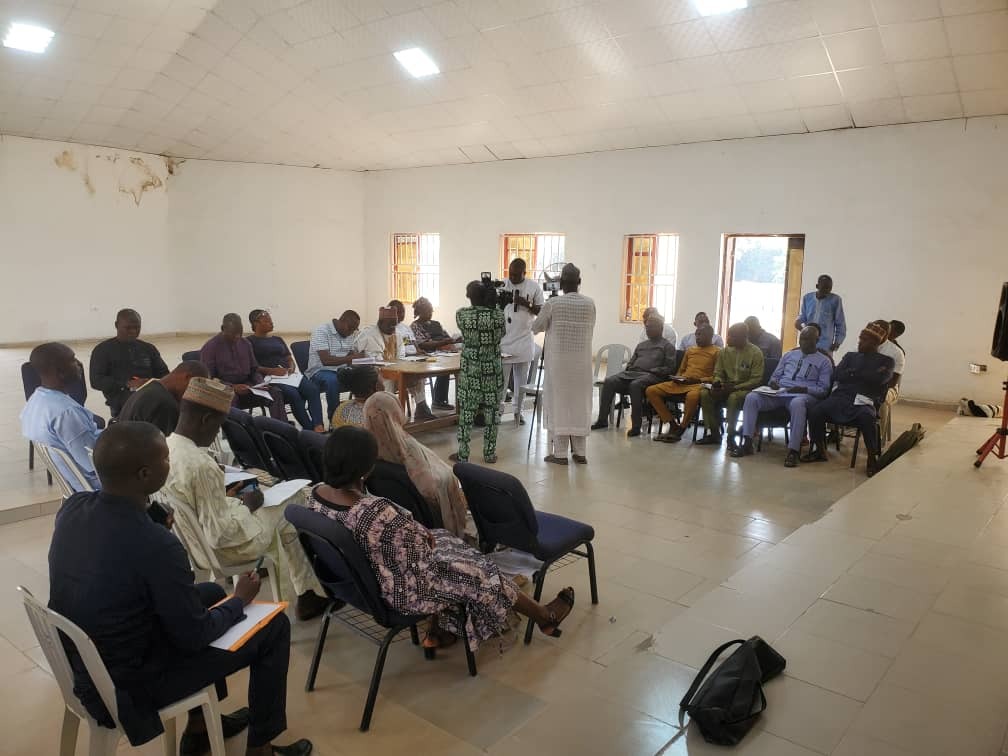
The Association of Civil Society Organisations on Malaria, Immunisation, and Nutrition (ACOMIN) convened its Q8 State Media Meeting in Taraba State, supported by the Global Fund’s Community-Led Monitoring (CLM) Project, which forms part of the GC7 grant. The meeting was chaired by ACOMIN’s State Chair, Alh. Muhd T. Danburam, and attended by the Project Manager of the State Malaria Elimination Programme, the State Team Lead of Management Sciences for Health, representatives from the Society for Family Health, the State TB Programme, the Taraba State AIDS Control Agency, the State Primary Health Care Development Agency, media representatives, and Executive Directors of implementing community-based organisations.
The meeting addressed the ongoing triple challenge hindering healthcare delivery across communities: a shortage of health workers, frequent stock-outs of essential supplies, and severe infrastructure decay in primary health facilities. These gaps continue to impact the provision of HIV, TB, and malaria services, leaving many community members without timely access to care.
ACOMIN reported significant community-driven improvements achieved through the CLM project in October and November 2025 across various local government areas (LGAs). These improvements include community donations of sulfadoxine-pyrimethamine (SP) for intermittent preventive treatment in pregnancy (IPTp), malaria rapid diagnostic tests (RDTs), mosquito nets, rechargeable bulbs, water drums, transparent billing sheets, voluntary security support, restoration of HIV testing services, provision of HIV test strips, sputum cups, and replacement of expired Truenat cartridges. These initiatives have contributed to increased antenatal care attendance, enhanced accountability, better malaria prevention, improved TB diagnosis, greater staff availability, increased patient patronage, and overall enhancement of service delivery.
ACOMIN called for stronger, unified action to tackle these challenges. Government agencies were urged to invest more in staffing, supply chains, and facility rehabilitation; the private sector and philanthropists were encouraged to support infrastructure, essential supplies, and staff welfare; the media was asked to continue amplifying community voices and promoting accountability; and community, traditional, and religious leaders were urged to intensify mobilization, monitoring, and advocacy to strengthen the availability and quality of services.
ACOMIN emphasised that only through collective effort and sustained collaboration can community health facilities evolve from facing shortages to becoming reliable, people-centred centres of care. The organisation reaffirmed its commitment to empowering communities, strengthening accountability, and improving health outcomes across Taraba State.