
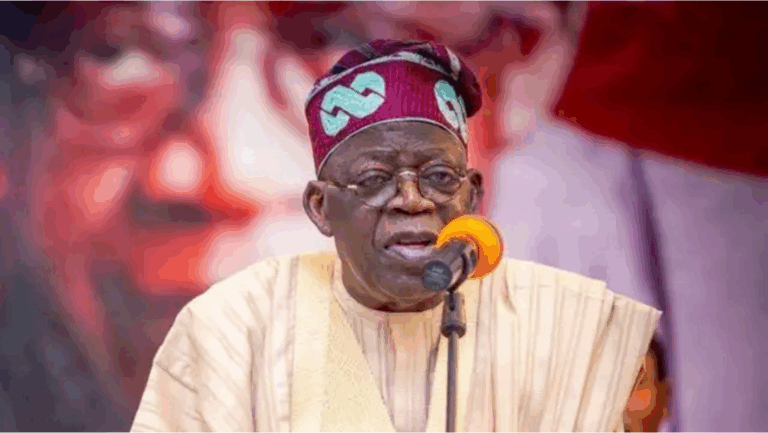
President Bola Tinubu has asserted that it is time for Africa to secure permanent seats on the United Nations (UN) Security Council, complete with all associated privileges, including the power of veto.
Mr. Tinubu, represented by Vice-President Kashim Shettima, made this statement on Monday during the first plenary session focused on Peace, Security, Governance, and Multilateralism at the Seventh African Union–European Union Summit in Luanda, Angola.
The Nigerian leader emphasised that a comprehensive reform of the global governance system is long overdue.
“It is time for Africa to occupy permanent seats on the UN Security Council, with all attendant privileges, including the veto. Genuine text-based negotiations under the Intergovernmental Negotiations (IGN) framework must now commence. We hope that EU Member States will support Africa’s long-standing and legitimate call for reform of the United Nations,” he stated.
President Tinubu highlighted that addressing these challenges necessitates a renewed focus from the AU and EU on preventive diplomacy, inclusive governance, and long-term investment in people and infrastructure.
He acknowledged that the EU has been one of the AU’s most reliable partners since the establishment of the African Peace and Security Architecture in 2002.
Mr. Tinubu recalled Nigeria’s experience, which demonstrates that unchecked regional instability can fuel terrorism, insurgency, banditry, and transnational organised crime.
He revealed that over 250,000 individuals linked to Boko Haram had surrendered in early 2025, following the Nigerian government’s strategic measures.
The president asserted that the challenges of armed conflict, illicit arms, climate pressures, irregular migration, and political instability across Africa now require enhanced cooperation.
In response, Mr. Tinubu stated that his administration has implemented a blend of kinetic and non-kinetic measures, including the Multinational Joint Task Force (MNJTF) in the Lake Chad Basin, which he described as an effective model of African-led cooperative security.
He noted that a significant aspect of Nigeria’s strategy continues to yield positive security results. “As of early 2025, over 120,000 individuals connected to Boko Haram, including family members, have surrendered.”
“Nigeria’s commitment to regional stability is further reinforced by the recent Sea-Lift Agreement between the Nigerian Navy and the AU Standby Force (ASF), enhancing Africa’s rapid deployment capabilities for peace operations and humanitarian support.”
The president commended the EU’s dedication to restoring peace in the Sahel while recognising Europe’s understandable concerns over irregular migration, much of which originates from ungoverned territories affected by insecurity.
On security matters, the president called for an EU initiative rooted in African-led frameworks and regional ownership to achieve positive outcomes. “Recent experiences have shown that externally driven initiatives, no matter how well-intentioned, cannot succeed quickly without robust regional ownership and a grounded understanding of local dynamics. Peace and security initiatives must therefore be co-created with African partners and anchored in African-led frameworks.”
Mr. Tinubu asserted that the issue of irregular migration must be addressed in a manner that acknowledges its deep economic and demographic drivers. He pointed out that criminalising mobility has only exacerbated insecurity across the continent and beyond.
Instead, he proposed structured labour pathways, such as Nigeria’s Technical Aid Corps, for cooperation within the Global South and Business Process Outsourcing (BPO). He noted that Nigeria’s highly skilled youthful population could help meet Europe’s labour needs without resorting to irregular migration.
“Seasonal mobility has been a cornerstone of West African civilisation for centuries — the ECOWAS Protocol on Free Movement simply acknowledges this reality. Our joint task is to transform mobility into safe, orderly, and productive pathways that benefit both continents,” he said.
The President also expressed concern over the resurgence of Unconstitutional Changes of Government (UCGs) in Africa, stating that they undermine the democratic foundations upon which the African Union was established. He remarked that these disruptions cannot be divorced from external pressures that distort political balances and strain already fragile systems.
He called on the European Union to collaborate closely with African partners in addressing the structural drivers of these crises. “Nigeria and its neighbours have initiated the Regional Partnership for Democracy (RPD), aimed at reinforcing constitutional order, countering extremist narratives, combating disinformation, and supporting governance reforms across West Africa. It reflects our belief that security and democratic stability must be pursued simultaneously.”
“The conflict in Sudan has resulted in over 40,000 deaths and displaced more than 12 million people. We welcome the G7’s call for renewed diplomacy; however, external actors fuelling the conflict must be held accountable. Similarly, rising tensions in South Sudan require continued engagement to ensure the full implementation of the Revitalised Peace Agreement ahead of the 2026 elections,” he added.
The president further emphasised that Nigeria firmly believes that peace and security initiatives in Africa must be African-led and implemented through legitimate platforms. “We stand resolutely against the use of private military and security companies (PMCs) in African conflicts, as their presence often complicates resolution efforts and undermines state sovereignty.”
“As the world witnesses a diminishing commitment to multilateralism, the EU remains a platform for partnership and collaboration on a continent-to-continent basis, anchored on mutual respect and shared aspirations,” Mr. Tinubu concluded, stating Nigeria’s steadfast commitment to advancing peace, security, and democratic governance across the continent. He expressed Nigeria’s readiness to work with the European Union to build a more stable, just, and prosperous world and extended gratitude to the government and people of Angola for their warm hospitality, as well as to the European Union for its longstanding support to the African Union, particularly in the realm of peace and security.