
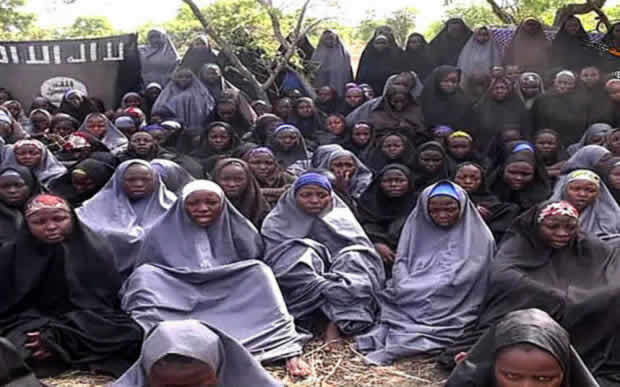
The UN Committee on the Elimination of Discrimination against Women (CEDAW) has disclosed that 91 Chibok schoolgirls are either still missing or held in captivity, ten years after their abduction.
The committee’scommittee’s findings indicate that many survivors continue to suffer from trauma and social stigma, facing significant barriers to accessing adequate support services.
This information was released in an inquiry report following a two-week confidential mission to Nigeria conducted in December 2023.
During their visit, the CEDAW delegation assessed conditions in Abuja and various states, including Adamawa, Borno, Enugu, and Kaduna.
The report stated, “The committee finds that grave and systematic violations persist following the mass abduction of schoolgirls in Chibok.” It emphasized that Nigeria is accountable for severe and systematic violations of the rights of women and girls amid ongoing mass abductions.
Experts highlighted the urgent need for measures to prevent torture and ill-treatment.
School staff noted that this was the first visit by a UN delegation to Chibok Government Secondary School since the mass abduction in 2014.
In Abuja, the delegation met with the Director of the Women Development Department and the Director of Defence and Security. They also engaged with officials from the National Agency for the Prohibition of Trafficking in Persons and representatives from the Nigerian Armed Forces and the Police Service Commission.
The delegation visited an internally displaced persons camp in Abuja, where they spoke with victims of Boko Haram abductions and other women and girls kidnapped for ransom.
The initial focus of the Committee’s inquiry was the mass abduction by Boko Haram in 2014, during which 276 schoolgirls were taken from Chibok Secondary School in Borno State. Of those, 82 managed to escape independently, while 103 were released in small groups between 2016 and 2017 through negotiations. Unfortunately, at least 91 of the Chibok girls remain unaccounted for.
The scope of the CEDAW inquiry, however, extended beyond the Chibok case, addressing abductions by various armed groups in subsequent years, including those motivated by ransom.
Nahla Haidar, Chair of the Committee, remarked, “The abduction of the Chibok girls was not an isolated incident but part of a larger pattern of mass abductions targeting schools and communities throughout northern Nigeria. Although it was the first widely publicized case that gained global attention, such attacks had occurred earlier, with Chibok marking the beginning of heightened international scrutiny of this decade-long trend.”
Haidar added that more than 1,400 students have been kidnapped from schools since the Chibok incident, with victims often taken for ransom, forced marriage, trafficking, or prisoner exchange.
The Committee concluded that the state’s repeated inability to protect schoolgirls and other women and girls from abductions constitutes systematic and serious violations of their rights.
The report detailed the dire conditions in which the Chibok girls and others held by Boko Haram and similar groups are detained, where they are deprived of adequate food and subjected to physical punishment for disobedience. Many have been coerced into marriage with fighters, forced to convert to different religions, and some have given birth while in captivity.
Additionally, survivors of ransom-related abductions by other armed groups face a heightened risk of sexual violence, often suffering repeated assaults by multiple perpetrators.
For the Chibok girls, the report indicated that circumstances post-release vary significantly. Those who escaped independently often cannot return to their villages due to the stigma associated with Boko Haram affiliations. Many have reportedly received no rehabilitation or educational opportunities.
The 103 girls released through government negotiations received some training and psychosocial support in Abuja, with many benefiting from scholarships at the American University of Nigeria and abroad. In contrast, the fate of the remaining 91 Chibok girls remains uncertain, as government efforts to negotiate with the armed groups have ceased.
Survivor testimonies reveal not only the hardships endured during captivity but also the profound challenges faced upon their return. “These girls were failed twice—first when abducted, and again when many were left without care or support after escaping, including those remaining in IDP camps,” Haidar stated. Many families have been left impoverished after exhausting their resources to pay ransoms to the kidnappers.
The Committee concluded that authorities have failed to prevent targeted attacks on schools and communities, protect schoolgirls from abduction, and uphold their right to education. It also noted the failure to destigmatize survivors of abduction, particularly those who have been raped and their children.
Moreover, the authorities have not criminalized abduction and marital rape in all 36 states.
The Committee urged the government to actively pursue the rescue of the remaining 91 Chibok girls and all other women and girls held captive by Boko Haram and other armed groups. It also called on Nigeria to adequately fund and equip the Police Force to safeguard women and girls from mass abductions.
The full inquiry report, containing detailed findings and recommendations, is now available online.
The delegation comprised two designated committee members—Dalia Leinarte (Lithuania) and Rhoda Reddock (Trinidad and Tobago)—along with two human rights officers.
(NAN)