
The National Bureau of Statistics (NBS) has announced that Nigeria’s inflation rate fell to 20.12% in August. This was detailed in their Consumer Price Index (CPI) and Inflation Report released in Abuja on Monday.
The report indicates a decrease of 1.76% from July’s rate of 21.88%. Year-on-year, the inflation rate has dropped significantly, showing a reduction of 12.03% compared to the 32.15% recorded in August 2024.
From a month-on-month perspective, inflation for August was at 0.74%, down from 1.99% in July, highlighting a slower increase in average price levels compared to the previous month.
The report attributes this decline in inflation to price increases in specific goods and services. The main contributors to the annual inflation rate included food and non-alcoholic beverages at 8.05%, restaurants and accommodation services at 2.60%, and transport at 2.15%. In contrast, categories like recreation, sport, and culture contributed the least, at just 0.06%.
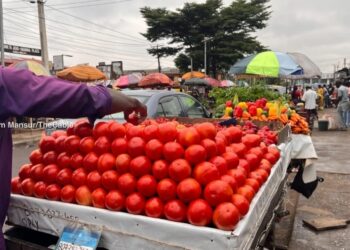
Food inflation in August stood at 21.87% year-on-year, a notable decrease from 37.52% a year earlier, largely due to changes in the base year. Month-on-month food inflation was recorded at 1.65%, down from 3.12% in July, attributed to price drops in various staple items.
Core inflation, which excludes food and energy, was reported at 20.33% year-on-year, with a month-on-month increase of 1.43%, up from 0.97% in July.
Urban inflation was noted at 19.75% year-on-year, with a month-on-month rate of 0.49%, reflecting a decrease from 1.86% in July. Rural inflation, on the other hand, was at 20.28% year-on-year, with a month-on-month increase of 1.38%.
State-wise, Ekiti recorded the highest annual inflation rate at 28.17%, followed by Kano at 27.27% and Oyo at 26.58%. Zamfara had the slowest annual inflation rise at 11.82%. Month-on-month, Yobe experienced the highest rate at 9.20%, while Enugu recorded a decline of -5.32%.
Food inflation was highest in Borno at 36.67%, while Zamfara showed the slowest increase at 3.20%. On a month-to-month basis, Kaduna led with a food inflation rate of 9.37%.
The NBS also noted a recent adjustment in the CPI, which rose to 126.8 in August, reflecting a 0.9 point increase from July’s 125.9. This adjustment comes as part of a rebasing effort, updating the base year from 2009 to 2024, with 2023 now serving as the reference for expenditure weights.