
By Abbas Jimoh
The European Union (EU) has announced a €2m Regreening Africa Project, to be anchored in Sokoto State, Nigeria as part of measures to tackle desertification and other impacts of global climate change.
The five-year project, which targets 40,000 small holders farmers, women and youth in Wamakko and Wurno local government areas of Sokoto State, would be implemented by the CARE International Nigeria, Catholic Relief Services (CRS), and CIFOR-ICRAF is expected to run between 2025 and 2029.
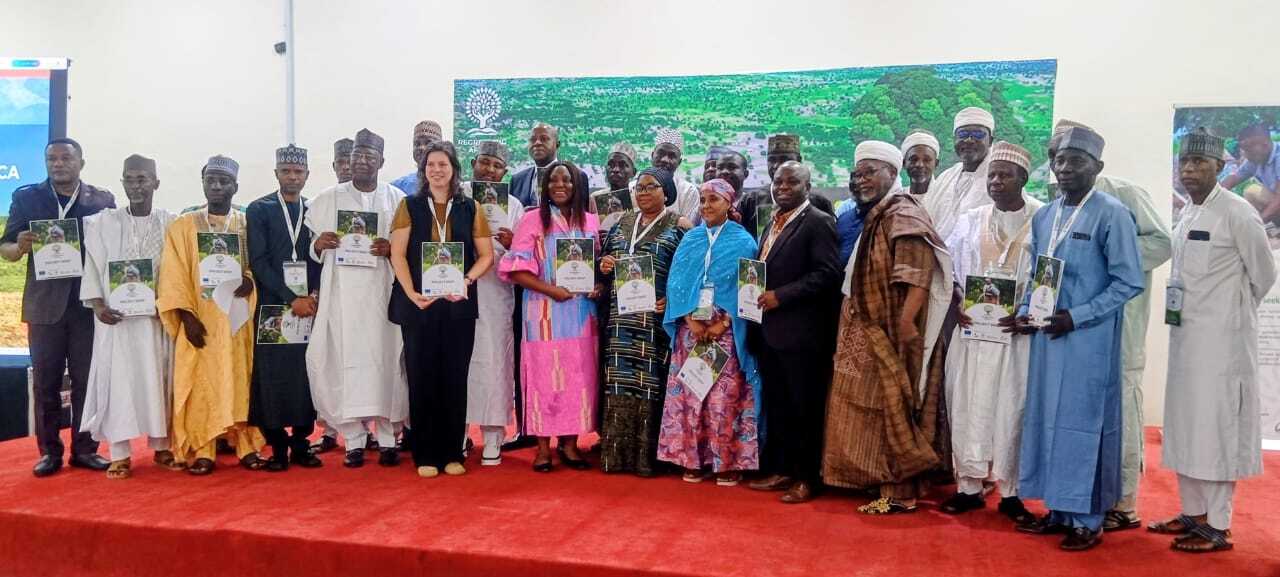
The project launched on Wednesday in Abuja, aims to strengthen the resilience of smallholder farmers, restore degraded lands to improve agricultural productivity, and promote best practices that help farmers and other allied services to adapt to climate change.
Delivering the keynote during the launch of the project, the Head of Cooperation, EU Delegation in Nigeria, Mr Massimo De Luca, said the impact of climate change and degradation threatens the peace, stability and prosperity of any nation.
He said the project will support livelihoods, reduce vulnerability and contribute to global climate goals by storing carbon and reducing emissions.
“We are here because the challenges before us are urgent and undeniable. Across Africa’s drylands, and particularly in northern Nigeria, land degradation, climate stress, and food insecurity are threatening livelihoods and futures.
“For millions of smallholder farmers and pastoralists, this means uncertainty. For communities, it means pressure on resources, displacement, and vulnerability. Moreover, for nations, it means risks to peace, stability, and prosperity.
“Nevertheless, we are also here because we believe in the power of solutions. We know that degraded land can be restored. We know that communities can adapt and thrive when given the right tools and support. In addition, we know that what begins in Sokoto can serve as a powerful example of resilience, innovation, and hope for the rest of the Sahel and beyond,” De Luca said.
He said that the EU is proud to support the Regreening Africa initiative, building on the strong foundations laid in the first phase, which ran from 2017-2023.
According to him, this is not only an environmental project, it is about people, about ensuring that farmers in Sokoto can increase their yields and secure their families’ nutrition.
“It is about women, who often carry the heaviest burden of scarcity, being placed at the center of solutions and empowered as leaders of change. It is about young people, whose energy and innovation are vital, being given opportunities to shape a more sustainable and prosperous future.
“Through proven practices like farmer-managed natural regeneration and agroforestry, this initiative will restore land, improve soil fertility, strengthen water management, and enhance biodiversity. At the same time, it will support livelihoods, reduce vulnerability, and contribute to global climate goals by storing carbon and reducing emissions.
“This work in Sokoto also connects to broader ambitions. It contributes directly to Nigeria’s own priorities on food security, climate action, and sustainable development. It aligns with the African Union’s Great Green Wall Initiative and global commitments under the Bonn Challenge and the Paris Agreement. Most importantly, it shows that international partnerships can be translated into tangible, local action that changes lives, he said.
The EU envoy said that what they are looking at is to create the conditions for and facilitate sustainable productive investments in Sokoto in line with the EU Global Gateway Strategy, whether in agriculture, water, energy, digital, education or health and that the launch is an important step in that direction.
The Country Director of CARE International Nigeria, Dr. Hussaini Abdu said the project would boost food security and quality of life.
Dr. Abdu, represented by the CARE International Nigeria Interim Country Director, Ms Jennifer Orgle said, “We have seen land degradation through climate change and we know what this leads to reduction in the quality of livelihood, it leads to insecurity because we all end up fighting for the very few resources available when there’s land degradation.
“This project will bring restoration in terms of land and introduce best practices which would make majority of the people improve their farming, improve livelihoods. It’s a five-year project and through it, we will see that communities will improve their livelihoods, we will see that women will be able to feed their children and their households better.
“We know that environmental restoration succeeds when communities lead the way. CARE has seen this across Nigeria and in other parts of Africa. When farmers, women’s groups, youth associations, and local leaders are empowered with knowledge and resources, change becomes both sustainable and transformative”.
He called for a collective approach and partnership with relevant stakeholders for the project to succeed.
He said that the Regreening Africa Phase II offers an opportunity to deepen this approach in Nigeria, particularly in Sokoto, by ensuring that the voices of women, youth, and marginalised groups shape every step of the journey.
He said that no single organisation can tackle land degradation, climate change, or food insecurity alone and that success will depend on the collaborations among government institutions, development partners, civil society, the private sector, and the communities.
He said, “At CARE, our starting point is always people. Behind every statistic of land degradation or food insecurity are real families struggling to survive, women working tirelessly to feed their households, and young people searching for opportunities to thrive. For us, regreening is not simply about restoring ecosystems; it is about restoring dignity, equity, and hope.
“Regreening Africa Phase II offers us an opportunity to deepen this approach here in Nigeria, particularly in Sokoto, by ensuring that the voices of women, youth, and marginalized groups shape every step of the journey.”
Also at the launch, Mr Akim Kikonda, Country Representative of CRS; Mr Kabiru Salihu, Representative of CIFOR-ICRAF; Alhaji Ahmed Majidadi Bagudu, who represented Mallam Saleh Abubakar, the Director General of the National Agency for the Great Green Wall (NAGGW); Mrs Helen Ohuche, who represented The Minister of Budget and Economic Planning, Alhaji Abubakar Atiku Bagudu; the Sokoto State Commissioner for Budget, Dr Abubakar Zayyan; and Sokoto State Commissioner for Agriculture, Hon. Muhammed Tukur, among other pledged their commitment to the success of the project.