
When the Federal Capital Territory languished in 31st position during the 2023 Subnational Ease of Doing Business assessment, few anticipated the remarkable transformation that would unfold within a single assessment cycle. Today, that narrative has been rewritten.
In the latest Presidential Enabling Business Environment Council (PEBEC) rankings, the FCT has surged to 4th nationally with a score of 61.0 per cent, trailing only Lagos, Kaduna and Oyo. This dramatic ascent from 31st to 4th represents a watershed moment for the Territory’s business environment.
While such rankings reflect the interplay of multiple institutions and measurable indicators, the FCT’s improved performance underscores the strategic direction of the administration led by the Honourable Minister of the FCT, Barrister Ezenwo Nyesom Wike, CON, particularly its focus on infrastructure, land administration, institutional effectiveness and private-sector engagement.
Infrastructure as Economic Catalyst
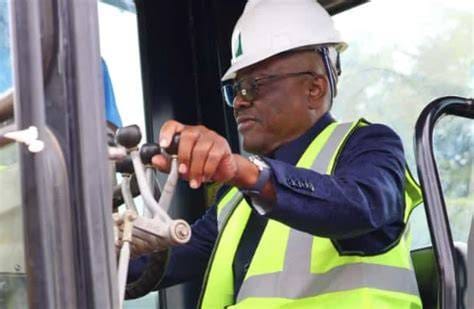
Since assuming office, Minister Wike has prioritised infrastructure development as a cornerstone of his administration. Across the capital, the construction, rehabilitation and expansion of road networks have unlocked vital corridors, enhanced connectivity and facilitated movement throughout the city and its satellite communities.
For enterprises, roads transcend mere physical infrastructure. They underpin the movement of people, goods and services, reduce logistical constraints and open previously underserved locations to commercial and real estate development.
Land Reforms Restore Investor Confidence
Perhaps equally consequential to Abuja’s investment climate has been the administration’s rigorous approach to land reforms and the restoration of discipline in land administration.
Land remains the most critical asset for investment in the FCT, spanning housing, agriculture, hospitality, manufacturing, education, healthcare and commercial development. Investors require confidence that land titles are secure and that allocation, documentation and development processes are transparent and predictable.
The Wike administration has adopted a firmer stance in addressing systemic challenges, implementing measures to strengthen land documentation integrity, tackle abuses in land allocations, enforce development conditions and improve accountability.
The administration has also addressed the long-standing issue of Area Council land documentation and regularisation, providing affected property owners with a clear pathway to formalise their interests within the FCT’s statutory framework.
Additional interventions include compelling property title holders to obtain required Certificates of Occupancy, enforcing ground rent obligations and recovering outstanding revenues associated with land and property.
Significantly, the administration’s insistence that allocated land be developed for its approved purpose rather than held indefinitely for speculation sends a powerful message. In a rapidly growing capital city, land constitutes an economic resource whose productive use stimulates construction, housing, commerce and employment.
These measures enhance the ease of doing business by reducing uncertainty. Investors are more willing to commit capital when property rights are clearer, documentation is reliable and development rules are applied consistently.
Institutional Progress
Beyond land and infrastructure, the FCT has recorded notable progress in institutional areas vital to business operations, including access to commercial justice, grievance-redress mechanisms and technology-driven public services. Functional Small Claims Courts, for instance, provide Micro, Small and Medium Enterprises with faster, less cumbersome routes for resolving commercial disputes.
Collectively, these interventions signal a broader shift: Abuja is increasingly being managed not merely as Nigeria’s administrative capital but as an economic destination competing for investment.
Investment Promotion Through AICL
A crucial element of this emerging narrative is the role of Abuja Investments Company Limited (AICL), the FCT Administration’s investment arm.
Under the current administration, AICL has intensified efforts to promote Abuja as an attractive investment destination, engage domestic and international investors and create platforms connecting government opportunities with private-sector capital.
Through strategic investment engagements, partnerships and platforms such as the Abuja Business and Investment Summit/Expo, the company has drawn greater attention to the FCT’s commercial potential. Its activities across real estate, agriculture, renewable energy and markets complement the administration’s broader economic development agenda.
This role proves particularly vital because infrastructure, land reforms and improved government processes must ultimately translate into actual investments. Investors require identifiable opportunities, secure assets, credible institutional partners and effective engagement platforms.
AICL therefore provides an essential bridge between the FCT Administration’s development agenda and the private sector, packaging opportunities, facilitating investment conversations and strengthening Abuja’s profile as a destination for capital.
The Road Ahead
The FCT’s ascent from 31st to 4th position offers an important governance lesson: sustainable results become achievable when political leadership, infrastructure development, land reforms, institutional efficiency and investment promotion align in a common direction.
However, a fourth-place ranking should inspire further ambition. Businesses require faster processes, greater predictability, deeper digitisation of services and continued improvements in land administration and regulatory procedures.
The real value of an ease-of-doing-business ranking lies not merely in national position but in whether entrepreneurs and investors experience tangible improvements when seeking land, registering interests, obtaining approvals, resolving disputes and interacting with government institutions.
Nevertheless, moving from 31st to 4th within one assessment cycle is significant. It suggests Abuja is progressing in the right direction and that the combination of infrastructure renewal, land reforms, institutional improvements and investment promotion is yielding measurable outcomes.
For decades, Abuja has been viewed primarily as the seat of the Federal Government. Yet with its strategic location, expanding infrastructure, growing population, valuable land assets, vibrant real estate and hospitality sectors and concentration of national and international institutions, the Territory possesses enormous potential to become one of Africa’s competitive investment destinations.
Unlocking that potential requires leadership that provides infrastructure, protects land administration integrity, strengthens institutions and actively creates opportunities for private investment.
Under Barrister Ezenwo Nyesom Wike, these elements are increasingly being brought together, while institutions such as Abuja Investments Company Limited complement the administration’s efforts by taking Abuja’s investment opportunities to the marketplace.
The latest PEBEC ranking therefore represents more than an improved position on a national table. It presents an opportunity to consolidate reforms, deepen investor confidence and demonstrate what coordinated leadership and institutional performance can achieve.
From 31st to 4th, Abuja has made a remarkable leap. The challenge now is to sustain momentum and make the nation’s capital not only a great place to live and work, but one of the best places to invest and do business in Nigeria.