
The ongoing trial of military officers accused of plotting to overthrow President Bola Tinubu’s administration has sparked national debate. Beyond the courtroom, however, the allegations have reopened an equally important conversation about the welfare of the men and women entrusted with defending Nigeria.
The recent reports surrounding an alleged coup plot have dominated headlines across Nigeria. According to investigators, documents recovered during the investigation allegedly contained proposals to review the removal of fuel subsidy, improve the salaries and allowances of members of the Armed Forces and other security agencies, and recognise military personnel who died in active service.
The officers facing trial have denied wrongdoing in different ways during the legal proceedings, and the allegations remain before the courts. As with every criminal matter, only the judiciary can determine guilt or innocence after due process.
Yet, beyond the legal arguments and public speculation lies a broader issue that deserves careful attention. Why has military welfare become one of the issues attracting public discussion? Why do conversations about the Armed Forces repeatedly return to salaries, accommodation, healthcare, insurance, equipment and support for military families? More importantly, why should these concerns matter to millions of Nigerians who have never served in uniform?
These questions go beyond one court case. They touch on the strength of Nigeria’s security institutions and the country’s ability to confront growing security challenges.
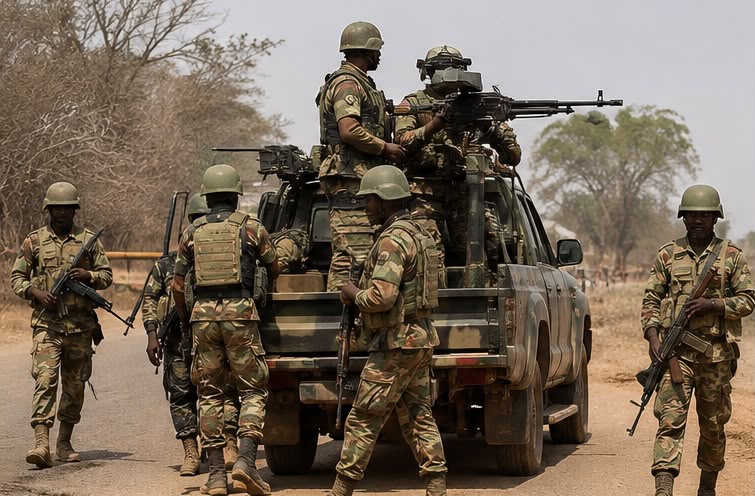
For many citizens, soldiers are the men and women they see at checkpoints, on highways, during military operations or while responding to emergencies. What remains largely unseen are the realities behind the uniform months spent away from loved ones, dangerous deployments, harsh living conditions, emotional strain and the constant possibility that every assignment could become their last.
While many professions involve risk, military service demands an unusual level of sacrifice. Personnel are often required to serve wherever the nation needs them, regardless of personal comfort or family circumstances. Their commitment frequently comes at the cost of birthdays missed, children growing up in their absence and families living with uncertainty until they safely return home.
A serving Nigerian Army officer, who requested anonymity because he was not authorised to speak to the media, described military welfare as an issue that extends far beyond monthly salaries. “People often see us in uniform and assume everything is fine, but they rarely see the sacrifices behind the job. When a soldier knows that his family will be cared for if anything happens to him, it gives him greater confidence to focus on his mission.”
The officer said adequate welfare reassures personnel that their sacrifices are recognised and allows them to concentrate fully on their duties. His remarks reflect concerns that have been raised for years by serving personnel, veterans and military families, who argue that welfare should be understood as a complete support system rather than simply a monthly paycheck.
Security experts agree. Dr. Amina Suleiman, Security Analyst and Lecturer in Peace and Conflict Studies at the University of Maiduguri, believes military welfare should be viewed as a national security priority rather than merely an employment benefit. “A country’s security depends not only on weapons and military strategy but also on the well-being of the people entrusted with defending it. Investing in the welfare of security personnel is ultimately an investment in national security.”
She explained that military welfare extends beyond salaries to include healthcare, accommodation, insurance, mental health support and assistance for military families. Her observation highlights an issue that often receives little public attention. Discussions about security usually focus on weapons, military operations and intelligence gathering, but the human beings expected to carry out those operations are just as important. Even the most sophisticated equipment cannot achieve its purpose without motivated, disciplined and adequately supported personnel.
As Nigeria continues to battle insurgency, banditry, kidnapping and other security threats, many analysts believe that strengthening the welfare of military personnel is not simply a matter of compassion. It is a strategic investment in the effectiveness, professionalism and resilience of the country’s Armed Forces.
The conversation, therefore, is larger than one investigation or one courtroom. It is about ensuring that the institution responsible for protecting Nigeria has the human capacity, morale and support required to carry out that responsibility effectively.
Military welfare has remained a recurring subject of public discussion in Nigeria for many years. While salaries and allowances often dominate the conversation, experts say welfare is much broader. It includes decent accommodation, quality healthcare, insurance, timely payment of benefits, access to modern equipment, opportunities for career development and adequate support for the families of personnel serving in difficult and dangerous environments.
In recent years, the Federal Government has repeatedly stated that improving the welfare of members of the Armed Forces remains one of its priorities. As part of ongoing security reforms, President Bola Tinubu recently approved the expansion of the Nigerian Army from eight to twelve divisions, with plans to recruit about 28,000 additional personnel. The reform is also expected to strengthen troop welfare, operational readiness and the capacity of the Armed Forces to respond to emerging security threats.
The government has also announced continued investments in military infrastructure, equipment and personnel as Nigeria confronts insurgency, banditry, kidnapping and other security challenges across different parts of the country.
According to the Stockholm International Peace Research Institute (SIPRI), Nigeria’s military expenditure rose to approximately 2.1 billion US dollars in 2025, representing one of the country’s largest increases in defence spending in recent years. Analysts say the increase reflects the growing security demands facing the country, but they also argue that investment in hardware must go hand in hand with investment in the people expected to operate it.
Retired Brigadier General Sani Ahmed believes welfare should never be treated as an afterthought. “A professional military depends on more than weapons and training. Personnel who feel valued are more likely to remain motivated, disciplined and committed to their responsibilities.” According to him, governments should view military welfare as a long-term investment in national stability rather than simply another public expenditure.
Retired Wing Commander Ibrahim Bello, a Nigerian Air Force veteran, said the sacrifices made by members of the Armed Forces are often overlooked by the public. “Serving your country is one of the greatest honours, but it comes with enormous personal sacrifices that many civilians never witness. Supporting our troops should not happen only during times of crisis; it should be a continuous national commitment.”
Bello noted that behind every service member is a family that also bears the emotional and financial burden of military life. His comments draw attention to a reality that extends beyond the battlefield. Long deployments, frequent transfers and the uncertainty associated with security operations affect spouses, children and relatives who must continue their lives while their loved ones serve in unpredictable conditions.
Although the Federal Government has introduced various initiatives over the years including housing schemes, healthcare improvements, insurance benefits and periodic reviews of allowances many observers believe that the expectations placed on military personnel continue to evolve alongside Nigeria’s economic realities. Rising living costs, inflation and prolonged security operations have increased pressure on many service members and their families.
Security experts therefore argue that improving military welfare should not be viewed simply as a response to public debate or isolated events. Rather, it should form part of a long-term national strategy aimed at building a professional, motivated and resilient Armed Forces capable of meeting the country’s complex security challenges.
For many analysts, the lesson is clear: safeguarding Nigeria requires more than sophisticated equipment or increased defence budgets. It also requires sustained investment in the people who stand on the front lines of the nation’s security every day.
While the allegations surrounding the reported coup plot will be resolved through the courts, the conversations they have generated should not end when the legal proceedings conclude. Rather, they should encourage a broader reflection on how Nigeria values those entrusted with safeguarding its sovereignty and protecting its citizens.
Military welfare is not an issue that concerns soldiers alone. It has direct implications for every Nigerian. Farmers rely on secure communities to cultivate their land. Traders depend on safe roads to move goods across the country. Businesses require a stable environment to invest and grow, while children need secure schools and communities in which to learn. Behind each of these realities are security personnel working under demanding and often dangerous conditions.
Experts believe that improving military welfare requires a comprehensive and sustained approach. Beyond periodic salary reviews, governments should continue investing in decent accommodation, modern medical facilities, life insurance, mental health support, quality equipment, regular training and prompt payment of benefits. Equal attention should also be given to the welfare of widows, children and other dependants of personnel who lose their lives in active service.
Analysts also stress the importance of transparency and accountability in implementing welfare programmes. Policies designed to improve the lives of service personnel should translate into visible improvements that reach those on the front lines rather than remaining promises on paper.
Retired Brigadier General Sani Ahmed believes that maintaining the morale of military personnel should remain a priority regardless of changing political administrations.
“Security is a continuous responsibility, not a seasonal project,” he said. “Governments may change, but the duty of defending the country remains constant. That is why welfare policies should be sustained, properly funded and regularly reviewed to reflect economic realities and the changing demands of military service.”
Dr. Amina Suleiman shares a similar view, noting that strengthening the welfare of security personnel should form part of a broader national security strategy. “Countries with strong security institutions understand that investing in personnel is just as important as investing in equipment.”
For many Nigerians, discussions about military welfare often receive attention only during periods of crisis or major national events. Yet experts argue that the issue deserves consistent public attention because the effectiveness of the Armed Forces depends not only on strategy and technology but also on the people who dedicate their lives to protecting the nation.
A nation’s security is measured not only by the strength of its weapons or the size of its defence budget, but also by how it values the men and women who stand ready to defend it. Long after the headlines surrounding the alleged coup have faded and the courts have delivered their judgments, the question of military welfare will remain. Addressing it consistently, transparently and through sustained reforms is not simply about improving the lives of soldiers it is about strengthening the institutions that safeguard Nigeria’s democracy, stability and future.
By Abigail ijai ijapari,student of Mass Communication,University of Maiduguri.